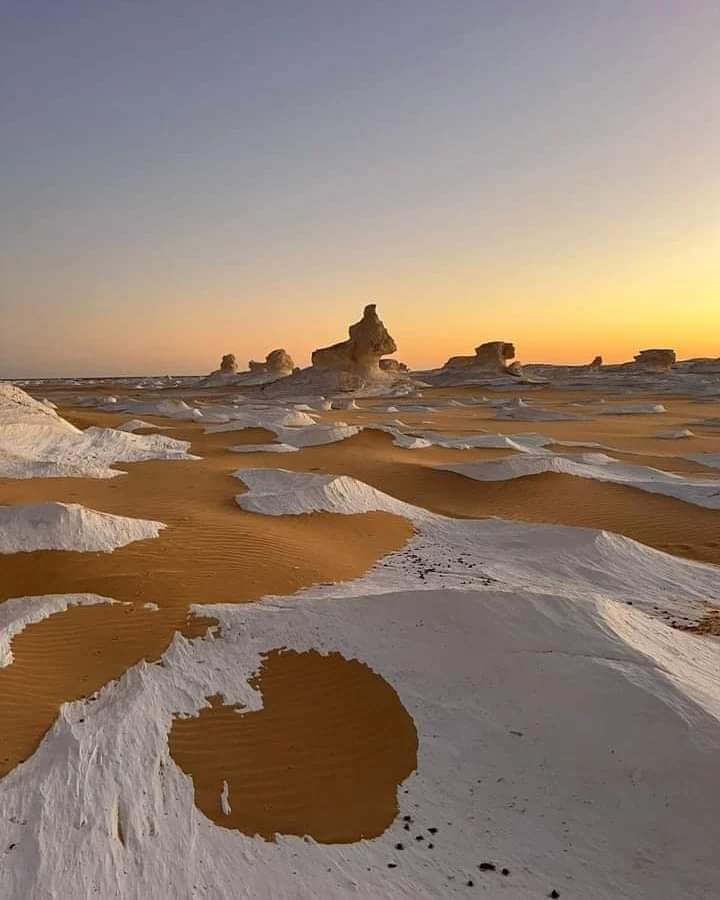
Mushroom Rock White Desert Egypt: Complete Visitor Guide

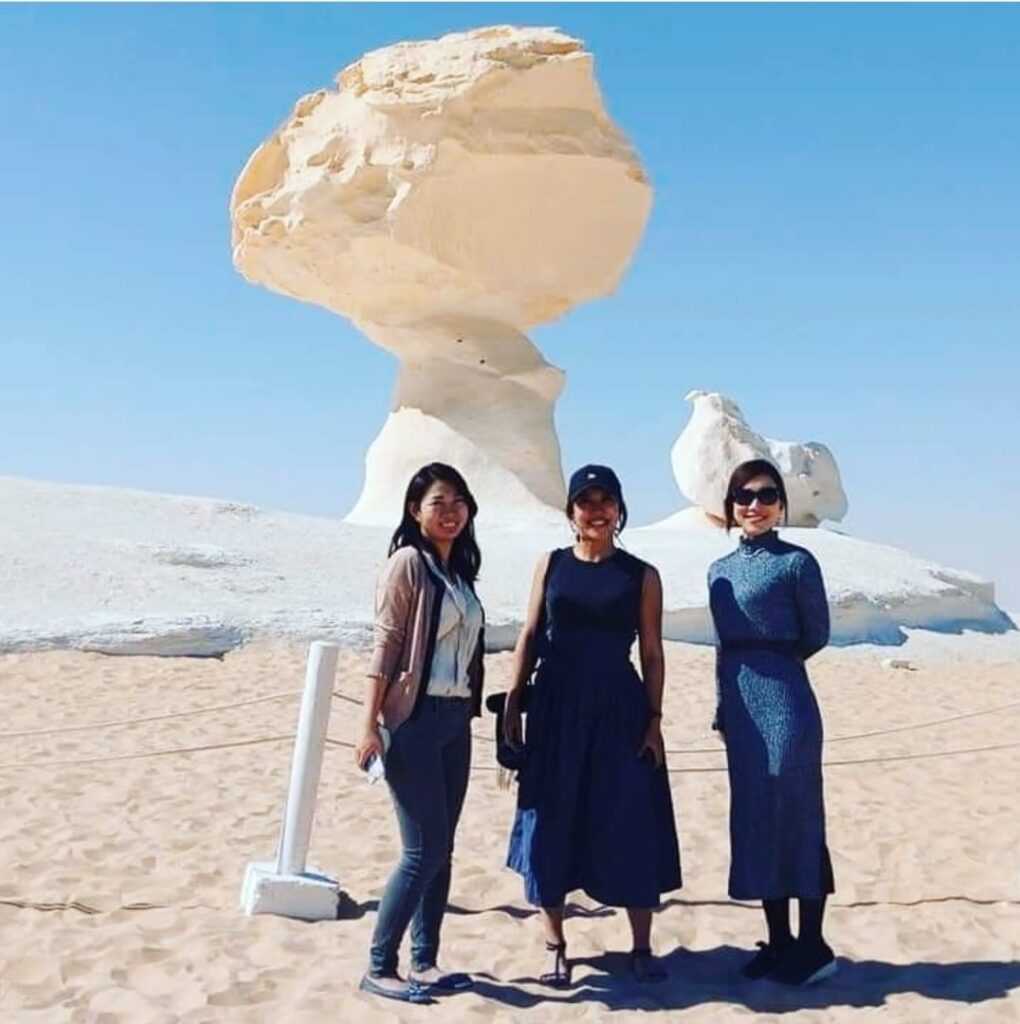
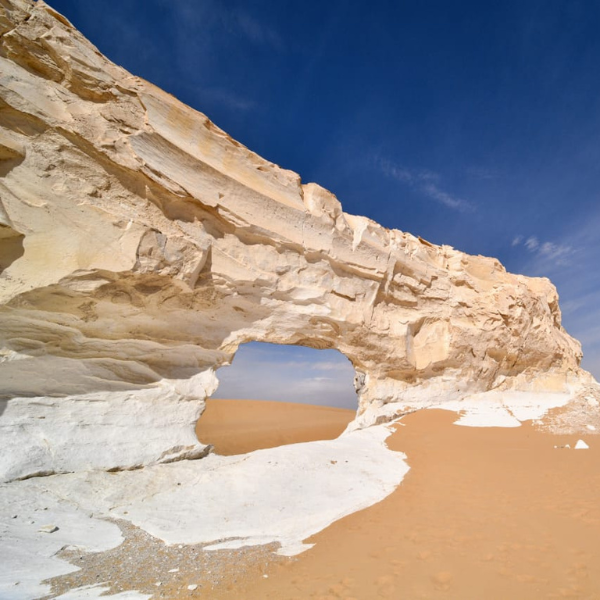
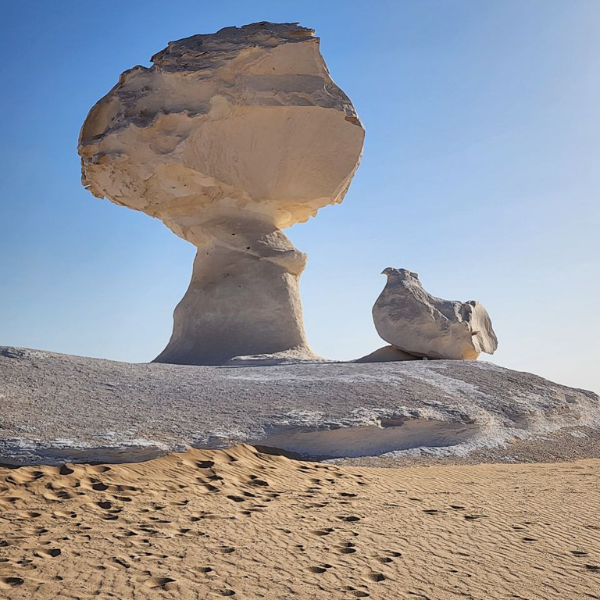
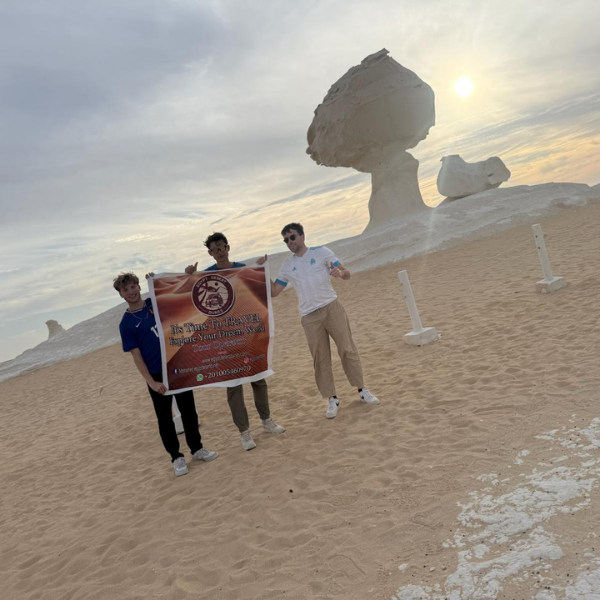
Few natural landmarks summarize Egypt’s White Desert as perfectly as its mushroom-shaped rocks.


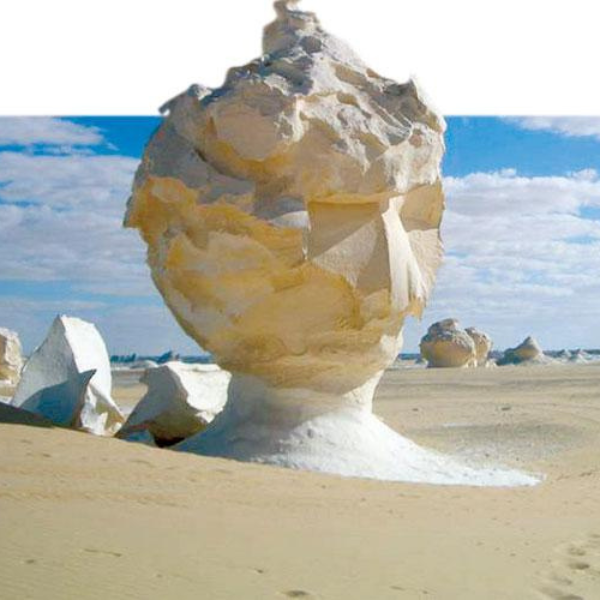
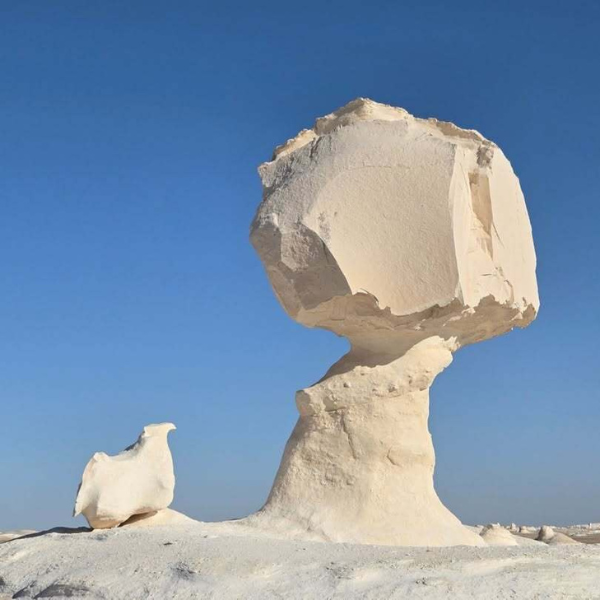
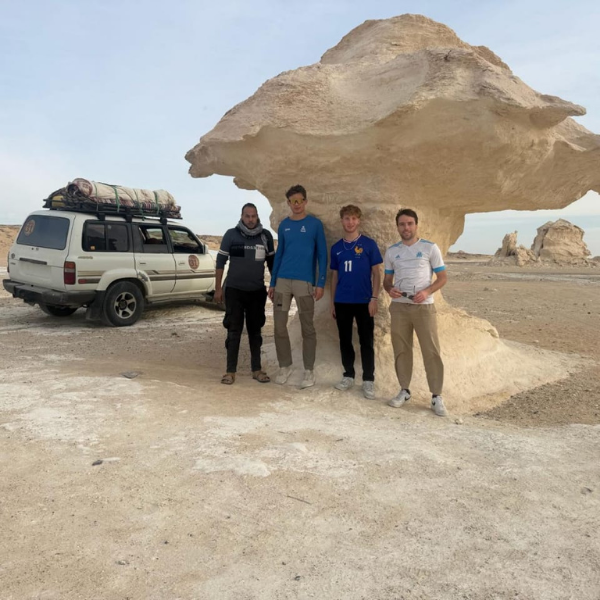
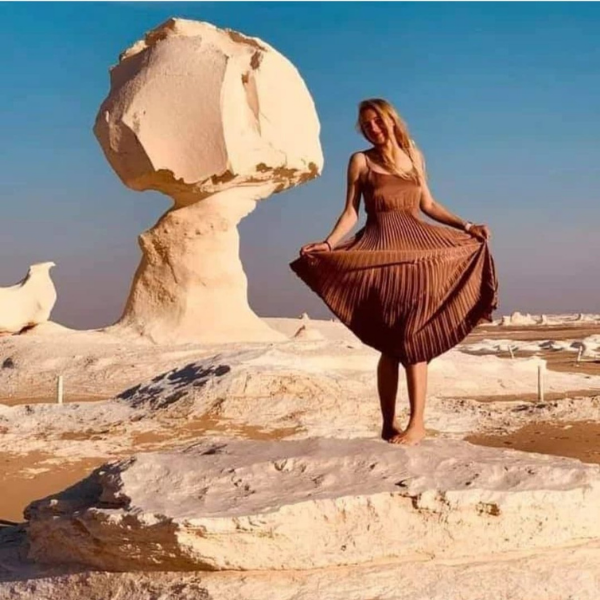
A narrow white pedestal rises from the desert floor.


Above it sits a much larger rounded mass of chalk.


From a distance, the entire formation can look like an enormous mushroom growing from one of the driest landscapes on Earth.


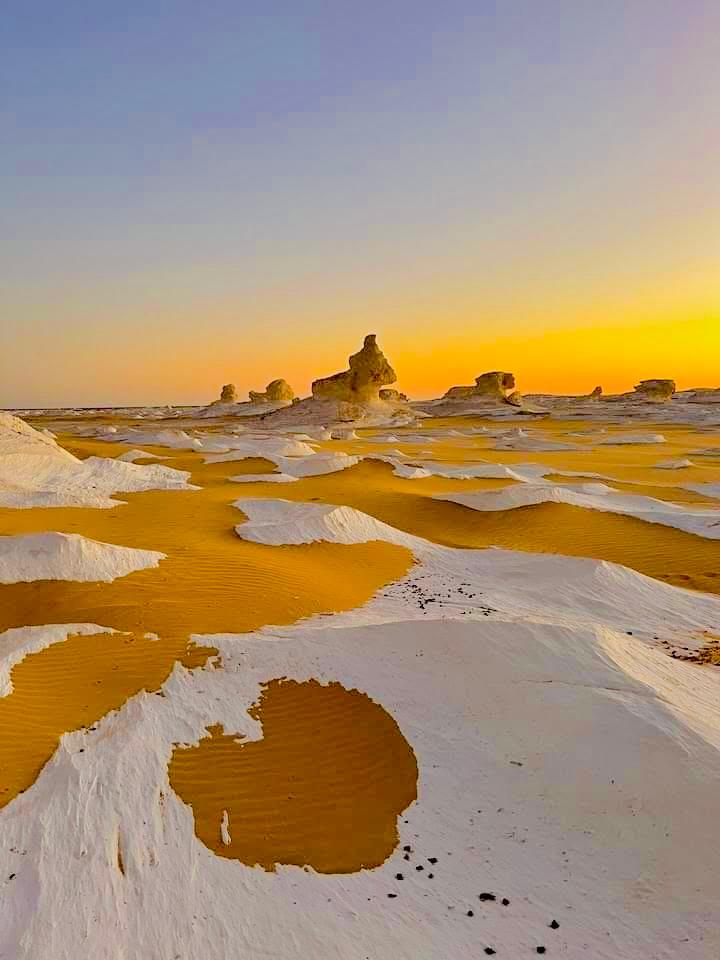
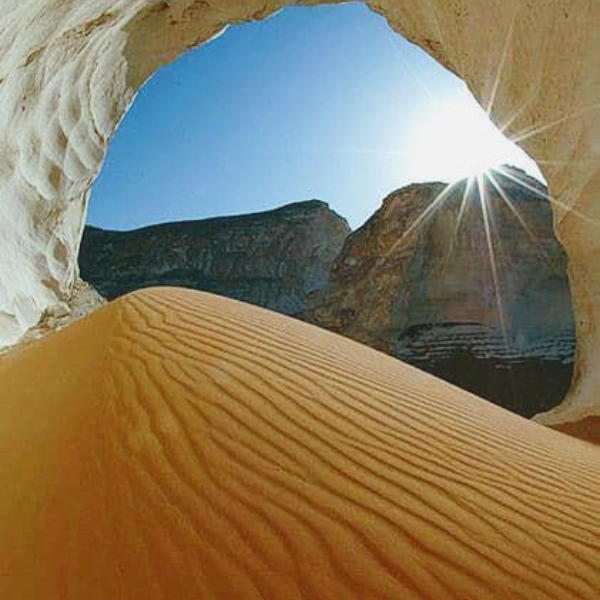
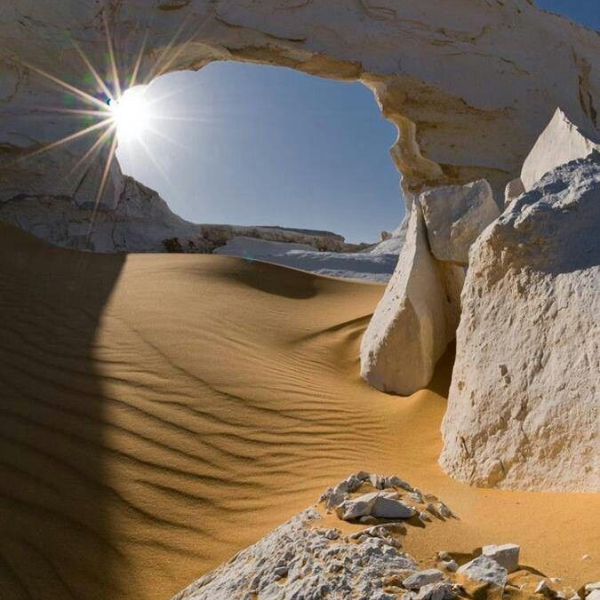
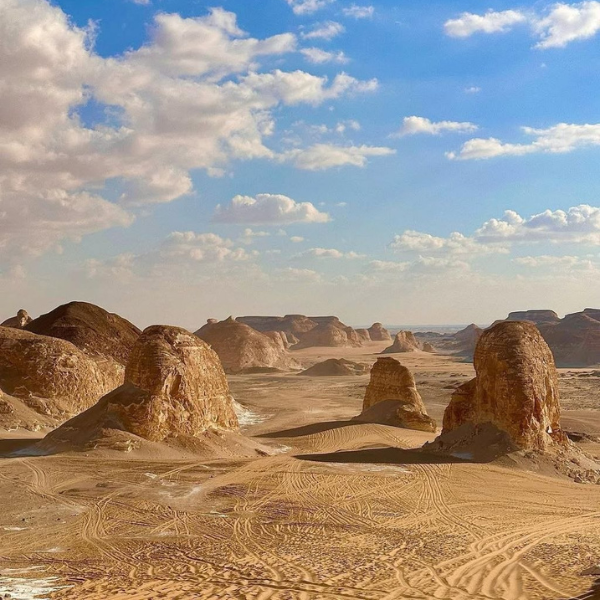
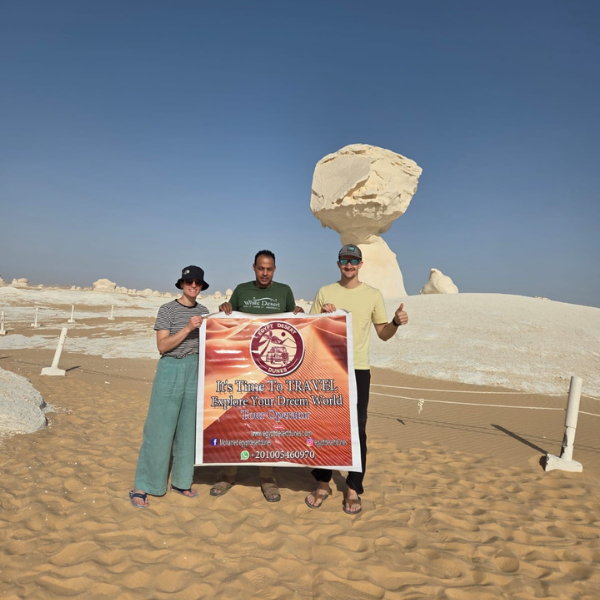
These strange formations have become visual symbols of the White Desert Egypt, appearing in travel photography, documentaries and tourism material promoting Egypt’s Western Desert.


Egypt’s official tourism authority specifically describes the White Desert as famous for its mushroom-shaped white rocks, while its protected-area information describes wind-carved chalk sculptures resembling mushrooms that are sometimes locally referred to as “desert ice.”


But Mushroom Rock isn’t simply a strange stone waiting for tourists to photograph it.


Its shape tells a much bigger geological story.


The rock began as sediment deposited in an ancient marine environment.


That sediment eventually became chalk and limestone.


The sea disappeared.


The rocks were exposed.


Water, wind and weathering began removing material.


Softer sections eroded faster than harder ones.


And after immense periods of time, some formations developed the narrow stems and broad upper sections that now resemble giant mushrooms.


Today, seeing these formations is one of the highlights of a White Desert safari.


If you’re planning the complete destination rather than one formation, start with our White Desert Egypt guide.


If you’re ready to experience the route from Cairo, explore our White Desert Safari from Cairo.

- Tours Carousel

Mushroom Rock White Desert at a Glance

Question

Quick Answer

What is Mushroom Rock?

A naturally eroded chalk formation shaped like a mushroom

Where is it?

In Egypt’s White Desert landscape near Farafra Oasis

Is there only one Mushroom Rock?

No. The White Desert contains many mushroom-like formations

What is it made from?

Primarily chalk and chalky limestone

Was it carved by humans?

No. It formed naturally through erosion and weathering

Why is the base narrow?

Differential erosion removes weaker material faster

Can you visit from Cairo?

Yes, normally as part of a multi-day White Desert safari

Can you camp nearby?

White Desert tours often include camping, subject to permitted locations

Best for photography?

Sunrise, late afternoon and sunset can produce strong shadows

Can you climb it?

Avoid climbing or touching fragile formations unnecessarily

What Is Mushroom Rock in Egypt's White Desert?

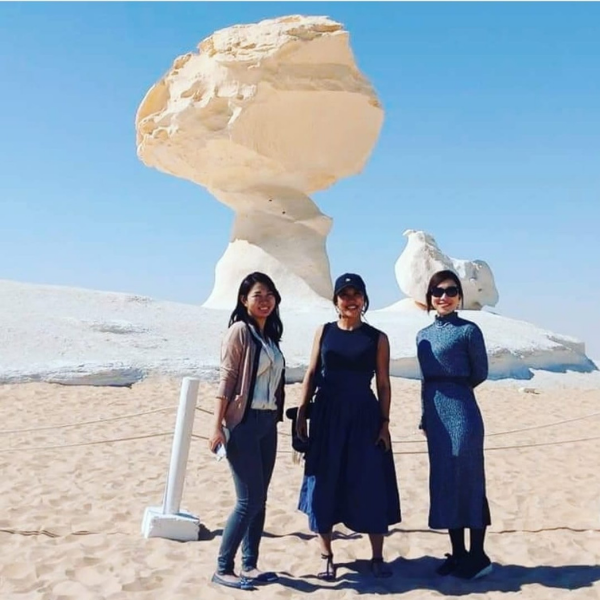
“Mushroom Rock” is a name used for natural chalk formations whose shape resembles a mushroom.


Typically, the formation has:


a narrow lower pedestal,

a wider upper section,

and a rounded or irregular cap.


The result can look almost artificial.


Some formations appear balanced so improbably that first-time visitors wonder whether humans modified them.


They didn’t.


These are products of natural geological processes.


Egypt’s official tourism website highlights the White Desert’s mushroom-shaped rocks as one of Farafra’s principal desert attractions and identifies the White Desert as roughly 40 km from Farafra Oasis.


But there’s an important detail:


There isn’t necessarily one universally agreed “Mushroom Rock.”


The White Desert contains many formations resembling mushrooms.


Some individual rocks have become particularly famous through tourism photography and local nicknames, while other mushroom-like formations appear across different parts of the landscape.


This is why searching online for “Mushroom Rock White Desert Egypt” can return photographs of slightly different formations.


You’re dealing with a type of natural landform as well as individual named landmarks.

Where Is Mushroom Rock in Egypt?

Mushroom-shaped formations occur throughout the wider White Desert landscape north of Farafra Oasis in Egypt’s Western Desert.


Official Egyptian tourism information places the White Desert around 40 km from Farafra.


However, many international visitors do not actually begin their safari in Farafra.


When traveling from Cairo, a common route instead begins through Bahariya Oasis.


A typical journey may follow:


Cairo

↓

Bahariya Oasis

↓

Black Desert

↓

Crystal Mountain

↓

Agabat Valley

↓

White Desert

↓

Mushroom-shaped chalk formations

↓

Camping

↓

Return through Bahariya


That’s why the Mushroom Rocks are usually experienced as part of a much larger Western Desert safari rather than as a standalone roadside attraction.


For a better understanding of the geography, see our White Desert Egypt Map.

Is There One Famous Mushroom Rock?

There are several mushroom-shaped formations across the White Desert.


That’s important because travel websites sometimes write about “the Mushroom Rock” as though there is one officially designated geological monument with a single universally accepted name.


The reality is more complicated.


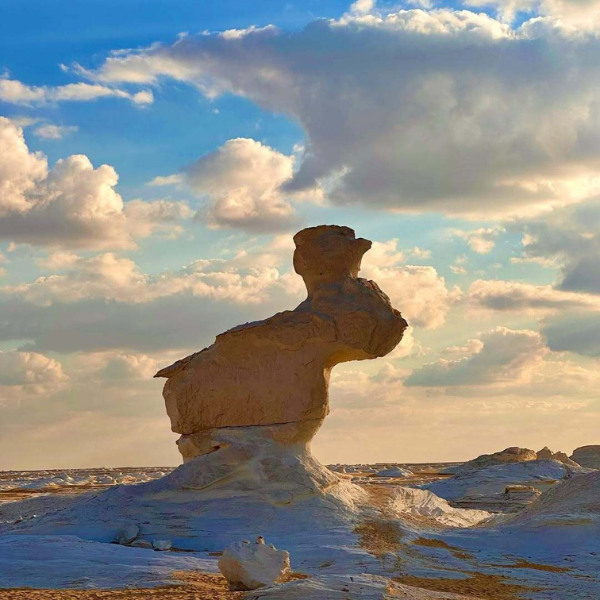
Natural shapes throughout the White Desert have acquired descriptive names based on what travelers and guides think they resemble.


You’ll hear names involving:


mushrooms,

chickens,

rabbits,

camels,

tents,

faces,

and other familiar objects.


Some names are widely used.


Others vary from guide to guide.


And natural erosion continues changing the rocks.


So instead of treating Mushroom Rock like the Great Pyramid — one fixed monument with an official name and entrance — think of mushroom rocks as one of the signature landform types of the White Desert.


Egypt’s national tourism portal itself describes the area generally through its famous mushroom-shaped white rocks rather than identifying only one individual formation.

What Is Chicken and Mushroom Rock?

You may also see references online to:


Chicken and Mushroom Rock

or

Chicken and Tree Rock.


This is one of the most photographed combinations of formations in the White Desert.


From the right angle, one rock resembles a chicken or bird while a neighboring formation resembles a mushroom or tree.


The attraction here is partly geological and partly psychological.


Humans naturally look for recognizable shapes in random objects.


This phenomenon is called pareidolia.


It’s why we see:


faces in clouds,

animals in mountains,

and objects in rock formations.


The White Desert is particularly good at triggering this effect because erosion has created such unusual shapes.


One person sees a chicken.


Another sees a rabbit.


Someone else sees something completely different.


There isn’t a wrong answer.

What Is Mushroom Rock Made Of?

The famous white formations are primarily associated with chalk and chalky limestone.


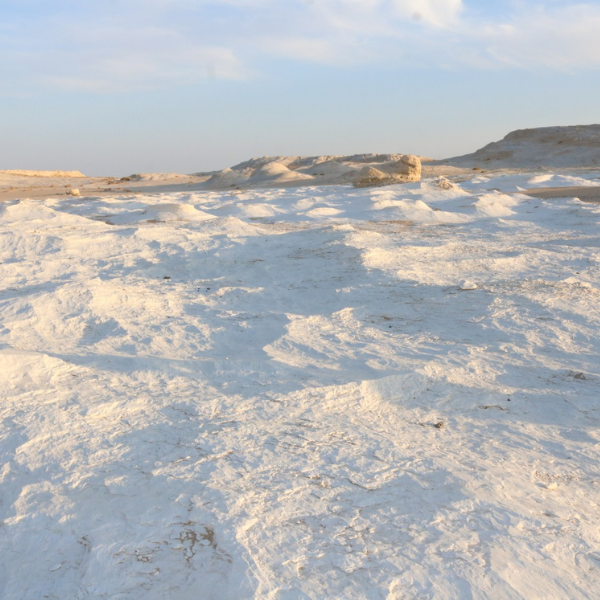
Egypt’s Environmental Affairs Agency describes the White Desert floor as white chalk with snow-white chalk pillars created through erosion and wind.


Scientific geological research into the Farafra Depression provides more detail.


The region contains extensive deposits of the Khoman Formation, a Late Cretaceous sedimentary unit dominated in many areas by chalk.


Research on the Farafra geological succession says the Khoman Formation covers much of the depression and that erosion of these carbonate deposits produced the spectacular landforms seen in the White Desert.


Another detailed study identifies the basal White Desert Member of the Khoman Formation as consisting of snow-white chalky limestone.


So Mushroom Rock isn’t made from ordinary desert sandstone.


Its material is closely connected to the ancient marine history of the area.

Was the White Desert Once Underwater?

Yes.


This is one of the coolest things to understand while you’re standing beside Mushroom Rock.


Egypt’s official tourism authority describes the White Desert as originating from an ancient seabed and notes that marine fossils can still be found in its limestone layers.


The rocks formed when the environment looked completely different from today.


Instead of:


dry desert,

dunes,

dust,

and hot wind,

the region experienced marine conditions in which carbonate-rich sediments accumulated.


Microscopic organisms and other marine life contributed material to these sediments.


Over immense periods of geological time, the deposits were compacted and transformed into chalk and limestone.


Later, the old marine rocks became exposed on land.


That ancient seafloor eventually became part of the Sahara.


So when you photograph a mushroom-shaped White Desert rock, you’re effectively photographing an eroded piece of ancient marine sediment.

How Did Mushroom Rock Form?

This is the big question.


And the answer is more interesting than simply saying:


“The wind did it.”


Wind is certainly important.


But Mushroom Rock is the result of differential erosion acting on sedimentary rock.


Different parts of the formation do not have exactly the same:


hardness,

composition,

cementation,

fracturing,

exposure,

or resistance to weathering.


As erosion attacks the rock, weaker sections disappear faster than stronger sections.


Over time, that can create a narrow base supporting a broader upper cap.


Step 1: Chalk Was Deposited


Millions of years ago, carbonate-rich sediments accumulated in a marine environment.


These sediments eventually formed chalk and limestone.


Step 2: The Rock Became Exposed


Geological and environmental changes eventually exposed these ancient sedimentary layers to the atmosphere.


Once exposed, erosion could begin reshaping them.


Step 3: Fractures Divided the Rock


Natural joints and fractures separated portions of once-continuous rock.


This is crucial.


Without natural weaknesses, erosion would have less ability to isolate individual towers and blocks.


Step 4: Wind and Sand Attacked the Formation


Moving air carries sand and dust.


Near the ground, windblown particles can repeatedly strike exposed rock surfaces.


Think of it as extremely slow natural sandblasting.


Not powerful enough to change the rock while you’re watching.


But given enough time?


Very powerful.


Egypt’s Environmental Affairs Agency explicitly attributes the famous snow-white chalk pillars to erosion and wind.


Step 5: Softer Rock Disappeared Faster


Differential erosion widened the difference between stronger and weaker sections.


If the lower part of a formation eroded faster while a stronger upper layer remained, the structure became increasingly top-heavy.


Eventually:


small pedestal + large cap = mushroom shape.

Did Wind Alone Make Mushroom Rock?

No.


That’s one of those travel-guide explanations that’s technically pointing in the right direction but too simple.


Wind is extremely important in the modern desert.


But geological research into the Farafra Depression shows that landscape development involved both running water and wind, as well as structural geology, erosion surfaces and karst processes.


The Sahara hasn’t always been as dry as it is today.


At different times in its past, the region experienced wetter conditions.


Water helped excavate and modify landscapes.


Then increasingly arid conditions allowed wind erosion to become a major shaping process.


A better explanation is therefore:


Mushroom rocks formed through long-term differential weathering and erosion, with wind and windblown sand playing a major role in sculpting the exposed chalk.

Why Is the Bottom Narrower Than the Top?

Imagine sand moving horizontally across the desert.


The highest concentration of heavy windblown sand grains often stays relatively close to the ground.


Those particles strike lower rock surfaces repeatedly.


As a result, rock closer to ground level can experience particularly strong abrasion.


Now combine that with differences in rock hardness.


If:


the base is more vulnerable,

and

the cap is more resistant,

the base disappears faster.


The upper portion becomes relatively wider.


Eventually the rock resembles a mushroom.


That doesn’t mean every mushroom rock formed through an identical mechanism.


Nature isn’t a manufacturing line.


Different formations can be influenced by different combinations of:


rock strength,

fractures,

layering,

sand abrasion,

water,

gravity,

and weathering.

Why Doesn't Mushroom Rock Fall Over?

Eventually, some formations probably do.


Mushroom rocks can look physically impossible because a large upper mass sits on a much narrower pedestal.


But the remaining pedestal still provides enough structural support.


For now.


Erosion never stops.


If the base becomes too weak, the formation can eventually collapse.


That means the Mushroom Rocks visitors see today are temporary geological sculptures.


Temporary on a geological timescale, obviously.


A formation may remain standing far longer than a human lifetime.


But it isn’t permanent.

Is Mushroom Rock Still Changing?

Yes.


Every desert wind contributes something.


Every temperature cycle contributes something.


Rare rainfall contributes something.


Gravity contributes something.


And visitors can contribute damage too — which is why they shouldn’t.


Over geological time, the shape can change dramatically.


A pedestal can become narrower.


A cap can fracture.


A chunk can fall.


An entire formation can eventually collapse.


So the White Desert should not be imagined as a museum filled with frozen objects.


It’s an active landscape.

Why Are the Mushroom Rocks White?

Because the underlying sedimentary rock is very pale.


Scientific studies of the Farafra area describe the White Desert rock as snow-white chalky limestone, while Egypt’s environmental authority describes the area as a landscape of white chalk.


Chalk is a carbonate rock rich in calcium carbonate, primarily calcite.


When it contains relatively little darker mineral material, the result can be brilliantly pale.


Under the Egyptian midday sun, that whiteness can become almost dazzling.


This is why:


sunglasses,

a hat,

and sun protection


are useful even beyond ordinary desert heat.


The light reflects strongly from the ground and rock surfaces.


For the complete geological story, read:


Why Is Egypt’s White Desert White? Geology & Formation Explained.

What Does Mushroom Rock Look Like in Person?

Photographs can be deceptive.


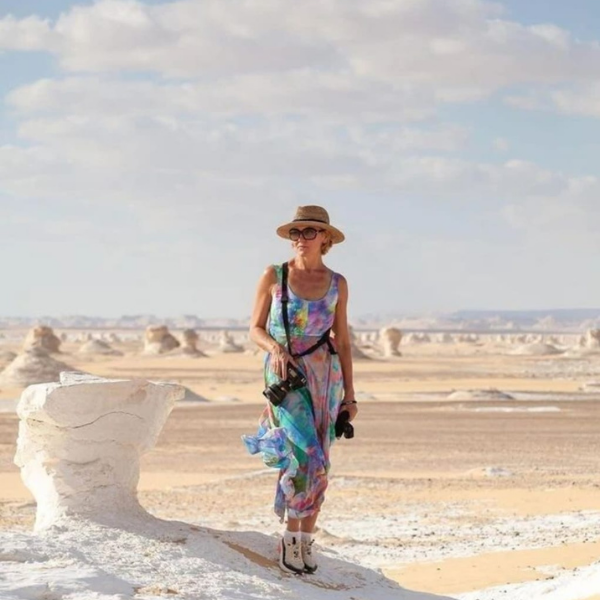
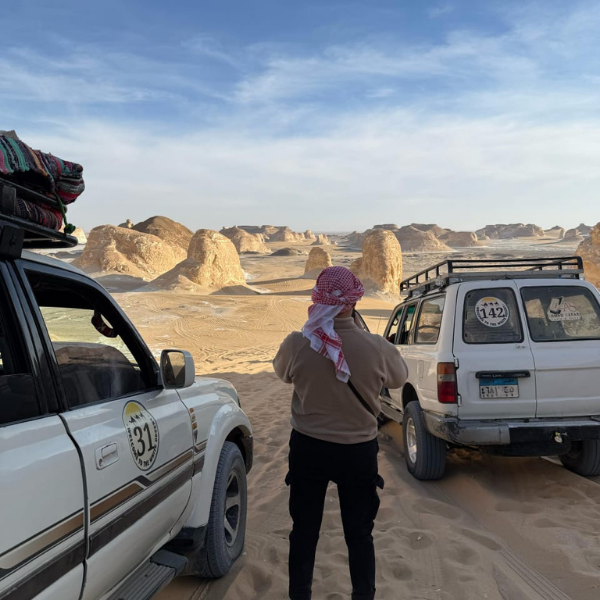
Without a person or vehicle nearby, it’s difficult to judge scale.


Some mushroom formations are relatively small.


Others are much larger.


And because there are no buildings around for comparison, the desert can distort your sense of size.


The most interesting thing in person isn’t necessarily one famous rock.


It’s seeing multiple formations scattered across the landscape.


You start recognizing patterns.


One rock looks like a mushroom.


Another looks like a giant table.


A third looks like a tower.


Farther away, another has a completely different shape.


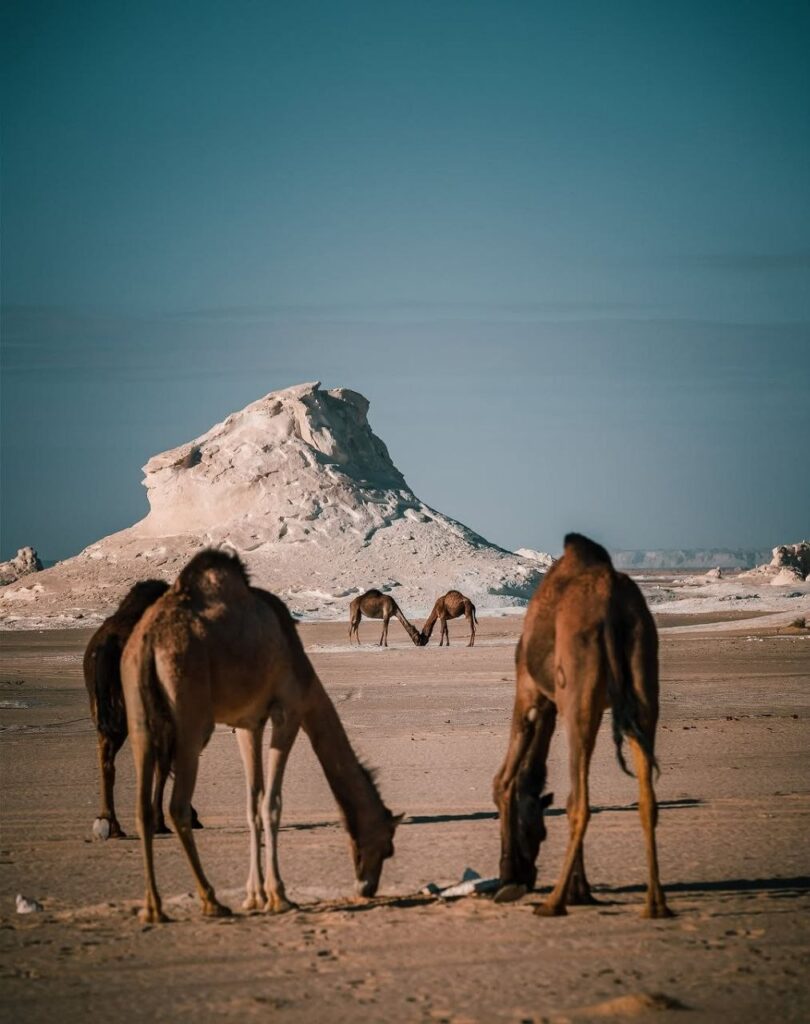
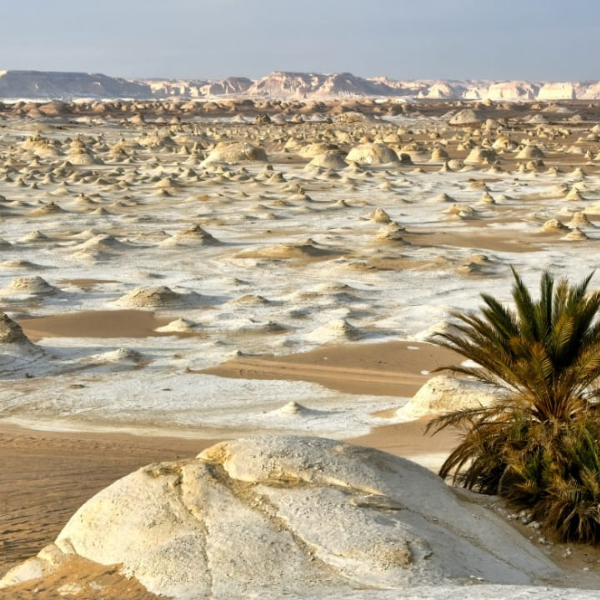
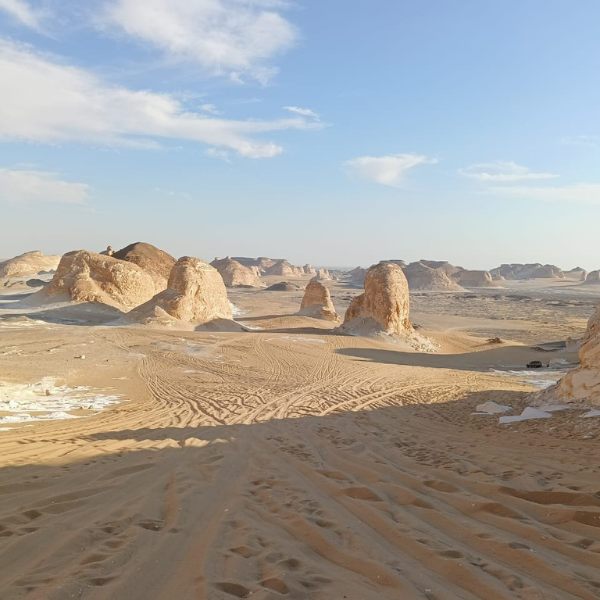
That’s when the White Desert begins to feel less like one attraction and more like a natural sculpture garden.


Egypt’s official tourism authority actually describes the protected area as a kind of natural art gallery created through millions of years of geological change.

Old White Desert or New White Desert: Where Are the Mushroom Rocks?

You’ll see online sources placing famous mushroom-shaped rocks in both the Old White Desert and New White Desert.


That’s because those labels are informal tourism terms rather than rigid official geological boundaries.


The wider White Desert contains numerous mushroom-style formations.


Specific local names and classifications can vary between guides and itineraries.


So don’t book a tour based solely on:


“Does it visit the Old Mushroom Rock or New Mushroom Rock?”


Instead ask:


  • Does the itinerary include the principal White Desert formations?
  • How much time do we actually spend exploring?
  • Do we reach the main formation areas before sunset?
  • Is camping included?
  • Do we have enough time to walk and photograph?

For the terminology issue, read our complete:


Old White Desert vs New White Desert Egypt.

Is Mushroom Rock the Most Famous White Desert Formation?

It is certainly among the most recognizable types of formation.


The reason is simple:


the shape is instantly understandable.


You don’t need to be a geologist.


You see a narrow stem and broad cap.


Your brain immediately says:


mushroom.


That creates a powerful visual identity.


Egypt’s national tourism marketing repeatedly uses mushroom-shaped formations when presenting the White Desert.


But the White Desert contains much more than mushroom rocks.


There are:


chalk towers,

isolated monoliths,

rounded domes,

large outcrops,

animal-like forms,

cliffs,

dunes,

and broad white plains.


Treating Mushroom Rock as the whole White Desert would be like treating one pyramid as all of ancient Egypt.


It’s an icon.


Not the entire story.

Best Time to Visit Mushroom Rock

For most travelers, the cooler desert season is more comfortable than the hottest summer months.


Why?


Because there’s almost no shade around the formations.


You’ll spend time:


walking,

photographing,

standing in open sunlight,

and traveling by vehicle.


In summer, desert heat can be demanding.


During cooler months, daytime exploration is generally easier.


But nights can become cold.


So desert travel requires thinking about both:


sun protection

and

warm layers.


For a detailed seasonal guide, see:


Best Time to Visit White Desert Egypt.

Best Time of Day to Photograph Mushroom Rock

Mushroom Rock can be photographed throughout the day.


But the look changes enormously.


Midday


Pros:


bright white color,

blue-sky contrast,

strong clean visibility.


Cons:


shorter shadows,

harsh highlights,

less texture.


The pale chalk can easily become overexposed in photographs.


Late Afternoon


This is often more visually interesting.


Lower sunlight creates longer shadows.


Surface texture becomes more visible.


The white rock takes on:


cream,

gold,

and warm beige tones.


Sunset


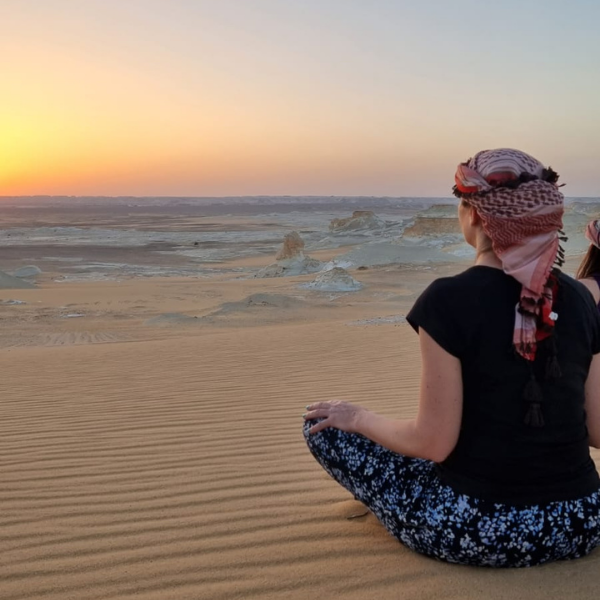
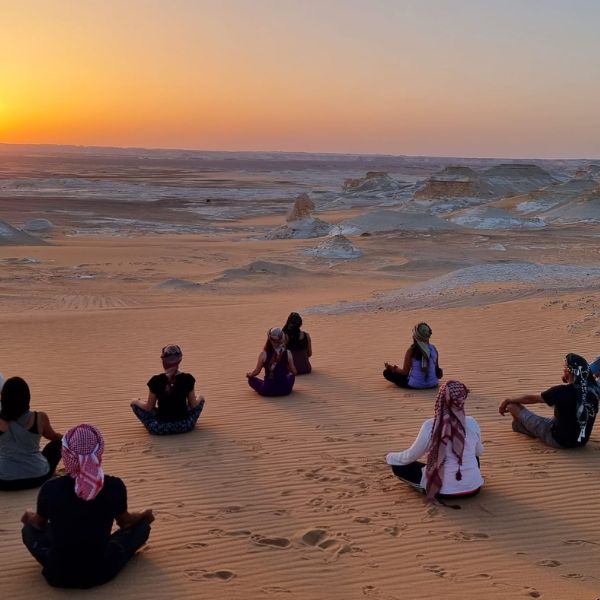
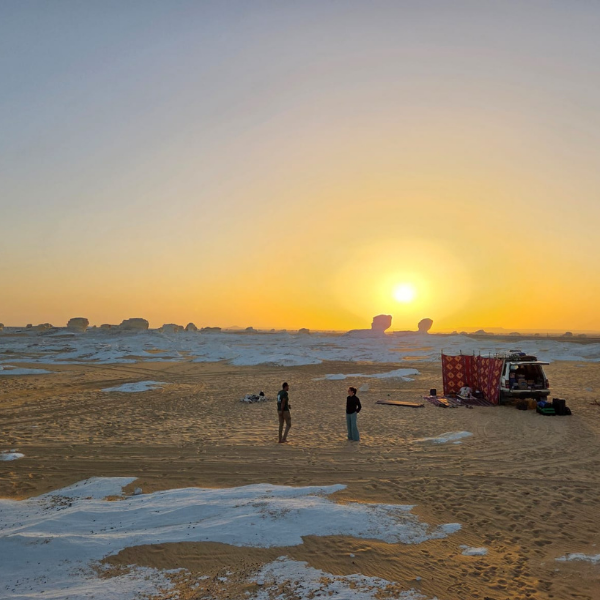
At sunset, Mushroom Rock can become a silhouette against the sky.


This works particularly well when the formation is isolated.


The challenge is itinerary timing.


You may have only one sunset during an overnight trip, and there are many excellent White Desert viewpoints competing for it.


Sunrise


Sunrise provides cooler colors followed by warm first light.


If your camp is near suitable formations, this can be fantastic.


The main advantage?


You don’t have to race the clock after the photograph.


You’re already in the desert.

How to Photograph Mushroom Rock

The obvious photograph is:


rock in the middle of frame.


Take it.


Then move on.


The more interesting photographs usually require changing perspective.


Use a Person for Scale


Without a reference point, viewers may have no idea how large the formation is.


Place a person at a safe distance beside the rock.


Suddenly the scale becomes obvious.


Go Low


A lower camera position can exaggerate the height of the pedestal.


This works well with wide-angle lenses.


But avoid physically damaging the chalk surface just to get a photograph.


Include Negative Space


One of the strengths of White Desert photography is emptiness.


Don’t fill every frame.


Allow:


sky,

desert,

and open horizon

to surround the formation.


A single isolated mushroom can look more powerful than ten rocks competing for attention.


Photograph the Texture


Move beyond wide shots.


Look at:


erosion patterns,

small cavities,

chalk layers,

fractures,

and shadows beneath the cap.


These details tell the geological story.


Watch Your Highlights


White chalk under desert sunlight is bright.


Very bright.


If you expose purely for the surrounding sand or sky, details in the chalk may disappear into pure white.


Check your camera’s histogram or highlight warnings.


For more advice, use our White Desert Photography Tips.

Can You Climb Mushroom Rock?

You shouldn’t.


Even if a formation looks solid, chalk can be fragile.


Remember:


the narrow shape exists because erosion has already removed a large amount of material.


Climbing puts additional stress on vulnerable surfaces.


It can also accelerate damage.


The White Desert is protected specifically because of its rare geological landscape.


Egypt’s Environmental Affairs Agency describes the area as a unique open-air location for studying desert environments, geographical phenomena, fossils and wildlife.


Admire the formations without treating them like playground equipment.

Can You Touch the Mushroom Rocks?

Occasional normal proximity is different from:


climbing,

scratching,

chipping,

or leaning heavily against fragile sections.


The safest principle is:


Minimize unnecessary physical contact.


There’s no need to test how soft the chalk is by scraping it.


There’s no need to carve initials.


And definitely don’t break off a “small souvenir.”


Natural monuments don’t become less protected just because there isn’t a guard standing beside every rock.

Can You Take a Piece of Chalk Home?

No.


Leave geological material where you find it.


This applies to:


chalk,

fossils,

crystals,

interesting stones,

and other natural objects.


The White Desert is a protected landscape.


One tourist taking one tiny piece sounds insignificant.


Ten thousand visitors doing the same thing isn’t.


Your photographs are the souvenir.

Are There Fossils Near Mushroom Rock?

Marine fossils occur in the wider White Desert and Farafra geological sequence.

Egypt’s official tourism information specifically mentions fossils such as:

sea urchins,

mollusks,

crustaceans,

and reef-related material

inside limestone layers.

This connects directly with the region’s marine history.

But again:

if you find something interesting, don’t remove it.

Take a photo.

Leave it where geological context is preserved.

A fossil lying in its original layer tells scientists more than the same object sitting on someone’s bookshelf.

How Do You Get to Mushroom Rock from Cairo?

For most tourists, Mushroom Rock isn’t a separate direct trip from Cairo.


Instead, you travel into the Western Desert as part of a White Desert safari.


A typical structure is:


Cairo → Bahariya Oasis


Road transfer.


Bahariya acts as the practical gateway for many Cairo-based tours.


Bahariya → Black Desert


Switch into suitable desert vehicles and begin the safari.


Black Desert → Crystal Mountain


Explore several geological environments.


Crystal Mountain → Agabat Valley


Move deeper toward the White Desert landscape.


Agabat → White Desert


Reach the chalk formations, including mushroom-shaped rocks.


This sequence is one reason the trip is so good.


Mushroom Rock isn’t the only attraction.


It’s the finale of a landscape that keeps changing.

Is Farafra or Bahariya the Better Starting Point?

Geographically, Farafra sits closer to the White Desert.


Egypt’s official tourism portal places the White Desert around 40 km from Farafra and describes Farafra as an ideal starting point for excursions into nearby desert landscapes.


But travelers coming directly from Cairo commonly use Bahariya-based itineraries because Bahariya is farther north and integrates naturally with:


Black Desert,

Crystal Mountain,

Agabat,

and White Desert.


So the “best” starting point depends on your larger route.


If you’re already traveling through New Valley and Farafra, your logistics differ from somebody doing a short safari from Cairo.

Do You Need a 4x4?

For the broader off-road White Desert safari:


yes, appropriate desert transportation is normally part of the experience.


That doesn’t mean you need a 4×4 for every kilometer from Cairo.


Road transfers and off-road sections may use different vehicles.


The key is having appropriate equipment and experienced desert drivers where it matters.


Egypt’s official tourism portal says White Desert excursions can involve:


camping,

hiking,

camel travel,

or exploring by 4×4,


and advises visitors to check current permits and regulations through their travel agency or authorized guide.

Can You Visit Mushroom Rock Without a Tour?

The White Desert shouldn’t be treated like a normal roadside photo stop.


Remote desert travel involves:


navigation,

vehicle suitability,

water,

camping logistics,

current permits,

protected-area regulations,

and emergency planning.


The official Egyptian tourism portal specifically advises visitors to check permits and regulations with an authorized tour guide or travel agency before desert excursions.


The better question isn’t:


“Can Google Maps find Mushroom Rock?”


It’s:


“Do I have the legal access, appropriate vehicle, local knowledge and logistics required for a remote protected desert area?”


For most international visitors, an organized safari is the practical answer.

How Long Should You Spend at Mushroom Rock?

Don’t plan the entire trip around one formation.


A famous mushroom formation may only require:


15,

20,

or 30 minutes


to view and photograph properly.


But the wider White Desert deserves hours.


That’s the distinction.


Your itinerary should allow time to:


walk among formations,

photograph multiple areas,

watch changing light,

camp,

and experience sunrise.


A safari where you jump out beside one mushroom rock, take three photos and immediately drive back does not represent the White Desert properly.

Is an Overnight Trip Enough?

Yes, for many first-time visitors.


A 2-day / 1-night White Desert safari can include:


Bahariya,

Black Desert,

Crystal Mountain,

Agabat,

Mushroom Rocks,

other chalk formations,

sunset,

camping,

stargazing,

and sunrise.


It’s a packed trip, but it delivers the core experience.


Explore the White Desert Overnight Tour from Cairo.

When Is a 3-Day Trip Better?

Choose three days if:


photography matters,

you want slower exploration,

you want more than one night in the desert,

or you simply dislike rushed travel.


A 3-day itinerary gives you more freedom to spend time in individual landscapes without constantly asking:


“What time do we need to leave?”


See our White Desert 3 Days Tour from Cairo.


We’ve also compared the formats in:


2-Day vs 3-Day White Desert Tour.

Can You Camp Near Mushroom Rock?

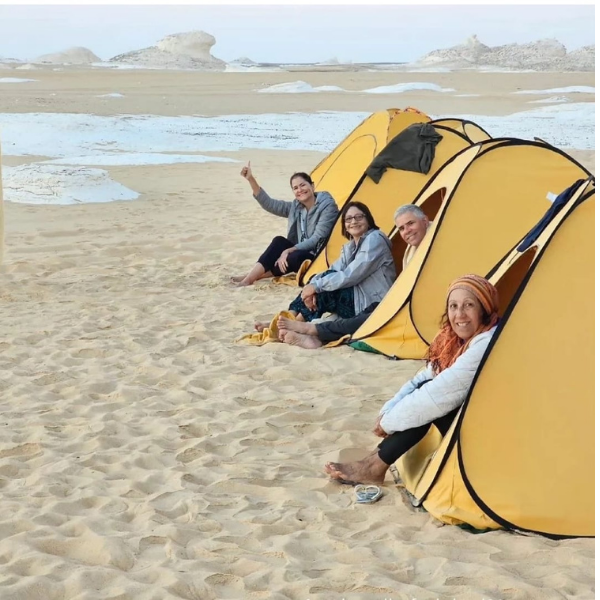
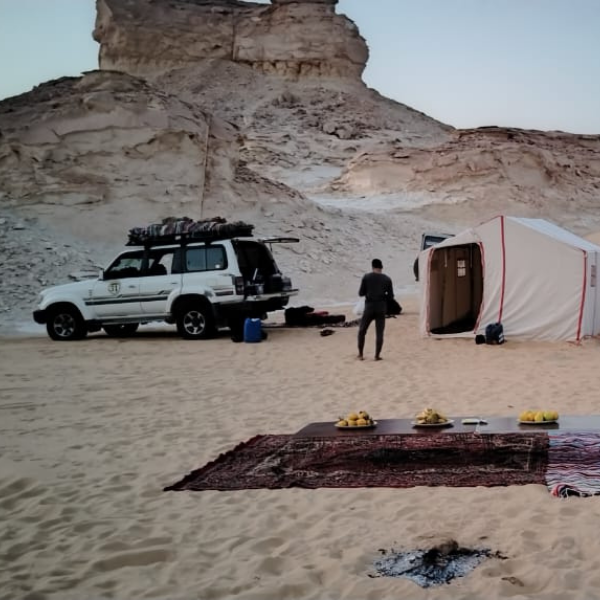
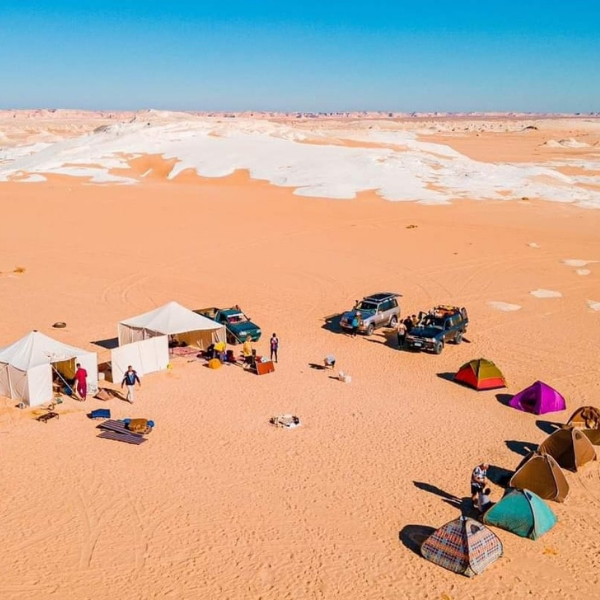
White Desert tours commonly include camping inside approved areas of the wider desert landscape.


But camping doesn’t mean:


“choose any beautiful rock and pitch a tent beside it.”


The White Desert is protected.


Specific routes and camp areas can be governed by current access and conservation requirements.


Your operator should select an appropriate campsite.


Camping somewhere slightly away from the most photographed formations can actually be better.


You get:


less vehicle disturbance,

more space,

better stars,

and a quieter sunrise.


For the full experience, read our White Desert Camping Guide.

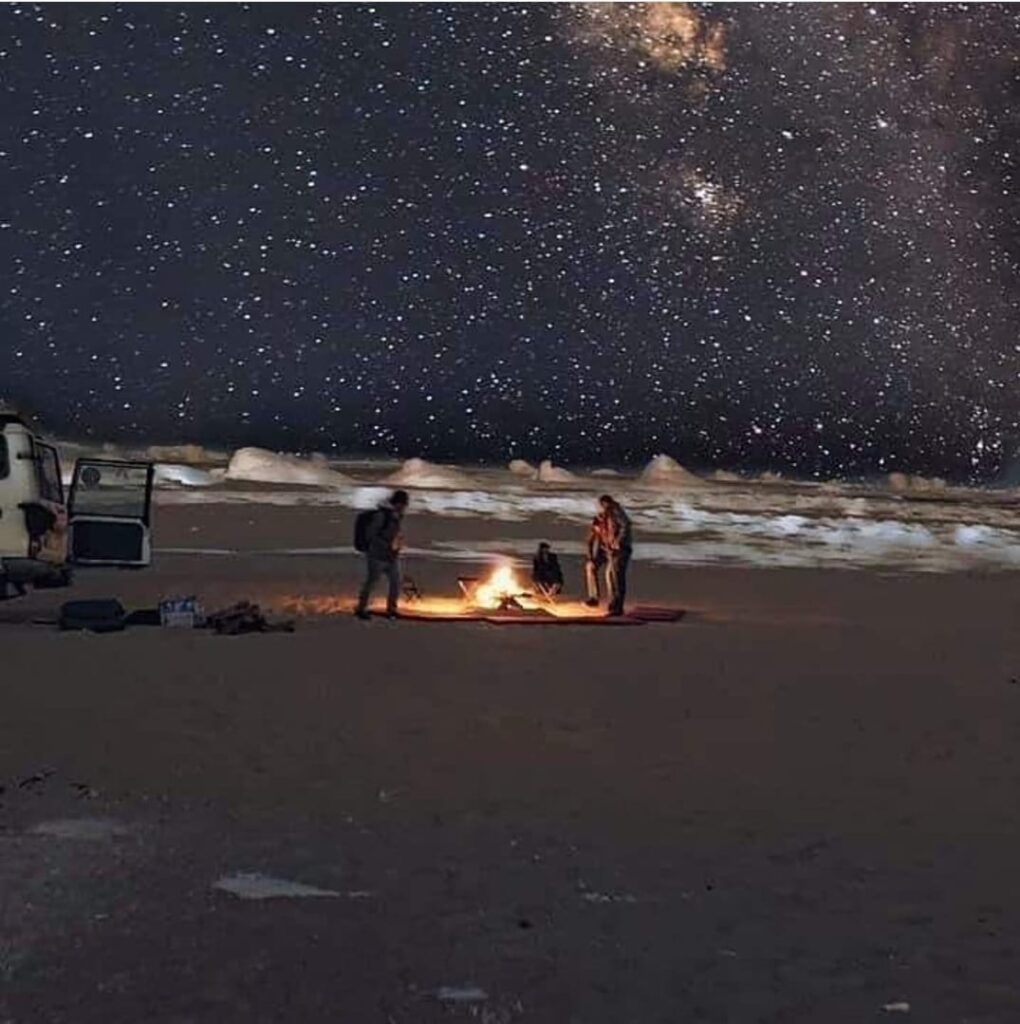
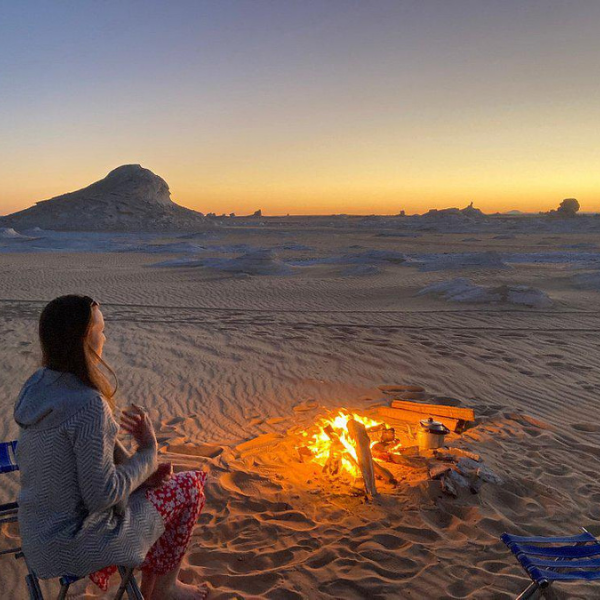
What Is Night Like in the White Desert?

Very different from Cairo.

Vehicles stop.


Tour groups settle.


Dinner is prepared.


Light levels fall.


The white rocks turn grey.


Then almost black.


If the sky is clear and the Moon isn’t too bright, stars begin dominating the scene.


A formation that looked whimsical in daylight can become almost eerie as a silhouette.


This transformation is one reason camping adds so much value.


The White Desert isn’t only a daytime landscape.


It has several personalities:


morning,

midday,

sunset,

night.

Is Mushroom Rock Good for Stargazing Photography?

As a foreground?


Absolutely.


An isolated formation can provide an excellent foreground for night-sky photographs.


However, the conditions matter more than the rock itself.


You’ll need to consider:


Moon phase,

cloud,

dust,

Milky Way position,

camera settings,

tripod stability,

and artificial light from the camp.


Avoid shining powerful lights on other people’s camps or ruining everyone’s night vision for one photograph.


Our upcoming White Desert Stargazing Guide will cover this topic in depth.

Is Mushroom Rock Worth Visiting?

Yes — within a complete White Desert journey.


Would I travel hundreds of kilometers simply to photograph one mushroom-shaped rock for ten minutes?


No.


Would I include Mushroom Rock as one highlight in a journey containing:


Black Desert,

Crystal Mountain,

Agabat Valley,

White Desert,

camping,

sunset,

stars,

and sunrise?


Absolutely.


That’s the right way to think about it.


Mushroom Rock is iconic because it visually summarizes the White Desert’s erosion story.


But the wider landscape is what makes the trip unforgettable.

Mushroom Rock vs Crystal Mountain

These two landmarks tell completely different geological stories.


Mushroom Rock


Primarily associated with chalk and limestone.


Shape produced through long-term differential erosion.


Part of the classic White Desert formation landscape.


Crystal Mountain


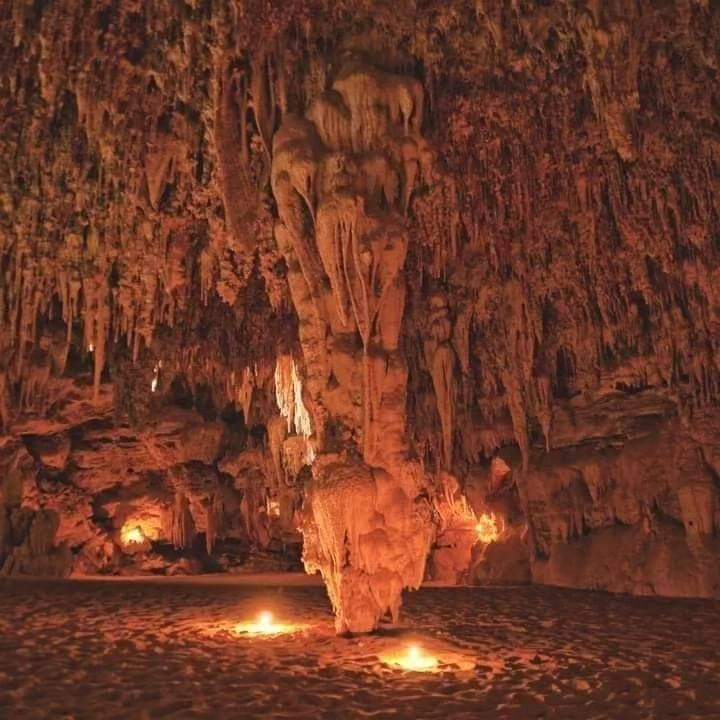
Mineral-rich geological feature associated with an ancient cave and karst system.


Known for exposed crystalline material.


Much smaller and more detailed as a stop.


Read our Crystal Mountain Egypt Guide for the full comparison.

Mushroom Rock vs Agabat Valley

Again, completely different scale.


Mushroom Rock is an individual sculptural landform.


Agabat is a giant landscape.


At Mushroom Rock, you examine:


shape,

texture,

erosion.


At Agabat, you notice:


distance,

cliffs,

dunes,

and scale.


They complement each other beautifully.


Read our Agabat Valley Egypt Guide.

Mushroom Rock vs Black Desert

The contrast is extreme.


The White Desert’s chalk is bright and pale.


The Black Desert contains dark hills and stones that produce the opposite visual impression.


Seeing both in one safari makes the geology much easier to appreciate.


Read our Black Desert Egypt Guide.

Is Mushroom Rock in the Old or New White Desert?

You may encounter different answers depending on the specific formation and guide.


That’s because Old White Desert and New White Desert are informal itinerary labels.


They are not two separate formally mapped national parks with an official boundary line between them.


Multiple mushroom formations occur across the wider White Desert.


If you want to understand this naming issue before booking, read:


Old White Desert vs New White Desert Egypt.

Is Mushroom Rock Safe to Visit?

The formation itself doesn’t involve technical climbing or extreme physical activity if you’re simply viewing it responsibly.


The larger safety issue is the desert environment.


You’re dealing with:


remote terrain,

sun exposure,

limited facilities,

potentially weak phone reception,

and significant distances from major medical services.


Travel with experienced operators.


Stay hydrated.


Don’t wander away alone.


Follow current route and permit requirements.


And resist the urge to climb fragile formations for photos.


For detailed planning, read our White Desert Egypt Safety Guide.

What Should You Wear?

For normal exploration:


comfortable closed shoes,

breathable clothing,

hat,

sunglasses,

and sunscreen

are useful.


For overnight camping, add warmer layers.


Desert temperatures can shift quickly once the Sun disappears.


And because the White Desert surface is bright, don’t underestimate reflected sunlight during the day.


For the full list, read our What to Pack for White Desert Egypt.

Responsible Travel Around Mushroom Rock

Mushroom Rock survived natural erosion for an extraordinary amount of time.


A visitor can damage it in seconds.


Please do not:


climb fragile formations,

break chalk,

scratch names,

remove pieces,

move fossils,

leave rubbish,

or drive too close purely for a photograph.


Egypt’s environmental authority considers the White Desert important for its rare geological formations, fossils, desert environments and wildlife.


Protected doesn’t mean indestructible.


And remote doesn’t mean nobody cares.

Why Mushroom Rock Matters Beyond Tourism

These formations are visually beautiful.


But they also have educational value.


Researchers studying Bahariya and Farafra describe the region as having significant geological heritage with strong potential for geotourism and geoeducation because travelers can observe sedimentary rocks, fossils, mineral features, ancient environmental evidence and unusual landforms within the same desert region.


Mushroom Rock makes geology understandable.


You don’t need laboratory equipment to see erosion.


You can literally look at:


a narrow base,

a broad cap,

and the surrounding desert

and begin asking:


Why did this part disappear while that part survived?


That’s science happening in front of you.

Plan Your Mushroom Rock & White Desert Safari

Mushroom Rock is one of the White Desert’s most recognizable icons.


But don’t make the mistake of reducing the destination to one photograph.


The real experience begins much earlier.


Leave Cairo.


Reach Bahariya.


Watch the landscape change.


Enter the Black Desert.


Stop at Crystal Mountain.


Drive through Agabat Valley.


Then reach the pale White Desert.


Walk between formations that began as marine sediment millions of years ago.


Watch Mushroom Rocks turn gold under the evening Sun.


Stay after darkness.


See the stars.


Wake for sunrise.


That’s how the formation fits into the bigger journey.


For the complete experience, explore the White Desert Safari from Cairo.


For the classic overnight safari, see the White Desert Overnight Tour from Cairo.


For more time in the landscape, explore the White Desert 3 Days Tour from Cairo.


And compare all available experiences through Egypt Desert Dunes Tours.

- Tours Carousel
✓ Available on Viator

Book Egypt Desert Dunes Tours on Viator

Discover our private White Desert camping adventures and Siwa Oasis experience. Choose your favorite itinerary and complete your reservation securely through Viator.

✓ Private Tours
✓ Cairo Pickup
✓ Mobile Ticket
✓ English Speaking Team
✓ Book Through Viator
4-Day Private White Desert Camping Tour from Cairo by Egypt Desert Dunes
✓ Book on Viator
Private Tour
White Desert • Bahariya Oasis • Egypt
⏱ 4 Days / 3 Nights ★ 5.0 (4 Reviews)

4-Day Private Camping Tour in the White Desert from Cairo

Go deeper into Egypt's Western Desert with a private four-day camping adventure including spectacular desert landscapes, Black Desert, White Desert, open-air meals and three nights beneath the stars.

Cairo Pickup Private Tour Desert Camping Meals Included
Reference price from
€588 / person*
Check Viator for today's live price
View on Viator →
2-Day 1-Night White Desert Camping Tour from Cairo by Egypt Desert Dunes
✓ Book on Viator
Best Short Trip
White Desert • Black Desert • Egypt
⏱ 2 Days / 1 Night ★ 5.0 (3 Reviews)

2-Day, 1-Night Camping Tour in White Desert from Cairo

Our most compact White Desert adventure for travelers who want to experience the desert from Cairo, explore its unique landscapes and spend an unforgettable night camping beneath the stars.

1 Night Camping Cairo Pickup Breakfast Lunch & Dinner
Reference price from
€197 / person*
Price varies by date and group size
View on Viator →
3-Day Private White Desert Camping Tour from Cairo by Egypt Desert Dunes
✓ Book on Viator
Popular Choice
Black Desert • Aqabat • White Desert
⏱ 3 Days / 2 Nights ★ 5.0 (5 Reviews)

3-Day Private Camping Tour of White Desert from Cairo

Spend three days exploring the Western Desert, including the Black Desert, Crystal Mountain, Aqabat area and White Desert, with two nights of private desert camping.

2 Nights Camping Black Desert White Desert Private Experience
Reference price from
€394 / person*
Check Viator for today's live price
View on Viator →
4-Day Siwa Oasis Trip from Cairo by Egypt Desert Dunes
✓ Book on Viator
Siwa Experience
Siwa Oasis • Western Desert • Egypt
⏱ 4 Days Egypt Desert Dunes • 14 Operator Reviews

Siwa Oasis Trip with Cairo Pick Up

Travel from Cairo to legendary Siwa Oasis on a private four-day journey exploring Siwan culture, desert landscapes, Lake Siwa, traditional sites and some of the oasis's most distinctive attractions.

4 Days Cairo Pickup Siwa Hotel Meals Included
Reference price from
$1,150 / adult*
Check Viator for today's live price
View on Viator →
*Important: Prices shown above are reference “from” prices observed while reviewing the listings and may change based on travel date, number of travelers, availability, currency and Viator pricing. Click “View on Viator” for the current final price before booking.

Explore Egypt's Desert with Egypt Desert Dunes

From a one-night White Desert camping adventure to extended Western Desert and Siwa Oasis experiences, choose the itinerary that matches your travel style and complete your booking through Viator.

Explore Our Tours →
Plan Your Desert Adventure

Book a Tour or Create Your Own Egypt Experience

Choose one of our ready-made tours or customize your own private journey. Select your destinations, duration and travel style, then send your request directly to Egypt Desert Dunes on WhatsApp.

Book Your Desert Tour

Select your preferred itinerary and send us your travel details. Our team will reply on WhatsApp with availability and the final quote.

Choose Your Tour *
Please select a tour and complete your name, travel date and number of travelers.
Your booking request will open directly in WhatsApp. No payment is made through this form.

Create Your Own Private Egypt Tour

Combine Cairo, Giza, Fayoum, the Western Desert and Siwa in one custom itinerary. Choose the destinations and experiences you want and our team will recommend the best route based on your available days.

Which Places Would You Like to Visit? *
Select as many destinations as you like. Egypt Desert Dunes will recommend the best route according to your trip duration.
What Are You Most Interested In?
Please enter your name, number of travelers, trip duration and select at least one destination.
Egypt Desert Dunes will review your selections and send you a customized itinerary and quotation on WhatsApp.

FAQ — Mushroom Rock White Desert Egypt

What is Mushroom Rock in Egypt? +

Mushroom Rock refers to naturally eroded chalk and limestone formations in Egypt's White Desert that have narrow bases and wider upper sections resembling giant mushrooms.

Where is Mushroom Rock in Egypt? +

Mushroom-shaped rock formations occur across the White Desert near Farafra Oasis in Egypt's Western Desert. The White Desert lies approximately 40 km from Farafra according to Egypt's official tourism authority.

Is there only one Mushroom Rock in the White Desert? +

No. The White Desert contains many mushroom-shaped formations. Some individual rocks have become more famous through tourism photography and local nicknames, but mushroom-style landforms occur throughout the wider landscape.

How was Mushroom Rock formed? +

Mushroom Rock formed through long-term differential weathering and erosion. Wind, windblown sand, water, fractures and differences in rock hardness caused weaker sections to erode faster than more resistant sections.

What is Mushroom Rock made of? +

The White Desert's famous formations consist mainly of pale chalk and chalky limestone associated with the ancient sedimentary rocks of the Farafra Depression.

Why is Mushroom Rock white? +

The rock is pale because it contains calcium-carbonate-rich chalk and limestone. Geological research describes part of the White Desert succession as snow-white chalky limestone.

Was Mushroom Rock formed underwater? +

The sedimentary rocks from which the formation developed originated in ancient marine environments. The White Desert still contains marine fossils that record this history.

Is Mushroom Rock man-made? +

No. The mushroom shapes are entirely natural and were created by geological weathering and erosion over very long periods.

Can you climb Mushroom Rock? +

Visitors should avoid climbing fragile chalk formations. Climbing can damage vulnerable surfaces and accelerate erosion in the protected White Desert landscape.

Can you take pieces of Mushroom Rock home? +

No. Visitors should leave chalk, rocks, fossils and other geological material where they find them.

Can you visit Mushroom Rock from Cairo? +

Yes. Most travelers visit the White Desert from Cairo as part of an organized safari, commonly traveling first to Bahariya Oasis before continuing through the Western Desert by suitable vehicles.

Do you need a 4x4 to visit Mushroom Rock? +

Suitable off-road vehicles are normally used for the desert portion of White Desert safari itineraries. Current access requirements and permits should be arranged through an experienced authorized operator.

Can you camp near Mushroom Rock? +

White Desert safaris commonly include camping within approved areas of the wider landscape. Exact camp locations depend on the itinerary and current protected-area regulations.

What is the best time to photograph Mushroom Rock? +

Late afternoon, sunset and sunrise can create longer shadows and reveal more texture, while midday produces the strongest contrast between bright white chalk and blue sky.

How many days do you need to see Mushroom Rock? +

A 2-day/1-night White Desert safari is enough for a first visit, while a 3-day itinerary provides more time for photography, walking, camping and exploring additional formations.

Traveler Reviews

What Our Guests Say on Tripadvisor

Real experiences from travelers who explored Egypt’s deserts, oases, and cultural landmarks with Egypt Desert Dunes. Read their Tripadvisor reviews and discover why guests choose us for private desert safaris, camping adventures, and unforgettable Egypt tours.

Leave a Comment

Your email address will not be published. Required fields are marked *