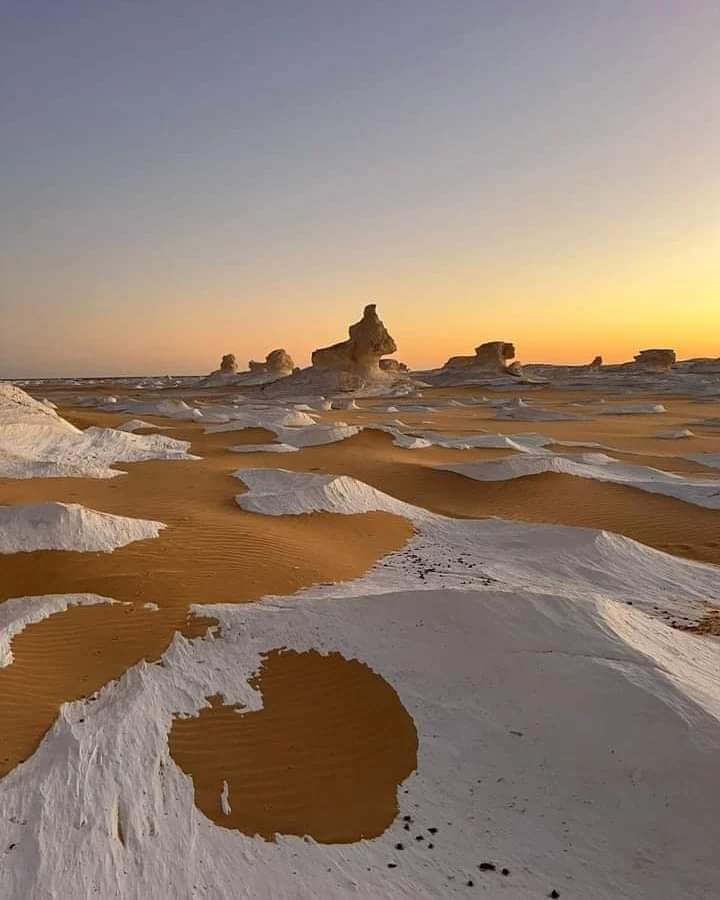
Why Is Egypt’s White Desert White? Geology & Formation Explained

At first glance, Egypt’s White Desert looks almost impossible.


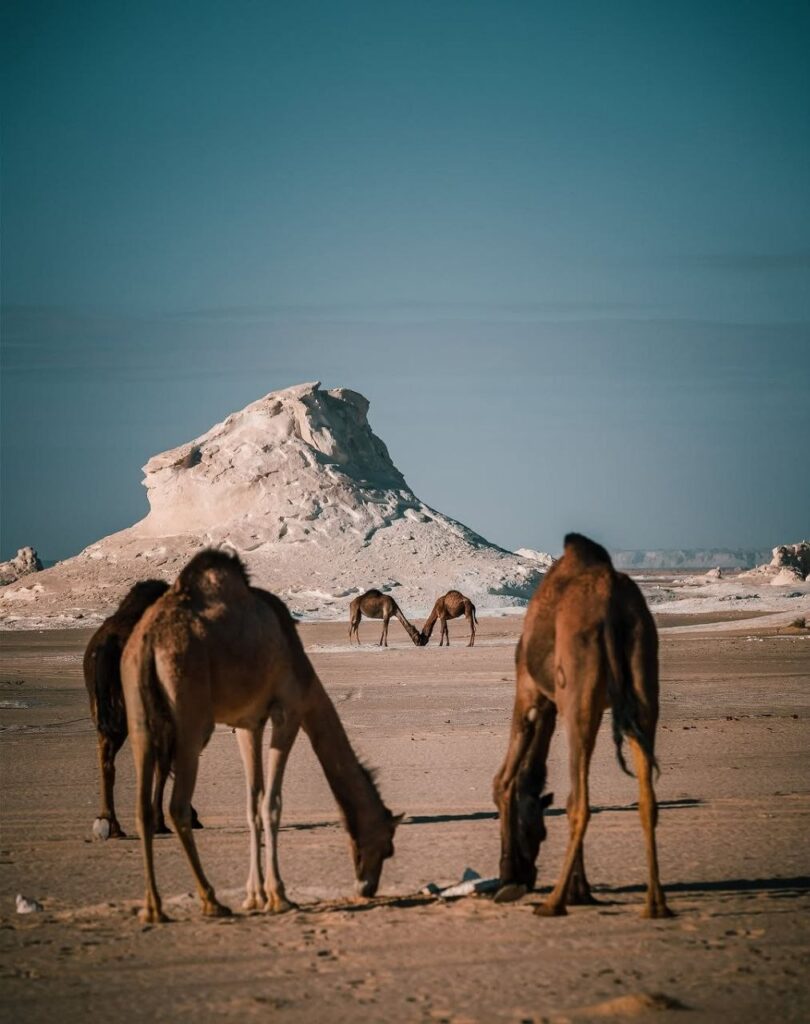
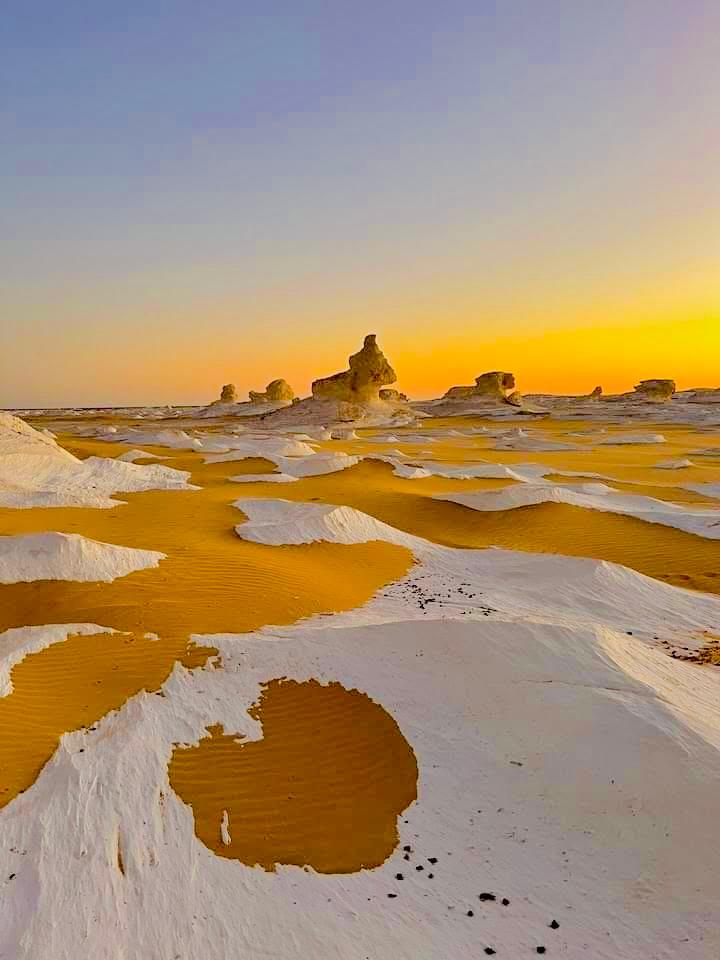
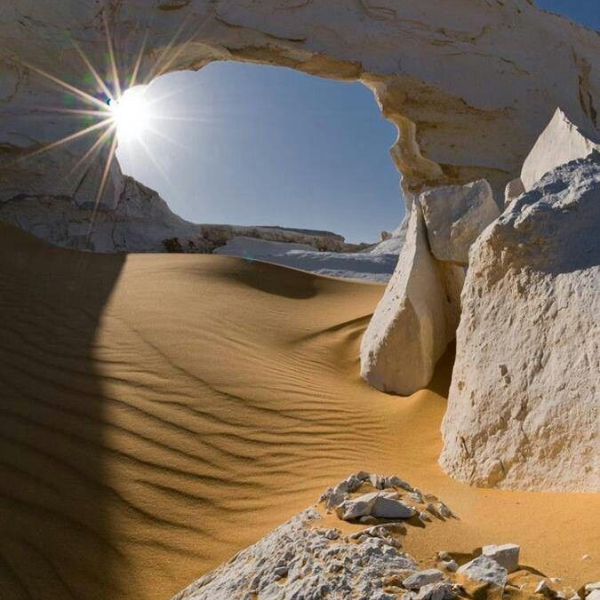
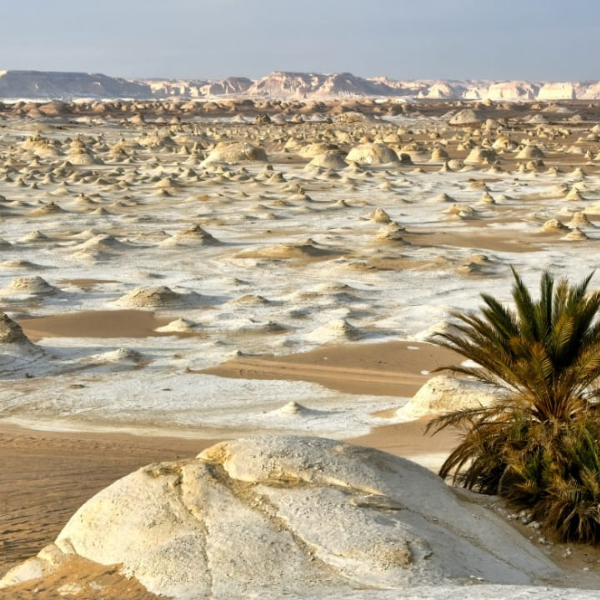
You are standing in the Sahara, yet instead of the golden and reddish sand most people associate with a desert, the landscape ahead can look as if it has been covered by snow.


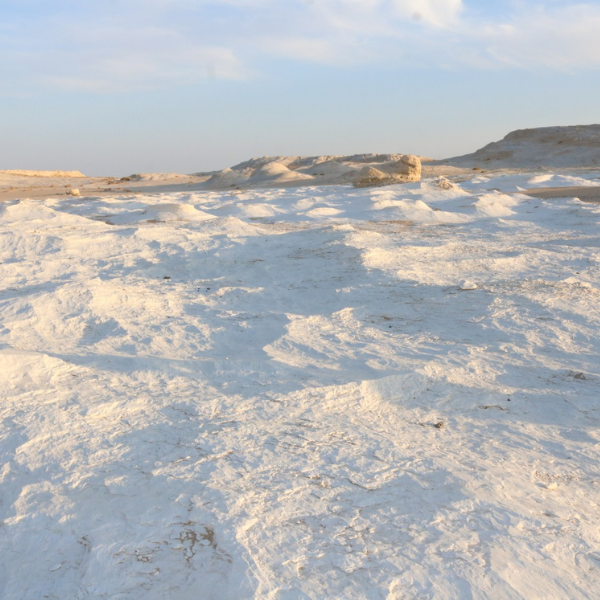
The ground is pale.


Huge white rocks rise from the desert.


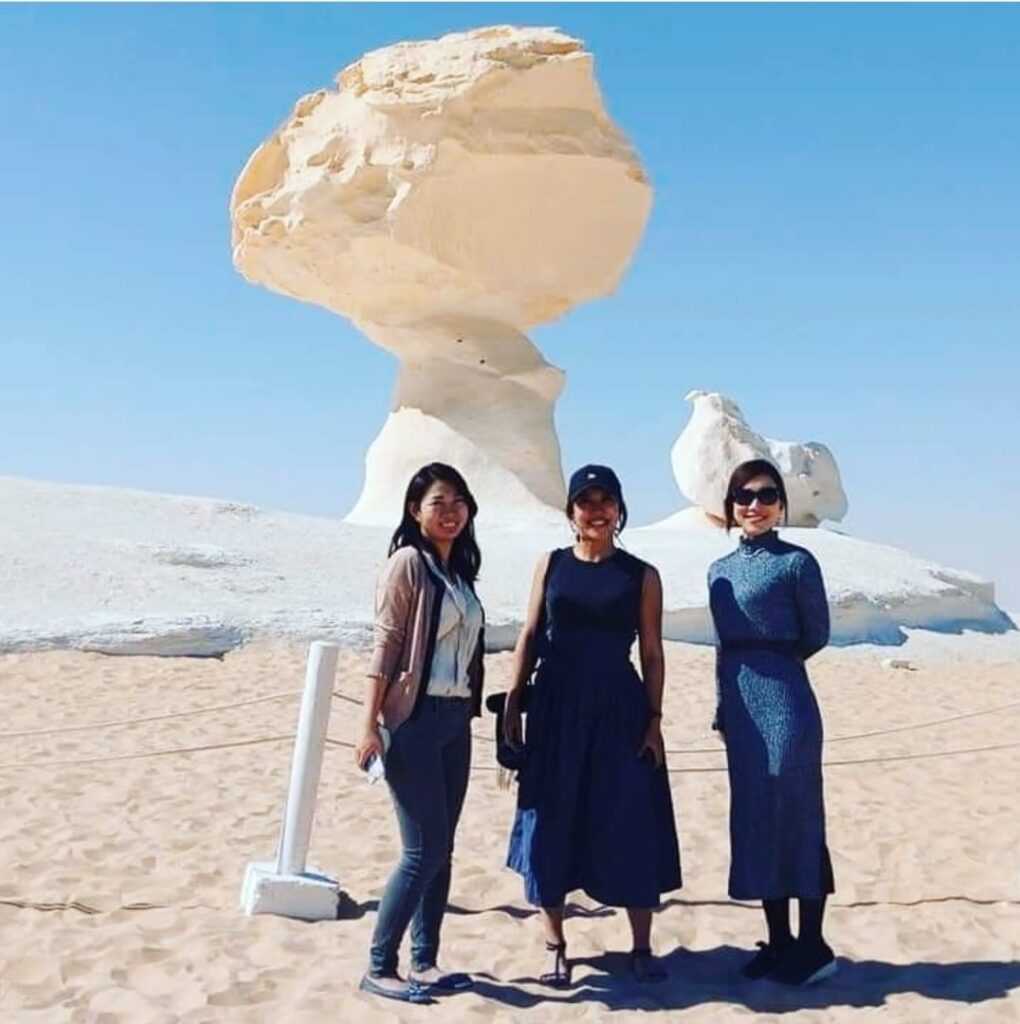
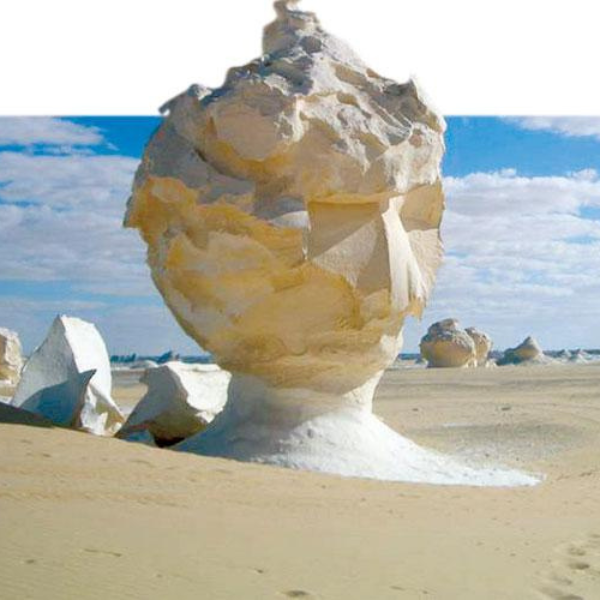
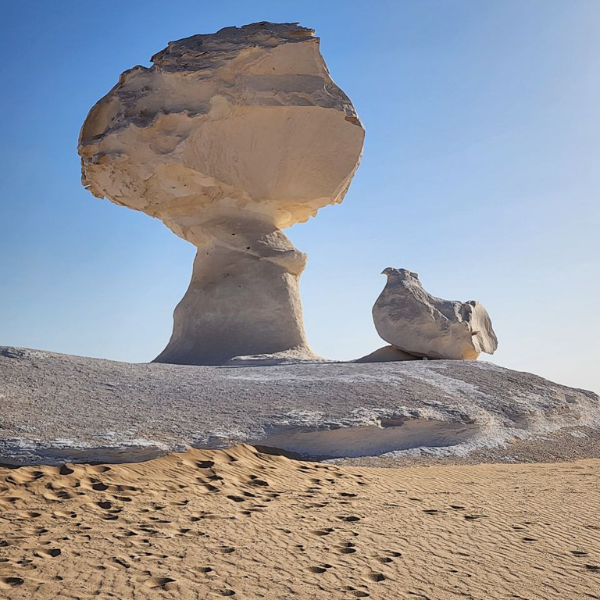
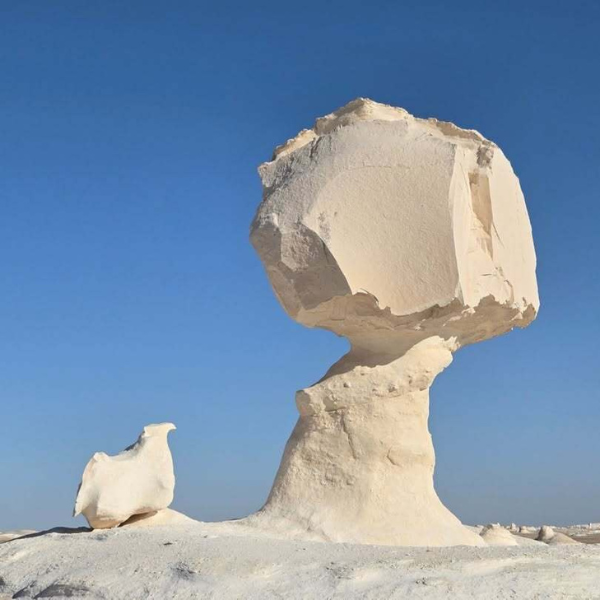
Some resemble mushrooms.


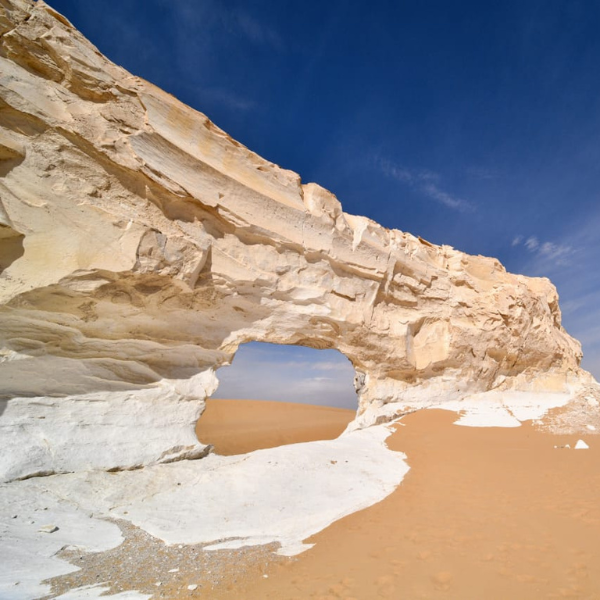
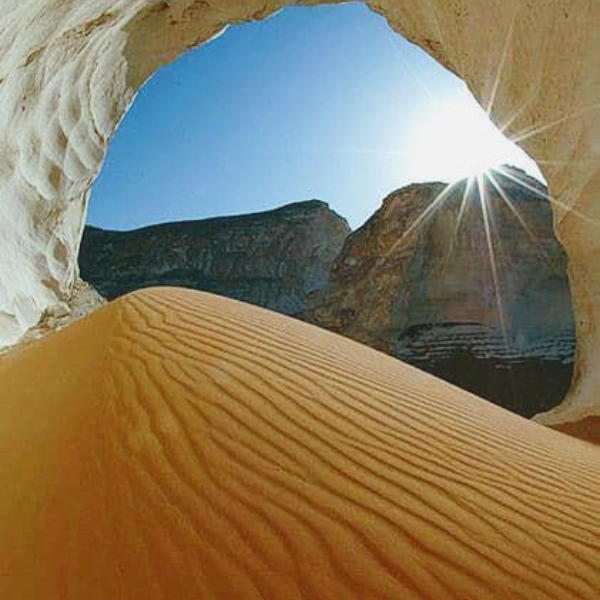
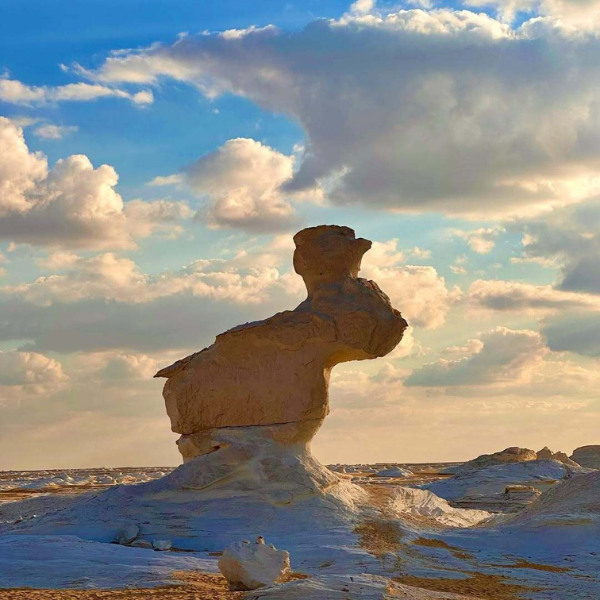
Others look like towers, animals, giant pieces of ice or sculptures deliberately placed across the landscape.


So why is Egypt’s White Desert actually white?


The short answer is:


The White Desert is white because much of its landscape is formed from extremely pale chalk and chalky limestone — calcium-carbonate-rich sedimentary rocks that were originally deposited in an ancient marine environment millions of years ago.


These rocks were later exposed and sculpted by geological uplift, water, weathering and prolonged erosion, including powerful wind action.


Egypt’s Environmental Affairs Agency describes the White Desert as having a floor of white chalk covered by striking snow-white chalk pillars produced by erosion and wind. It also identifies the Farafra area’s white chalk layer as part of a widespread geological rock unit.


Scientific research adds another important layer to the story.


Studies of the Farafra region describe the White Desert rocks as part of the Khoman Formation, including a distinctive unit of snow-white chalky limestone deposited during the Late Cretaceous, particularly the Maastrichtian age.


In other words:


The White Desert isn’t white because somebody poured pale sand across the Sahara.


You’re looking at the remains of an ancient marine geological world that has been exposed and transformed into one of Egypt’s most unusual landscapes.

If you’re planning a visit, start with our complete White Desert Egypt guide.


If you want to see the formations as part of an actual desert journey, explore the White Desert Safari from Cairo.

- Tours Carousel

White Desert Geology at a Glance

Question

Quick answer

Why is the White Desert white?

Because much of the exposed bedrock is pale chalk and chalky limestone rich in calcium carbonate

Is it white sand?

No. The defining white landscape comes primarily from chalky rock

Is it salt?

No. Salt occurs elsewhere in Egyptian deserts, but it is not what creates the White Desert’s famous chalk sculptures

Was the area once underwater?

Yes. Its sedimentary rocks record ancient marine environments

How old are the main chalk rocks?

Much of the Khoman chalk dates to the Late Cretaceous, around the Maastrichtian stage

What is chalk made from?

Mainly calcite/calcium carbonate, much of it originating from microscopic marine organisms

Are there fossils?

Yes. Marine fossils occur in the White Desert and Farafra sedimentary layers

What created the mushroom shapes?

Long-term differential erosion and weathering, including strong wind action

Is the landscape still changing?

Yes. Erosion continues today

Is the White Desert protected?

Yes. It was declared a protected area in 2002

The White Desert Is Not Made of White Sand

This is probably the first misconception worth clearing up.


When people hear the word “desert,” they usually imagine sand.


So when they see photographs of the White Desert, they understandably assume the white color comes from unusually pale sand.


But the defining geology of the White Desert is rock.


Egypt’s Environmental Affairs Agency describes the landscape as containing bright white limestone formations and a ground surface dominated by white chalk.


Scientific studies of the Farafra Depression identify widespread chalk, chalky limestone and carbonate rocks, particularly rocks belonging to the Khoman Formation.


Sand certainly exists throughout the landscape.


Large sand dunes occur across parts of the Farafra Depression and surrounding Western Desert.


But the surreal white sculptures that made the destination famous are primarily eroded chalk and limestone.


That’s an important distinction.


The landscape isn’t simply:


a white-colored version of ordinary sand dunes.


It is fundamentally geological.

What Is Chalk?

To understand the White Desert, we need to understand chalk.


Chalk is a type of limestone.

It is usually:


soft,

fine-grained,

porous,

light-colored,

and rich in calcium carbonate, primarily in the mineral form calcite.


But where does that calcium carbonate come from?


In many chalk deposits, the answer is microscopic marine life.


Marine organisms such as foraminifera and calcareous plankton produce tiny calcium-carbonate shells or skeletal plates.


When those organisms die, their remains can settle onto the seabed.


Layer after layer accumulates.


Over enormous periods of time, those carbonate-rich sediments become compacted and transformed into chalk.


U.S. Geological Survey material describes pelagic chalk as being dominated by microscopic skeletal components such as coccoliths and foraminifera and notes that carbonate ooze can progressively transform into chalk and eventually limestone during burial.


NASA likewise explains that coccolithophores are microscopic ocean organisms that surround themselves with tiny plates made from calcite.


So when you’re standing beside a White Desert chalk formation, you’re looking at rock connected to an ancient marine ecosystem.


That’s considerably stranger than simply standing beside white sand.

Was Egypt's White Desert Once Under the Sea?

Yes — and this is one of the most fascinating facts about the destination.


The geological layers around Farafra preserve evidence of ancient marine environments.


Egypt’s official tourism portal describes the White Desert as originating from an ancient seabed and notes that visitors can encounter marine fossils within the limestone layers, including remains associated with sea urchins, mollusks, crustaceans and reef organisms.


Scientific studies support that marine interpretation.


Research into the Farafra rock sequence identifies marine carbonate deposits extending from the Upper Cretaceous into younger Paleogene rocks. Studies of the Khoman, Tarawan and Farafra formations use microscopic marine fossils and sedimentary structures to reconstruct changing ancient sea environments.


Try to picture the transformation.


Today:


dry desert.

Very little rain.

Huge open skies.

Sand and chalk.


Millions of years ago:


marine water,

sediment accumulating on or near the seafloor,

microscopic plankton,

shell-producing organisms,

carbonate mud.


The landscape did not simply “turn white.”


The material responsible for the whiteness began forming under completely different environmental conditions.

How Old Is the White Desert?

This question needs a careful answer because there are several different ages involved.


You may see tourism websites say:


The White Desert is 30 million years old.


Egypt’s official tourism portal itself describes the natural art gallery as having been “in the making” for around 30 million years.


That can work as a simplified description of landscape evolution.


But it does not mean all the white rock was deposited exactly 30 million years ago.


The bedrock is older.


Scientific research from the Farafra region identifies major White Desert chalk within the Khoman Formation, dating to the Late Cretaceous — particularly the Maastrichtian — tens of millions of years earlier.


The geological story therefore has several stages:


  1. Ancient marine sediments were deposited.
  2. Those sediments became chalk and limestone.
  3. Sea levels and environments changed.
  4. The region was uplifted and exposed.
  5. Erosion carved the broader Farafra Depression.
  6. Wind, water and weathering continued shaping the exposed rock.
  7. The unusual formations we see today gradually emerged.

So asking:


“How old is the White Desert?”

is a little like asking how old the Grand Canyon is.

Do you mean the rock?

The landscape?

The valley?

Or the current shapes?


They don’t all have the same age.

What Is the Khoman Formation?

You’ll see this term repeatedly if you read geological research about Farafra.


The Khoman Formation is a major Upper Cretaceous rock unit exposed across parts of Egypt’s Western Desert.


In the Farafra area, it includes extensive white chalk.


One recent stratigraphic study subdivided the Khoman Formation in the Aqabaat area into three members and identified the basal White Desert Member as consisting of snow-white chalky limestone.


Other geological research describes the Khoman chalk as covering much of the Farafra Depression and explains that erosion of these carbonate deposits produced the spectacular landforms associated with White Desert National Park.


This is one reason “White Desert” isn’t just a poetic travel nickname.


The whiteness is literally built into the geology.

Why Is Chalk So White?

The color is closely tied to its mineral composition.


Chalk is dominated by calcium carbonate, especially calcite.


When relatively pure and not heavily mixed with darker minerals or iron-rich material, calcite-rich chalk can appear white or very pale.


That’s why the exposed surfaces reflect so much sunlight.


During the middle of the day, the landscape can become almost visually harsh.


Bright sun hits pale rock.


Pale ground reflects light upward.


The effect can make the White Desert look closer to:


snow,

ice,

or bleached stone

than a conventional Sahara scene.


Later in the day, the same rock changes appearance.


The white surfaces pick up warm sunlight and become:


cream,

yellow,

gold,

pink,

and eventually grey-blue after sunset.

The geology doesn’t change.

The light does.


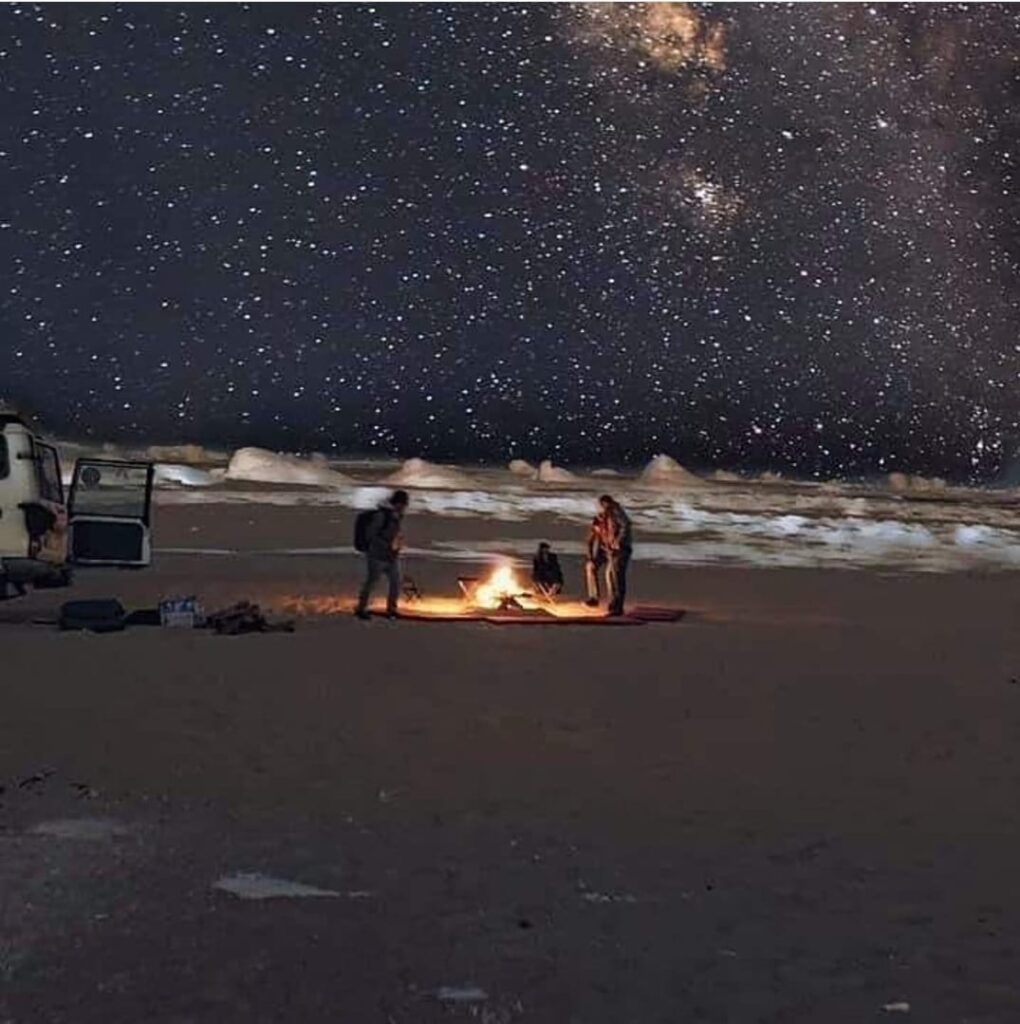
That’s why White Desert photography can look dramatically different depending on time of day.


For shooting advice, read our White Desert Photography Tips.

Why Doesn't the Whole Western Desert Look White?

Because Egypt’s Western Desert contains many different rock types.


This becomes obvious during a safari.


You can travel from Bahariya Oasis into the Black Desert and see dark hills containing materials very different from White Desert chalk.


Egypt’s Environmental Affairs Agency describes parts of the Black Desert as containing hills formed from dark dolerite, iron-rich quartzite and iron-bearing sandstone, alongside some lighter limestone.


Then continue toward:


Crystal Mountain,

Agabat Valley,

and the White Desert,

and the colors change again.


That’s what makes the Western Desert journey so interesting.


You’re not crossing one homogeneous desert.


You’re crossing a geological mosaic.


Read our Black Desert Egypt Guide to see how dramatically different nearby landscapes can be.

How Did the White Desert Form?

There isn’t one single process.


The White Desert is the result of a sequence of geological events.


Stage 1: Marine Sediments Accumulated


The story begins underwater.


Marine organisms lived and died.


Fine carbonate-rich sediment accumulated.


Microscopic shells and skeletal material contributed calcium carbonate.


Over time, these deposits became chalk and limestone.


Stage 2: Sediments Became Rock


As additional sediment accumulated, burial, compaction and chemical processes transformed loose carbonate sediment into chalk and harder limestone.


Geologists call these post-depositional changes diagenesis.


Different layers acquired different properties.


Some became harder.


Others remained softer and more porous.


That variation later became important for erosion.


Stage 3: The Region Was Exposed


Sea level and regional geology changed.


The old marine sediments eventually became part of dry land.


Tectonic movements and long-term uplift helped expose the sedimentary succession.


Instead of sitting beneath water and younger sediment, portions of the chalk and limestone were now vulnerable to erosion.


Stage 4: The Farafra Depression Developed


Scientific studies of Farafra describe the depression as having been excavated through a combination of water and wind erosion over long periods.


The region also records periods of wetter climate than today.


Research into Farafra describes past rainfall, palaeolakes and drainage processes that existed when the Sahara’s climate was very different.


This matters because the modern Sahara is not a perfect guide to its past.


Today’s dry desert preserves evidence of:


rivers,

lakes,

wetlands,

and wetter climatic periods.


Stage 5: Erosion Sculpted the Chalk


Once exposed, chalk was attacked by:


wind,

moving sand,

temperature changes,

occasional water,

chemical weathering,

and differential erosion.


Egypt’s official environmental management plan specifically describes abundant White Desert chalk stacks and notes that their pitted and sometimes polished surfaces are characteristic of wind action. It also says such stacks are particularly common where prevailing wind directions align with joints in the rock.


Over time, softer portions disappear faster than harder ones.


What remains can become:


pillars,

pedestals,

mushrooms,

towers,

and isolated blocks.

Did Wind Create the White Desert?

Yes — but saying “wind created the White Desert” is too simplistic.


Wind is clearly one of the major sculpting forces.


The Egyptian protected-area management plan specifically associates the pitted and polished surfaces of chalk stacks with wind action.


Wind carries sand.


Sand acts almost like abrasive material.


Over long periods, repeated impacts wear exposed rock.


But wind isn’t the beginning of the story.


Without:


the ancient sea,

marine sedimentation,

chalk formation,

tectonic exposure,

fractures and joints,

periods of wetter climate,

water erosion,

and differences in rock hardness,

there would be no spectacular chalk sculptures for the wind to shape.


The most accurate explanation is:


The formations are products of long-term differential erosion operating on ancient sedimentary rocks.


Wind is an important sculptor.


It isn’t the only geological actor.

Why Are There Mushroom-Shaped Rocks?

Mushroom rocks are the White Desert’s most famous formations.


They usually have:


a narrower lower section

supporting

a wider upper section.


Why?


Because erosion doesn’t attack every part of a rock at the same rate.


Near the ground, wind-driven sand can create strong abrasion.


Differences in:


rock hardness,

layering,

fractures,

surface exposure,

and moisture


can also cause lower or weaker parts to weather faster than more resistant sections.


Eventually the base becomes narrower while a larger cap remains.


The result looks like a giant stone mushroom.


You can see examples and other shapes in our White Desert Rock Formations Guide.

Were the Formations Carved by People?

No.


Despite how sculptural they look, the famous White Desert formations are natural.


Nobody carved the mushroom rocks.


Nobody built the towers.


Nobody sculpted the animal-like forms.


Humans simply give familiar names to shapes created by geological processes.


A formation may resemble:


a rabbit,

chicken,

camel,

face,

sphinx,

or mushroom

because our brains naturally search for recognizable patterns.


Another traveler might look at the same rock and see something completely different.


That’s part of the fun.

What Are White Desert Fossils?

Because the White Desert’s rocks formed in marine environments, fossils occur throughout the wider Farafra geological succession.


Egypt’s official tourism portal mentions:


sea urchins,

mollusks,

crustaceans,

and reef-related fossils

within limestone layers.


Geological studies also identify abundant microfossils such as planktonic and benthic foraminifera, which scientists use to determine rock ages and reconstruct ancient environments.


For geologists, those fossils aren’t just interesting objects.


They’re evidence.


They can help answer questions such as:


How deep was the water?

How warm was it?

How old is this layer?

Was sea level rising or falling?

What organisms lived here?


That’s why the White Desert is much more than a photography destination.


It’s effectively an enormous outdoor geology museum.

Can You Collect Fossils in the White Desert?

Don’t.


The White Desert is a protected landscape.


Egypt’s Environmental Affairs Agency officially lists it as a natural protected area declared in 2002.


Fossils, geological formations and archaeological material belong where they are.


Taking one small piece may feel harmless.


But multiply that by thousands of visitors and the damage becomes obvious.


The responsible rule is easy:


Look. Photograph. Leave it.


The same applies to chalk, crystals and unusual stones.

Is the White Desert Limestone or Chalk?

Both terms can be correct depending on the layer and level of detail.


Chalk itself is a type of limestone.


More specifically, it is usually a soft, fine-grained carbonate rock composed mostly of calcium carbonate.


The Farafra region includes:


chalk,

chalky limestone,

harder limestone,

dolostone,

shale,

sandstone

and other sedimentary units.


So describing the entire area as simply:


“chalk”


is useful for tourists but geologically simplified.


Likewise, calling everything:


“limestone”


isn’t wrong, but it hides the variations that help create the landscape.


Those differences matter because rocks of different hardness weather differently.


Differential erosion helps turn a once-continuous layer into separate pillars and sculptures.

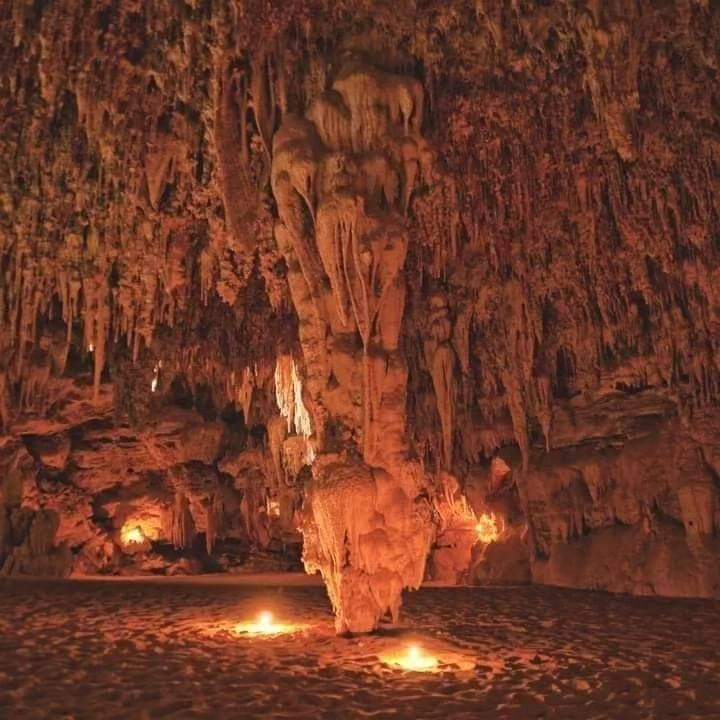
Is Crystal Mountain Made from the Same Rock?

Not exactly.


Crystal Mountain lies on the wider Western Desert safari route, but its story is different.


It is famous for exposed crystalline mineral deposits associated with ancient karst and cave systems.


Scientific research from the area documents significant calcite mineralization, rather than supporting the common internet description that it is simply a mountain made entirely from quartz.


We’ve explained this separately in our Crystal Mountain Egypt Guide.


This is another reason the safari route is so geologically interesting.


In a relatively short journey, you can see several completely different geological environments.

How Does Agabat Valley Fit Into the Story?

Agabat is another transition.


Instead of dense White Desert chalk sculptures, you see enormous pale cliffs rising above golden sand.


Research at the Aqabaat section is particularly important because geologists have studied the Upper Cretaceous–Eocene sedimentary succession there in detail.


For travelers, however, the most immediate difference is visual.


Agabat feels:


larger,

broader,

more monumental.

The White Desert feels:

more sculptural,

stranger,

more intimate.


Read our Agabat Valley Egypt Guide for the full landscape story.

Why Does the White Desert Look Different from the Black Desert?

Because the underlying geology is different.


The White Desert is dominated by pale carbonate rocks.


The Black Desert contains dark volcanic or iron-rich materials across many of its distinctive hills.


That creates perhaps the strongest color contrast on a Western Desert safari.


One moment:


black-streaked hills.


Later:


golden sand.


Then:


bright white chalk.


It can feel as though you’ve traveled across several countries in one day.


That visual transition is one reason I wouldn’t recommend thinking of the White Desert as an isolated attraction.


The route leading to it is part of the experience.

Is the White Desert Actually a National Park?

Travel websites often call it White Desert National Park.


Official Egyptian environmental sources refer to it as the White Desert Protected Area / Protectorate.


It was declared protected in 2002.


The Egyptian Environmental Affairs Agency currently lists an area of approximately 3,133.5 square kilometers, although older government documents cite approximately 3,010 km², reflecting differences in the underlying administrative data or boundaries used in different publications.


The protected-area designation is important because the White Desert isn’t only valuable for scenery.


It preserves:


geology,

fossils,

wildlife,

desert ecosystems,

archaeological evidence,

and unusual natural formations.

Does the White Desert Change Over Time?

Yes.


Slowly — but constantly.


Every gust of sand-bearing wind contributes something.


Temperature changes expand and contract exposed rock.


Occasional rainfall acts on cracks and slopes.


Gravity causes weakened sections to fall.


Erosion removes material.


That means the exact formations travelers photograph today are temporary on a geological timescale.


A narrow pedestal could eventually collapse.


A larger rock could separate along a fracture.


A famous shape could stop looking like the object it was named after.


The desert is not a museum full of fixed sculptures.


It is an active landscape.

Could Mushroom Rock Eventually Collapse?

Yes.


Every natural formation eventually changes.


Some erode slowly.


Some lose pieces.


Others collapse when a narrow base can no longer support an upper section.


That’s one reason visitors should never:


climb fragile chalk,

strike formations,

remove pieces,

or carve names.


The desert is already doing enough erosion on its own.


It doesn’t need help from tourists.

Why Are Some Rocks Harder Than Others?

Sedimentary rocks aren’t perfectly uniform.


Even layers that look similar can differ in:


carbonate content,

cementation,

porosity,

grain size,

fossils,

fractures,

silica content,

and other minerals.


Harder sections resist erosion longer.


Softer portions disappear faster.


This process is called differential erosion.


It’s one of the fundamental reasons fantastical rock forms emerge from otherwise continuous sedimentary layers.


Imagine an enormous sheet of chalk.


Now imagine tiny variations across that sheet being exposed to millions of years of weathering.


Eventually those differences become enormous.

What Are the Dark Bands You May See in White Rock?

Not every White Desert exposure is perfectly snow-white.


Some geological sequences contain:


chert,

shale,

clay,

iron-rich material,

or harder limestone layers.


A 2026 study describing the Farafra succession notes Khoman Chalk containing chert bands, for example.


Those harder or darker materials can produce striking patterns across pale formations.


They’re also another reminder that “White Desert” is a tourism name applied to a geologically diverse sedimentary landscape.

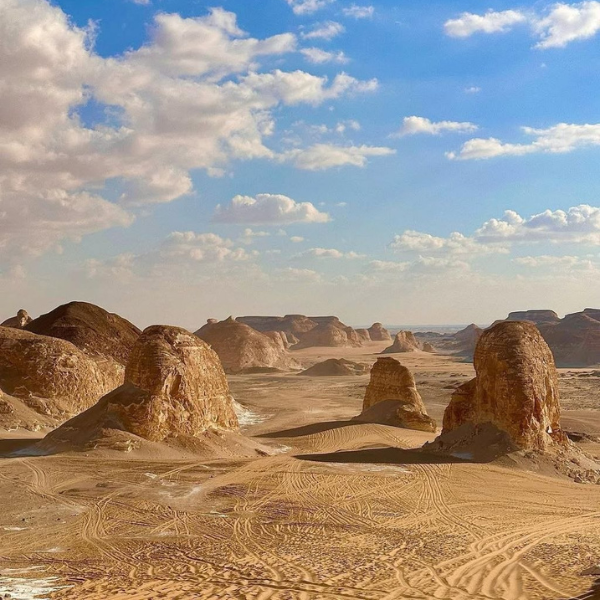
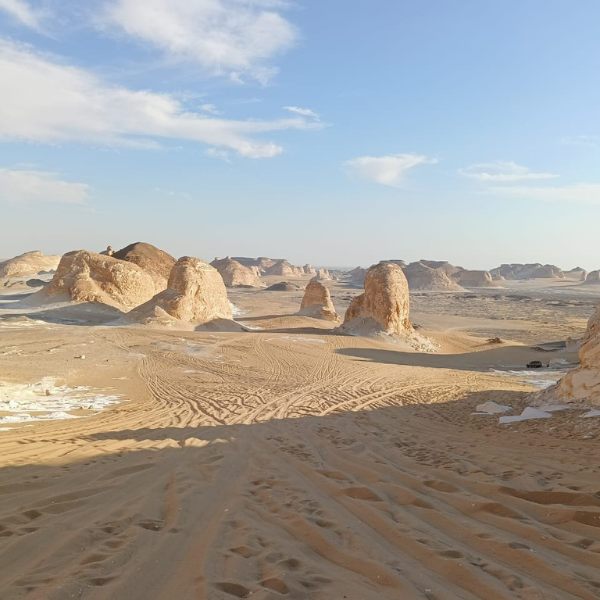
Is the Ground White Everywhere?

No.


Photographs can create the impression that the entire protected area is uniformly white.


In reality, you’ll encounter:


pale chalk,

golden sand,

dunes,

gravel,

darker stones,

playa deposits,

and different sedimentary surfaces.


Research into Farafra describes windblown sand, dunes and playas covering portions of the chalk floor.


That variation actually makes the white formations more dramatic.


A brilliant chalk tower rising from golden sand stands out more than it would against an entirely white background.

Why Does the White Desert Look Like Snow?

Two reasons:


color and shape.

The chalk is extremely pale.


At the same time, erosion creates soft-looking rounded surfaces.


Under bright sunlight, your brain receives:


white surface,

irregular mounds,

smooth curves,

bright reflections.


Those visual cues resemble:


snowbanks,

ice formations,

or frozen landscapes.


Yet you are standing in one of the driest environments on Earth.


That contradiction is a large part of the White Desert’s visual appeal.

Is the White Desert Similar to the White Cliffs of Dover?

At a very broad geological level, there’s an interesting similarity:


both involve chalk-rich sedimentary rocks formed in ancient marine environments.


But they’re not identical geological formations and shouldn’t be treated as direct equivalents.


Different:


ages,

basins,

climates,

tectonic histories,

erosion regimes,

and landscapes


produced very different results.


Dover became dramatic coastal cliffs.


Farafra became a desert filled with isolated chalk sculptures.


Same broad family of rock.


Very different life story.

What Is the Best Place to See White Desert Geology?

You don’t need one single viewpoint.


The entire safari tells the story.


A strong route allows you to compare:


Black Desert


Dark, iron-rich and volcanic-associated materials.


Crystal Mountain


Crystalline mineralization and ancient karst features.


Agabat Valley


Large sedimentary cliffs and broad eroded landscapes.


White Desert


Exposed white chalk sculptures.


Together, they tell a better geological story than any individual stop.


For trip geography, see our White Desert Egypt Map.

How Long Should You Spend in the White Desert?

If you’re interested in geology, don’t rush it.


A 2-day / 1-night trip is a good introduction.


A 3-day / 2-night itinerary gives you more time to:


walk,

photograph details,

visit different formation zones,

experience sunset,

camp,

see sunrise,

and compare landscapes.


For the differences, read our 2-Day vs 3-Day White Desert Tour.

Does Geology Make the White Desert Worth Visiting?

Absolutely — but you don’t need to be a geologist.


Understanding even a little bit changes the experience.


Without context, you see:


white rocks.


With context, you see:


an ancient seafloor,

microscopic marine organisms,

Cretaceous sediment,

fossils,

climate change,

uplift,

ancient wetter phases,

millions of years of erosion,

and a landscape still changing today.


Suddenly one mushroom-shaped rock becomes evidence of an enormous Earth-history story.


That’s the kind of context that makes travel better.

How to Visit the White Desert from Cairo

For most international travelers, the practical route begins in Cairo.


From there, you travel toward Bahariya Oasis, one of the principal gateways for Western Desert safaris.


Then suitable desert vehicles continue through landscapes such as:


Black Desert,

Crystal Mountain,

Agabat Valley,

and White Desert.


For full transport details, read our Cairo to White Desert Egypt Guide.

Can You Visit Without a Guide?

Remote Western Desert travel involves more than navigating to GPS coordinates.


Permits, protected-area access, desert routes, suitable vehicles, water, communications and emergency planning matter.


Egyptian authorities treat the White Desert as a protected natural area, so travelers should follow current regulations and use appropriate authorized operators rather than assuming unrestricted access.


For trip planning, read our White Desert Egypt Safety Guide.

Responsible Geotourism in the White Desert

Understanding the geology should change how you behave there.


A chalk mushroom is not an unlimited resource.


A fossil isn’t free merchandise.


A crystal isn’t a souvenir.


The White Desert has survived natural erosion for millions of years.


Human damage can happen in seconds.


Don’t:


remove fossils,

take chunks of chalk,

break formations,

collect crystals,

carve names,

drive over sensitive formations,

or leave waste.


The best souvenir is the photograph.

Plan Your White Desert Geological Adventure

The White Desert is beautiful even if you know nothing about geology.


But once you understand the story, the landscape becomes something else entirely.


The white isn’t snow.


It isn’t salt.


It isn’t simply pale sand.


It is ancient carbonate rock.


Much of the striking chalk belongs to geological sequences deposited when the region experienced marine conditions during the Late Cretaceous.


Microscopic organisms contributed calcium carbonate.


Sediment became rock.


The sea disappeared.


The landscape was exposed.


Water and wind reshaped it.


Softer rock vanished.


Harder portions remained.


And over millions of years, the Western Desert turned ancient seabed into natural sculpture.


To experience the complete route, explore the White Desert Safari from Cairo.


For the classic overnight format, see the White Desert Overnight Tour from Cairo.


For more time among the formations, explore the White Desert 3 Days Tour from Cairo.


And browse all Egypt Desert Dunes tours to compare the available Western Desert experiences.

- Tours Carousel
✓ Available on Viator

Book Egypt Desert Dunes Tours on Viator

Discover our private White Desert camping adventures and Siwa Oasis experience. Choose your favorite itinerary and complete your reservation securely through Viator.

✓ Private Tours
✓ Cairo Pickup
✓ Mobile Ticket
✓ English Speaking Team
✓ Book Through Viator
4-Day Private White Desert Camping Tour from Cairo by Egypt Desert Dunes
✓ Book on Viator
Private Tour
White Desert • Bahariya Oasis • Egypt
⏱ 4 Days / 3 Nights ★ 5.0 (4 Reviews)

4-Day Private Camping Tour in the White Desert from Cairo

Go deeper into Egypt's Western Desert with a private four-day camping adventure including spectacular desert landscapes, Black Desert, White Desert, open-air meals and three nights beneath the stars.

Cairo Pickup Private Tour Desert Camping Meals Included
Reference price from
€588 / person*
Check Viator for today's live price
View on Viator →
2-Day 1-Night White Desert Camping Tour from Cairo by Egypt Desert Dunes
✓ Book on Viator
Best Short Trip
White Desert • Black Desert • Egypt
⏱ 2 Days / 1 Night ★ 5.0 (3 Reviews)

2-Day, 1-Night Camping Tour in White Desert from Cairo

Our most compact White Desert adventure for travelers who want to experience the desert from Cairo, explore its unique landscapes and spend an unforgettable night camping beneath the stars.

1 Night Camping Cairo Pickup Breakfast Lunch & Dinner
Reference price from
€197 / person*
Price varies by date and group size
View on Viator →
3-Day Private White Desert Camping Tour from Cairo by Egypt Desert Dunes
✓ Book on Viator
Popular Choice
Black Desert • Aqabat • White Desert
⏱ 3 Days / 2 Nights ★ 5.0 (5 Reviews)

3-Day Private Camping Tour of White Desert from Cairo

Spend three days exploring the Western Desert, including the Black Desert, Crystal Mountain, Aqabat area and White Desert, with two nights of private desert camping.

2 Nights Camping Black Desert White Desert Private Experience
Reference price from
€394 / person*
Check Viator for today's live price
View on Viator →
4-Day Siwa Oasis Trip from Cairo by Egypt Desert Dunes
✓ Book on Viator
Siwa Experience
Siwa Oasis • Western Desert • Egypt
⏱ 4 Days Egypt Desert Dunes • 14 Operator Reviews

Siwa Oasis Trip with Cairo Pick Up

Travel from Cairo to legendary Siwa Oasis on a private four-day journey exploring Siwan culture, desert landscapes, Lake Siwa, traditional sites and some of the oasis's most distinctive attractions.

4 Days Cairo Pickup Siwa Hotel Meals Included
Reference price from
$1,150 / adult*
Check Viator for today's live price
View on Viator →
*Important: Prices shown above are reference “from” prices observed while reviewing the listings and may change based on travel date, number of travelers, availability, currency and Viator pricing. Click “View on Viator” for the current final price before booking.

Explore Egypt's Desert with Egypt Desert Dunes

From a one-night White Desert camping adventure to extended Western Desert and Siwa Oasis experiences, choose the itinerary that matches your travel style and complete your booking through Viator.

Explore Our Tours →
Plan Your Desert Adventure

Book a Tour or Create Your Own Egypt Experience

Choose one of our ready-made tours or customize your own private journey. Select your destinations, duration and travel style, then send your request directly to Egypt Desert Dunes on WhatsApp.

Book Your Desert Tour

Select your preferred itinerary and send us your travel details. Our team will reply on WhatsApp with availability and the final quote.

Choose Your Tour *
Please select a tour and complete your name, travel date and number of travelers.
Your booking request will open directly in WhatsApp. No payment is made through this form.

Create Your Own Private Egypt Tour

Combine Cairo, Giza, Fayoum, the Western Desert and Siwa in one custom itinerary. Choose the destinations and experiences you want and our team will recommend the best route based on your available days.

Which Places Would You Like to Visit? *
Select as many destinations as you like. Egypt Desert Dunes will recommend the best route according to your trip duration.
What Are You Most Interested In?
Please enter your name, number of travelers, trip duration and select at least one destination.
Egypt Desert Dunes will review your selections and send you a customized itinerary and quotation on WhatsApp.

FAQ — Why Is Egypt's White Desert White?

Why is Egypt's White Desert white? +

The White Desert is white because much of its exposed bedrock consists of very pale chalk and chalky limestone rich in calcium carbonate. Major White Desert chalk deposits belong to ancient sedimentary rock formations in the Farafra region.

Is the White Desert made of sand? +

No. Sand occurs throughout the region, but the famous white formations are primarily made from chalk and limestone rather than white sand.

Is the White Desert made of salt? +

No. The famous formations are carbonate sedimentary rocks, primarily chalk and chalky limestone. They should not be confused with salt formations or salt lakes found elsewhere in Egypt.

Was the White Desert once under the sea? +

Yes. Geological evidence shows that the rocks of the Farafra region formed in ancient marine environments. Marine fossils remain preserved in many limestone and chalk layers.

What is White Desert chalk made of? +

Chalk is a calcium-carbonate-rich form of limestone composed largely of calcite. Much chalk originates from the accumulated microscopic skeletal remains of marine organisms such as foraminifera and calcareous plankton.

How old are the rocks in the White Desert? +

Many of the major white chalk deposits belong to the Upper Cretaceous Khoman Formation. Geological research identifies White Desert chalk dating to the Maastrichtian stage of the Late Cretaceous.

How were White Desert rock formations created? +

The formations developed through prolonged weathering and differential erosion acting on exposed chalk and limestone. Wind and windblown sand are important sculpting forces, while water, fractures and variations in rock hardness also contributed to landscape development.

Why are there mushroom-shaped rocks in the White Desert? +

Mushroom shapes develop when lower or weaker portions of a rock erode faster than harder upper sections. Windblown sand, differences in rock resistance and long-term weathering can gradually create narrow bases beneath wider rock caps.

Are there fossils in the White Desert? +

Yes. The White Desert and wider Farafra sedimentary sequence contain marine fossils, including microfossils as well as remains of marine invertebrates preserved within carbonate rocks.

Can you take fossils from the White Desert? +

Visitors should not remove fossils, rocks or pieces of geological formations. The White Desert is a protected natural area, and its geological heritage should remain intact.

Is Crystal Mountain part of the same geology as the White Desert? +

Crystal Mountain is part of the wider Western Desert safari circuit but has a distinct geological story involving mineralized ancient karst and cave features. It should not simply be treated as another White Desert chalk formation.

Is the White Desert still changing? +

Yes. Weathering and erosion continue to reshape the exposed formations. Over geological time, existing sculptures can change, weaken or collapse.

When was the White Desert declared a protected area? +

Egypt declared the White Desert a protected area in 2002.

Why does the White Desert look like snow? +

The pale chalk strongly reflects sunlight, while rounded eroded formations can resemble snow or ice. The effect is visual; the landscape is dry desert rock, not frozen ground.

Is White Desert geology worth seeing if I'm not a geologist? +

Yes. Understanding the ancient marine origin and erosional history adds context, but the unusual shapes, bright colors and dramatic contrasts make the landscape visually impressive even without specialist geological knowledge.

Leave a Comment

Your email address will not be published. Required fields are marked *