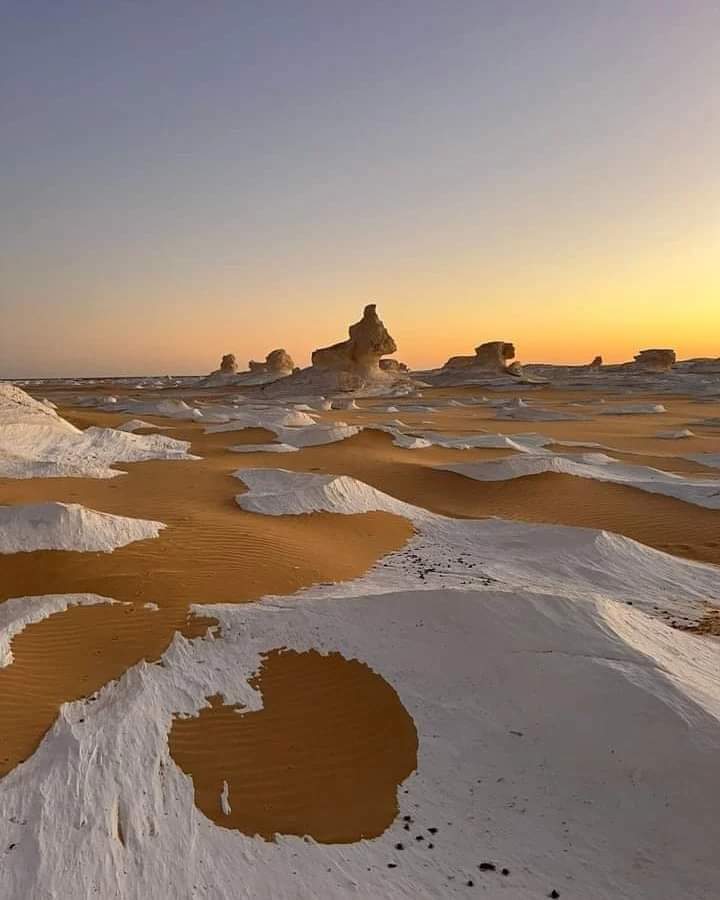
Bahariya Oasis to White Desert: Route, Stops & Safari Experience

If you’re planning a White Desert trip from Cairo, one destination appears in almost every itinerary before the famous white chalk formations:


Bahariya Oasis.


That can be confusing for first-time visitors.

Is Bahariya Oasis part of the White Desert?

How far is Bahariya from the White Desert?

Why do most Cairo tours stop in Bahariya first?

Where do the Black Desert, Crystal Mountain and Agabat Valley fit into the journey?

And why does a normal road trip suddenly become a 4×4 desert safari?


The easiest way to understand the trip is this:


Bahariya Oasis is one of the main gateways for Cairo-based White Desert safaris, while the White Desert is the deeper protected desert landscape reached after leaving the oasis and continuing through the Western Desert.


Bahariya lies roughly 370 km southwest of Cairo and is the closest major Western Desert oasis to the capital according to Egypt’s official tourism authority. It is surrounded by palm groves, springs, desert landscapes and important archaeological sites, while also serving as a practical starting point for excursions toward the Black and White Deserts.


Once you leave Bahariya, the character of the trip changes completely.


You move from:


palm groves,

villages,

springs,

and paved roads


into:


black volcanic-looking hills,

golden dunes,

crystalline geological formations,

huge pale cliffs,

remote desert tracks,

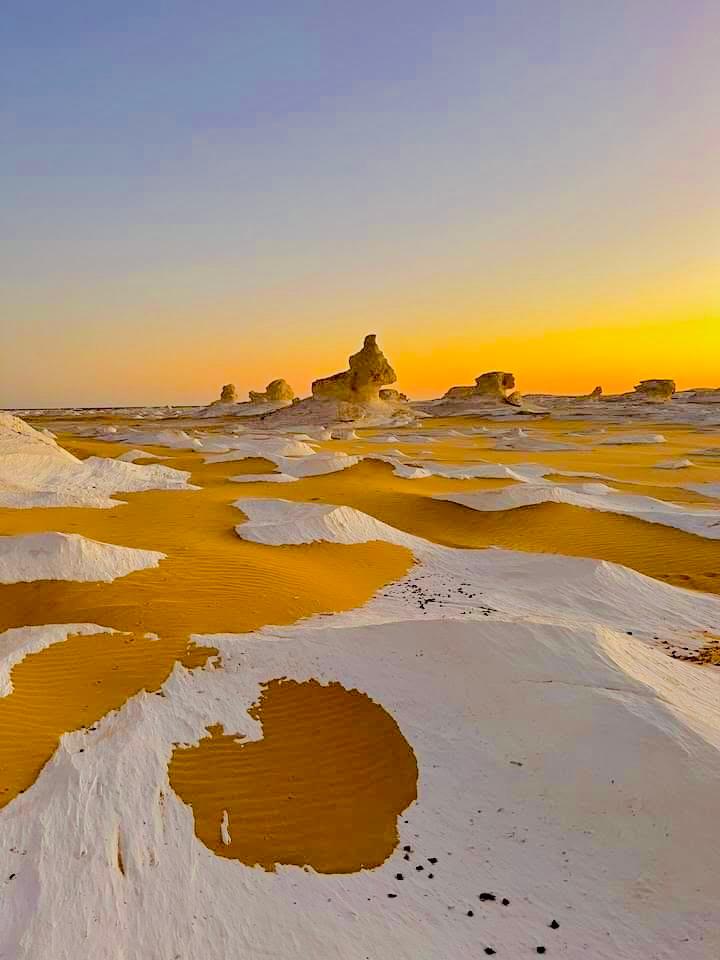
and finally the surreal chalk formations of Egypt’s White Desert.


A typical route may look something like:


Cairo

↓

Bahariya Oasis

↓

Black Desert

↓

El Haize / Springs

↓

Crystal Mountain

↓

Agabat Valley

↓

White Desert

↓

Sunset

↓

Desert Camp

↓

Stargazing

↓

Sunrise

↓

Return to Bahariya

↓

Cairo


The exact route can change according to current regulations, daylight, weather, road conditions, permits and the specific tour.


But the most important thing to understand is this:


The journey from Bahariya Oasis to the White Desert is not simply transportation. It is the safari itself.


For the wider destination first, read our White Desert Egypt Complete Guide.


If you’re starting in Cairo, our Cairo to White Desert Egypt Guide explains the complete journey.


And if you’re ready to book the experience itself, explore our White Desert Safari from Cairo.

- Tours Carousel

Bahariya Oasis to White Desert at a Glance

Question

Quick Answer

Is Bahariya Oasis the White Desert?

No

What is Bahariya?

A populated Western Desert oasis and major safari gateway

Distance from Cairo to Bahariya

About 370 km

Typical Cairo to Bahariya travel time

Around 5 hours depending on conditions

What happens in Bahariya?

Lunch, supplies, guide/driver meeting and 4×4 change

Main safari vehicle

Suitable 4×4

Typical route stops

Black Desert, El Haize, Crystal Mountain, Agabat Valley, White Desert

Is the whole route paved?

No

Can you camp?

Yes, subject to current rules and approved locations

Best minimum from Cairo

2 days / 1 night

Better slower option

3 days / 2 nights

Best for photography

3 days

Need a guide?

Current arrangements require advance permits and official guiding for key Western Desert areas

Where Is Bahariya Oasis?

Bahariya Oasis lies in Egypt’s Western Desert, southwest of Cairo.


Its main town is Al Bawiti, often shortened to Bawiti.


Unlike the remote White Desert, Bahariya is not empty wilderness.


It contains:


villages,

date palms,

olive groves,

hot and cold springs,

farmland,

restaurants,

small hotels,

eco-lodges,

shops,

and archaeological sites.


Egypt’s official tourism portal describes Bahariya as approximately 370 km southwest of Cairo and highlights its springs, agricultural landscape and important Graeco-Roman archaeological discoveries.


That combination makes Bahariya particularly useful for desert tourism.


You can arrive from Cairo, rest, eat, prepare supplies and then continue into a much more remote environment.


For a deeper destination guide, read our Bahariya Oasis Egypt Guide.

Is Bahariya Oasis Part of the White Desert?

Not exactly.


This is one of the most common misunderstandings.


Bahariya Oasis and the White Desert are connected through the classic safari route, but they’re different environments.


Bahariya Oasis

A living oasis containing:


settlements,

farms,

springs,

palms,

hotels,

and archaeology.


White Desert

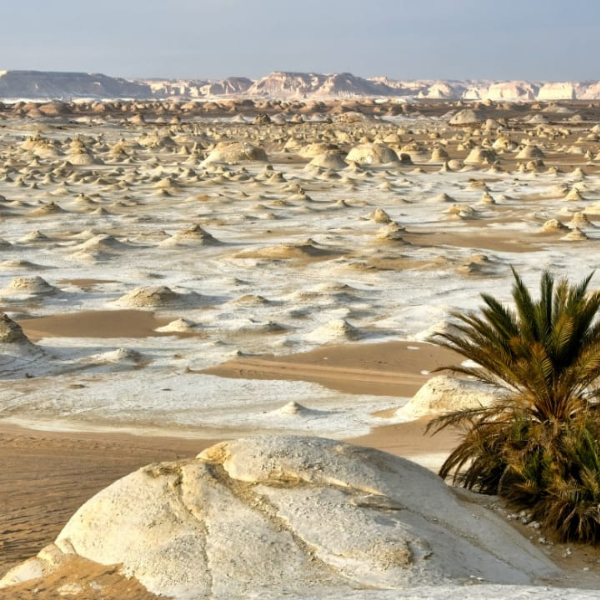
A remote protected desert landscape famous for:


chalk formations,

white plains,

mushroom-shaped rocks,

camping,

stars,

and extraordinary geology.


So when a tour says:


White Desert from Cairo via Bahariya

it normally means:


Cairo road transfer → Bahariya → desert safari → White Desert.


Bahariya is the gateway.


The White Desert is the deeper landscape.

Why Do White Desert Tours Start in Bahariya?

Because Bahariya is where the logistics of the desert journey become practical.


A White Desert safari needs more than a vehicle.


It can involve:


local drivers,

4×4 vehicles,

food,

water,

fuel,

camping equipment,

permits,

and knowledge of desert routes.


Bahariya provides a natural staging point for those things.


It is also much closer to Cairo than Farafra, making it particularly useful for travelers beginning in the capital.


That is why many itineraries don’t treat Bahariya as a separate attraction.


Instead, it functions as the place where the road trip ends and the actual safari begins.

Stage 1: Cairo to Bahariya Oasis

The first stage is the long transfer away from Cairo.


You’re still traveling by road.


The landscape gradually changes as you leave the Nile Valley and move deeper into Egypt’s Western Desert.


Egypt’s official tourism material places Bahariya around 370 km southwest of Cairo.


In practical terms, the transfer commonly takes roughly five hours, though the actual journey can vary with:


your Cairo pickup point,

traffic,

rest stops,

checkpoints,

and road conditions.


This is why most White Desert tours leave Cairo early.


You’re not trying merely to arrive in Bahariya before dinner.


You want enough daylight remaining to continue into the desert.

Why Leaving Cairo Early Matters

Sunset controls the entire first day more than many travelers realize.


Imagine reaching Bahariya at 3 PM.


You still need:


lunch,

vehicle change,

desert preparation,

and several safari stops.


If sunset happens around 5 or 6 PM during the season you’re traveling, the schedule becomes difficult.


That is why a good White Desert itinerary should work backwards from sunset.


The goal is usually to reach the White Desert while there is still enough low-angle light to enjoy the formations.


For detailed photography timing, read our White Desert Sunrise & Sunset Guide.

What Happens When You Reach Bahariya?

The transition is usually straightforward.


Depending on your tour, you may:


have lunch,

drink tea,

use proper bathroom facilities,

meet the local guide,

reorganize luggage,

prepare camping supplies,

and transfer into a suitable 4×4.


This is also your last easy opportunity to check that you have:


water,

medication,

warm layers,

camera batteries,

sunscreen,

and everything needed for the night.


Once the safari begins, shops become much less convenient.

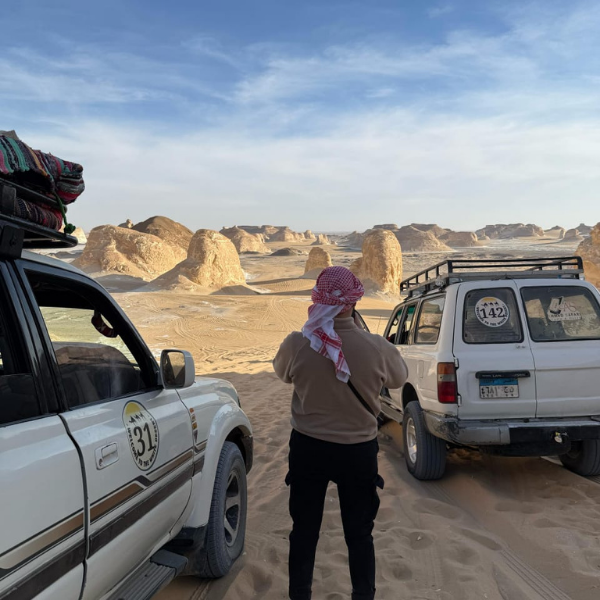
Why Do You Need a 4x4?

Because once you leave the main oasis environment, parts of the journey move through desert terrain rather than ordinary paved highways.


The route can involve:


sand,

rock,

gravel,

tracks,

and off-road sections.


A 4×4 is not simply a fun upgrade added to make the trip look adventurous.


It is appropriate equipment for the terrain.


Just as importantly, the driver matters.


Experienced desert drivers understand:


sand conditions,

tracks,

vehicle recovery,

safe stopping areas,

fuel planning,

and local access rules.


Remote desert travel is one of those situations where experience matters more than Google Maps.

Stage 2: Bahariya Oasis to the Black Desert

Once you leave the oasis, the scenery begins changing quickly.


One of the first major landscapes on many routes is the Black Desert.


And the name makes sense immediately.


Instead of the pale formations travelers associate with the White Desert, you see:


dark hills,

black stones,

brown desert,

and broad open terrain.


The Black Desert creates a powerful contrast with what comes later.


If you began the trip by teleporting directly into the White Desert, the chalk would still be beautiful.


But after spending time around the dark hills?


The whiteness feels much more dramatic.


Read our complete Black Desert Egypt Guide before your trip if you want to understand the landscape in more detail.

What Do You Do in the Black Desert?

Most itineraries include one or more short stops.


Depending on your route and current access, you may:


walk near the hills,

visit viewpoints,

photograph the dark terrain,

or stop for panoramic views.


The important thing isn’t collecting every named hill.


It’s seeing the contrast.


The Western Desert doesn’t have one visual identity.


Within a relatively short journey, it can move between:


black,

gold,

white,

and green oasis landscapes.

Is the Black Desert Volcanic?

It often looks volcanic, which is why travelers commonly describe it that way.


But the geology of the wider Black Desert contains a mixture of different rock types and mineral-rich dark materials.


For ordinary visitors, the important visual feature is simple:


the hills are covered or capped with dark material that makes the region look dramatically different from the later chalk landscapes.


If you’re interested in the geology rather than only the photography, the Black Desert Egypt Guide explains it further.

Stage 3: El Haize and the Spring Areas

Many White Desert itineraries include a stop around El Haize or a nearby spring area.


This introduces yet another type of landscape.


Instead of completely empty desert, you may encounter:


water,

vegetation,

a rest area,

or a small oasis environment.


Depending on the trip, this may be where travelers:


eat,

have tea,

rest,

or stop before continuing farther south.


Not every operator follows exactly the same route.


Some itineraries give the spring area more attention.


Others focus more heavily on geological stops.


That’s normal.

Should Every White Desert Tour Include the Same Stops?

No.


And that’s actually worth understanding before booking.


There is no universal checklist where a trip becomes “bad” if one particular spring isn’t included.


Routes depend on:


time,

access,

permits,

season,

weather,

and tour duration.


The better question is:


Does the itinerary provide enough time for the major landscapes without rushing the entire day?


A tour with eight meaningful stops can be much better than one advertising eighteen places but giving you five minutes at each.

Stage 4: Crystal Mountain

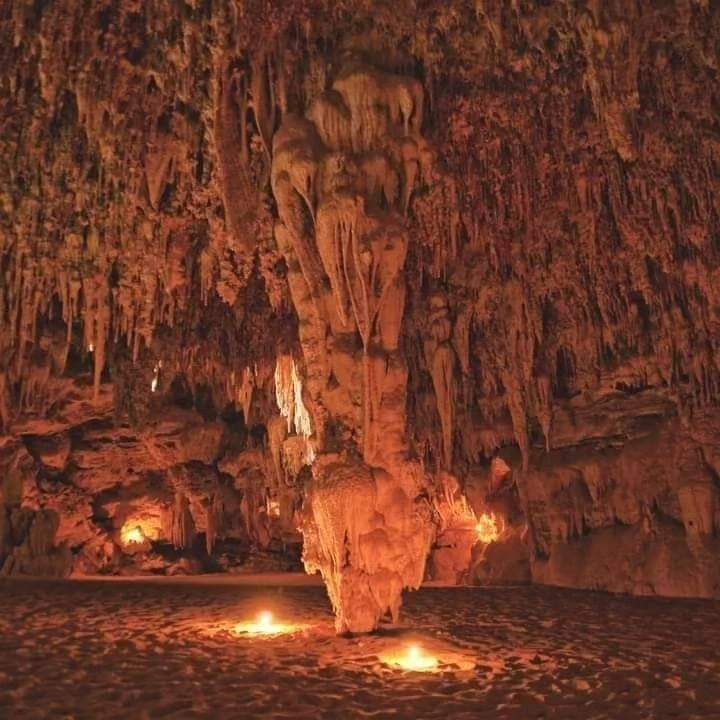
Crystal Mountain is one of the classic geological stops on the route.


The name makes it sound enormous.


It isn’t a Himalayan-style mountain climb.


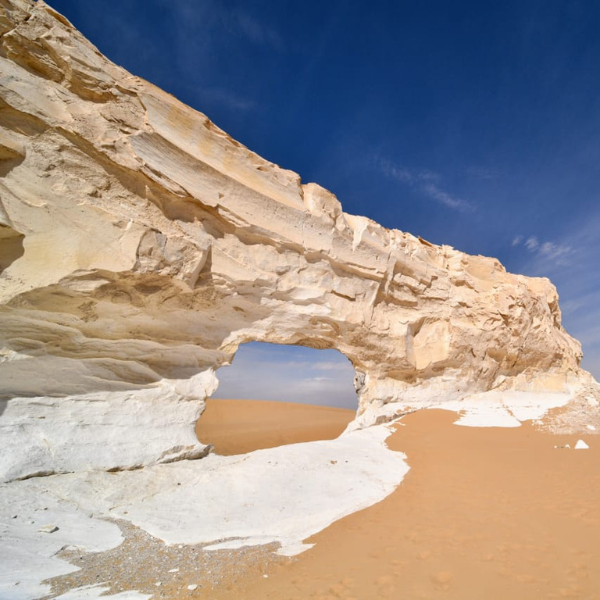
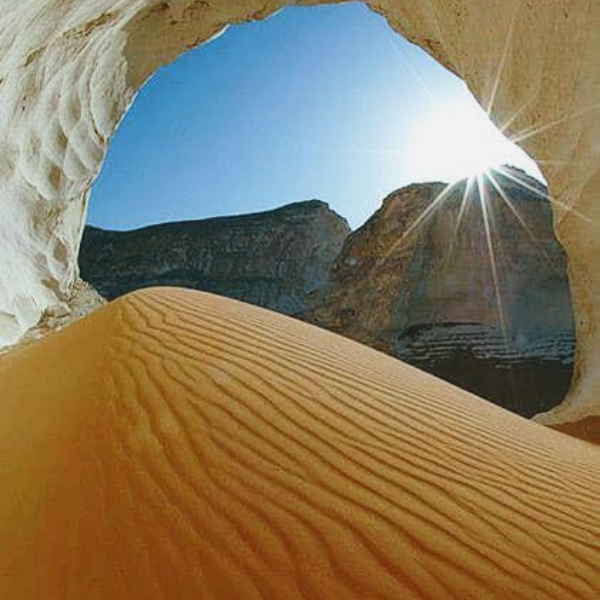
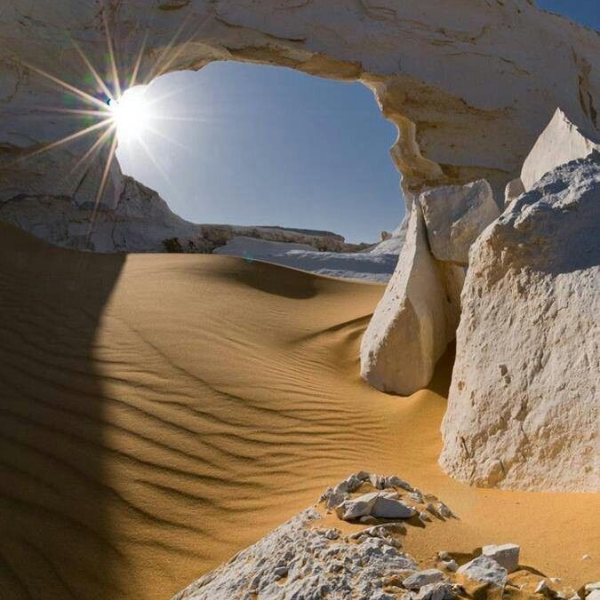
Instead, you’re visiting a compact geological formation known for exposed crystalline material and a distinctive natural arch-like feature.


Egypt’s official tourism portal describes Crystal Mountain as a former underground cave that later became exposed and highlights the sparkling crystals visible in the formation.


It’s usually a relatively short stop.


But it’s visually and geologically very different from everything you’ve already seen.

Why Crystal Mountain Is Worth Stopping For

At this point in the journey you’ve already seen:


Bahariya’s palms,

Black Desert hills,

and perhaps spring environments.


Then Crystal Mountain introduces:


exposed mineral formations,

different textures,

and another part of the Western Desert’s geological history.


The value is not that Crystal Mountain takes three hours to explore.


It doesn’t need to.


Its value is that the landscape changes again.


For the full geological story, read our Crystal Mountain Egypt Guide.

Is Crystal Mountain Really Made of Crystal?

Not in the way the name sometimes makes people imagine.


You shouldn’t expect a giant transparent quartz mountain.


The geology is more complex, and the exposed mineralized structure is the interesting part.


This is a good example of why understanding the geology before your trip can improve the experience.


Otherwise, you may arrive expecting a huge glittering mountain and wonder whether you’ve stopped in the wrong place.


You haven’t.

Can You Take Crystals from Crystal Mountain?

Don’t.


The same rule applies throughout the route:


leave geology where you find it.


Don’t remove:


crystals,

fossils,

chalk,

rocks,

or other natural material.


A geological landmark gradually loses its character if every visitor takes home one piece.


Take photos.


They’re lighter anyway.

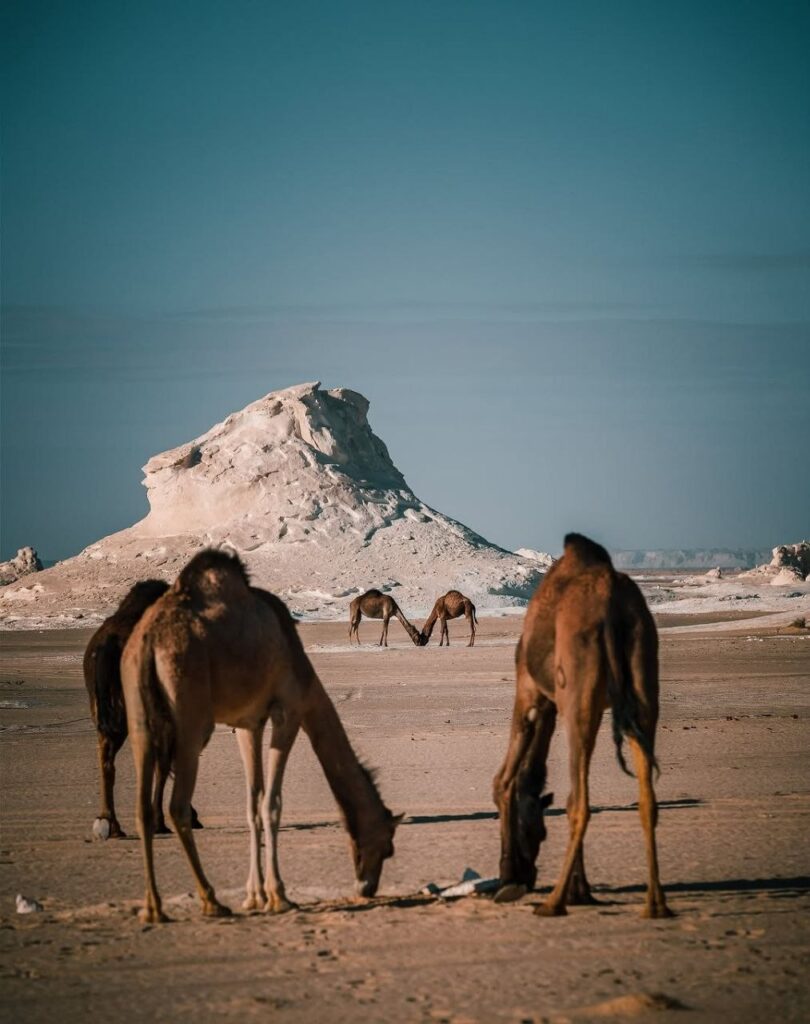
Stage 5: Agabat Valley

After Crystal Mountain, many routes continue toward one of the most dramatic landscapes of the trip:


Agabat Valley.


Egypt’s official tourism site describes Aqabat Valley as a landscape of soft golden sand, dunes and signature white cliffs, and identifies it as the dried site of an ancient riverbed.


The scale changes dramatically here.


Crystal Mountain feels like a geological feature you stop beside.


Agabat feels like a world you’re driving into.

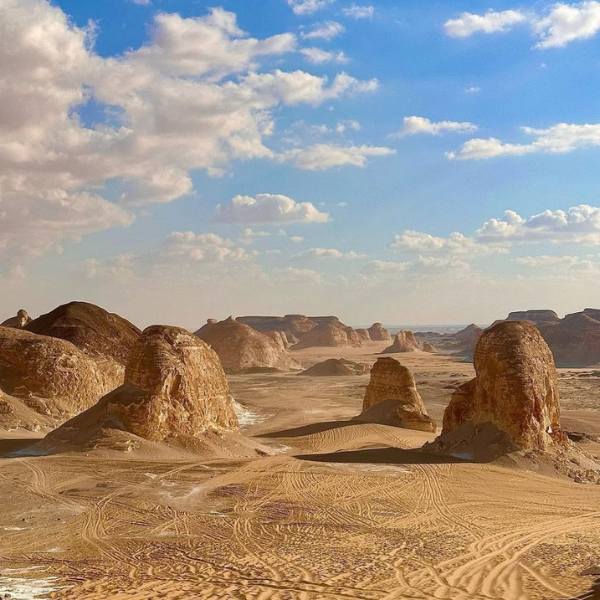
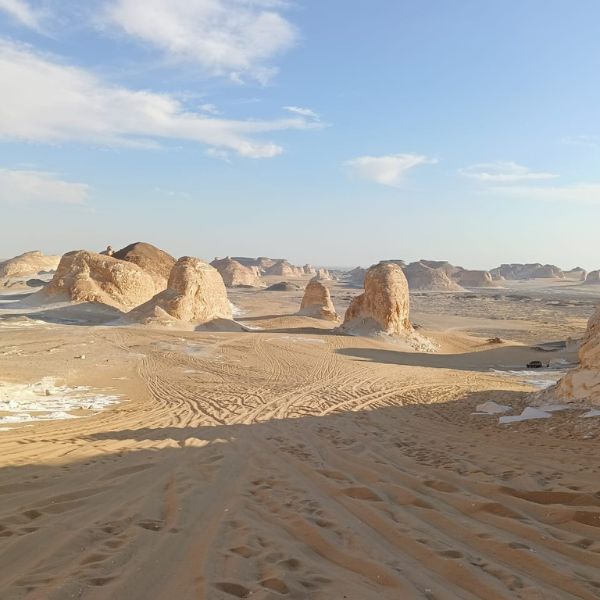
What Does Agabat Valley Look Like?

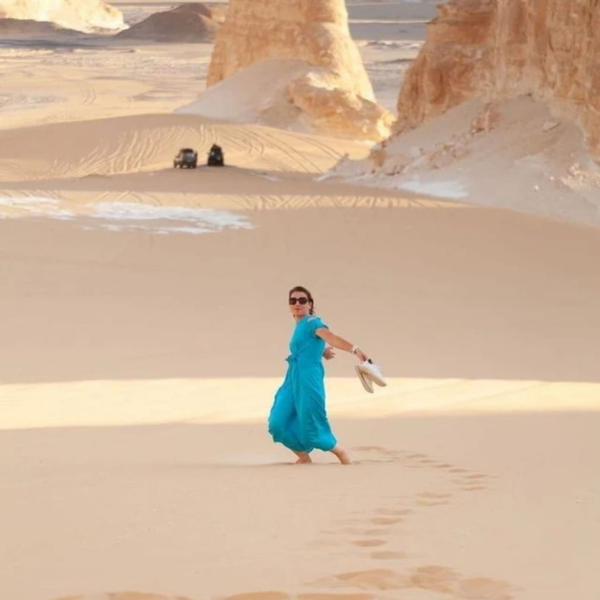
Imagine enormous pale rock formations rising from golden desert.


Between them:


broad valleys,

dunes,

open sand,

and distant cliffs.


Vehicles suddenly look tiny.


People look even smaller.


This sense of scale makes Agabat one of the best photography areas on the route.


It is also one of the places where travelers begin to understand that the Western Desert isn’t simply endless flat sand.


For everything you need to know about the destination, read our Agabat Valley Egypt Guide.

Is Agabat Part of the White Desert?

They’re closely connected through the safari route, but visually they are distinct landscapes.


Agabat is associated with:


large pale cliffs,

golden dunes,

and broad valleys.


The iconic White Desert is more strongly associated with:


white chalk plains,

mushroom formations,

and sculptural rocks.


That’s why visiting both works so well.


They’re different enough that the trip never becomes visually repetitive.

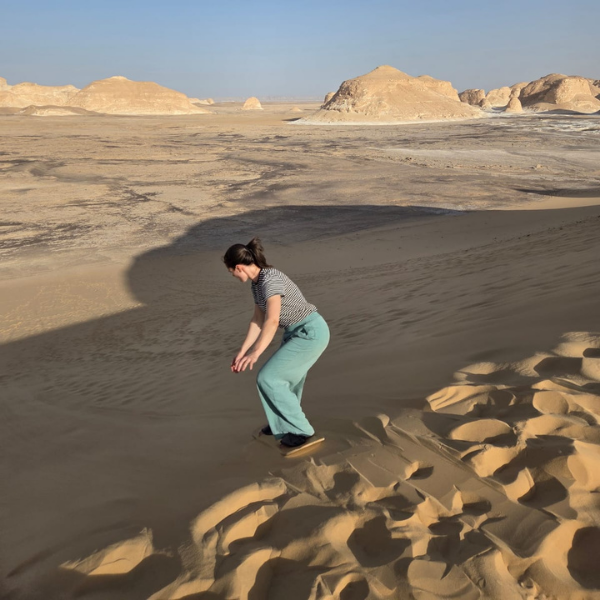
Sandboarding in Agabat

Some tours include sandboarding on suitable dunes in or around the wider Agabat landscape.


It’s simple.


You take a board.


Find a dune.


Go down.


Then discover that walking back up the dune is significantly less glamorous.


If sandboarding matters to you, check whether it’s included before booking rather than assuming every White Desert itinerary automatically provides boards.

Stage 6: Entering the White Desert

After several hours of changing landscapes, you finally reach the destination that gave the safari its name:


the White Desert.


The appearance can feel almost unreal.


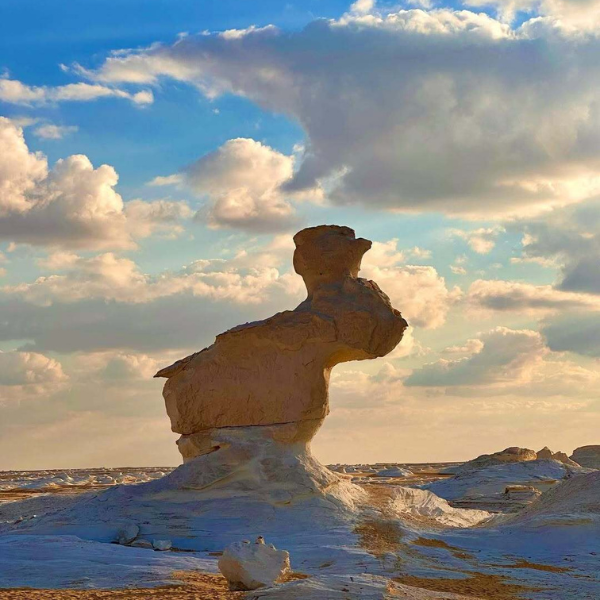
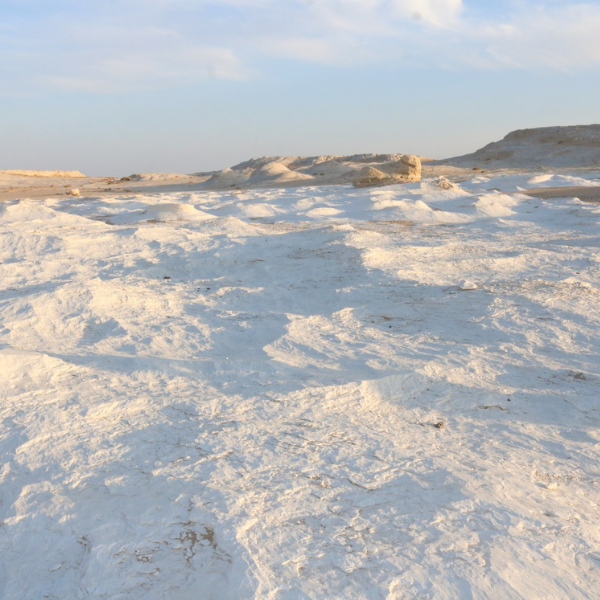
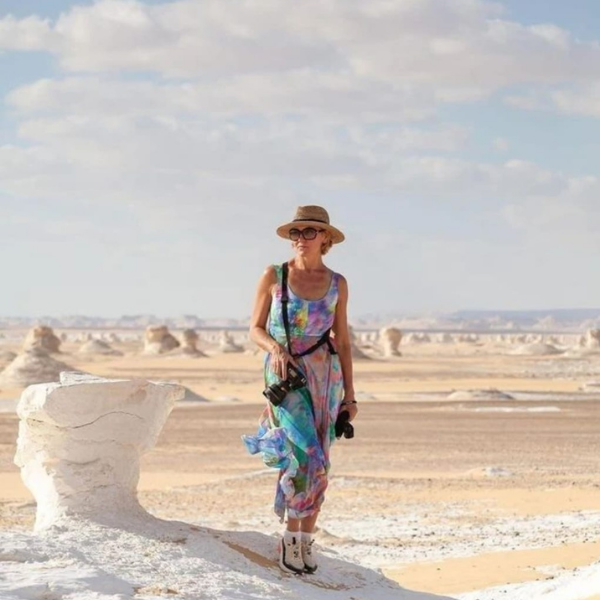
Instead of only golden Sahara sand, you find pale chalk formations spread across the desert.


Some resemble:


mushrooms,

towers,

animals,

tents,

and strange abstract sculptures.


For a complete overview, read our White Desert Egypt Guide.

Why Is the White Desert White?

The famous landscape is associated primarily with pale chalk and chalky limestone rather than simply white sand.


These sedimentary rocks record ancient marine environments.


Over enormous periods of time:


sediment accumulated,

rock formed,

the environment changed,

the layers became exposed,

and erosion began sculpting the landscape.


Wind, weathering and differential erosion helped create the bizarre shapes travelers see today.


Our full geological guide explains the process in much more detail:


Why Is Egypt’s White Desert White?


Understanding that story makes the formations far more interesting than simply calling them “cool white rocks.”

Old White Desert vs New White Desert

During the safari, you may hear guides talk about:


Old White Desert

and

New White Desert.


These names can confuse travelers.


They are best understood as local/tourism labels used for different sections or styles of the wider landscape rather than two completely separate officially designated national parks.


Different operators may use the terms slightly differently.


If you want to understand what people usually mean, read:


Old White Desert vs New White Desert Egypt

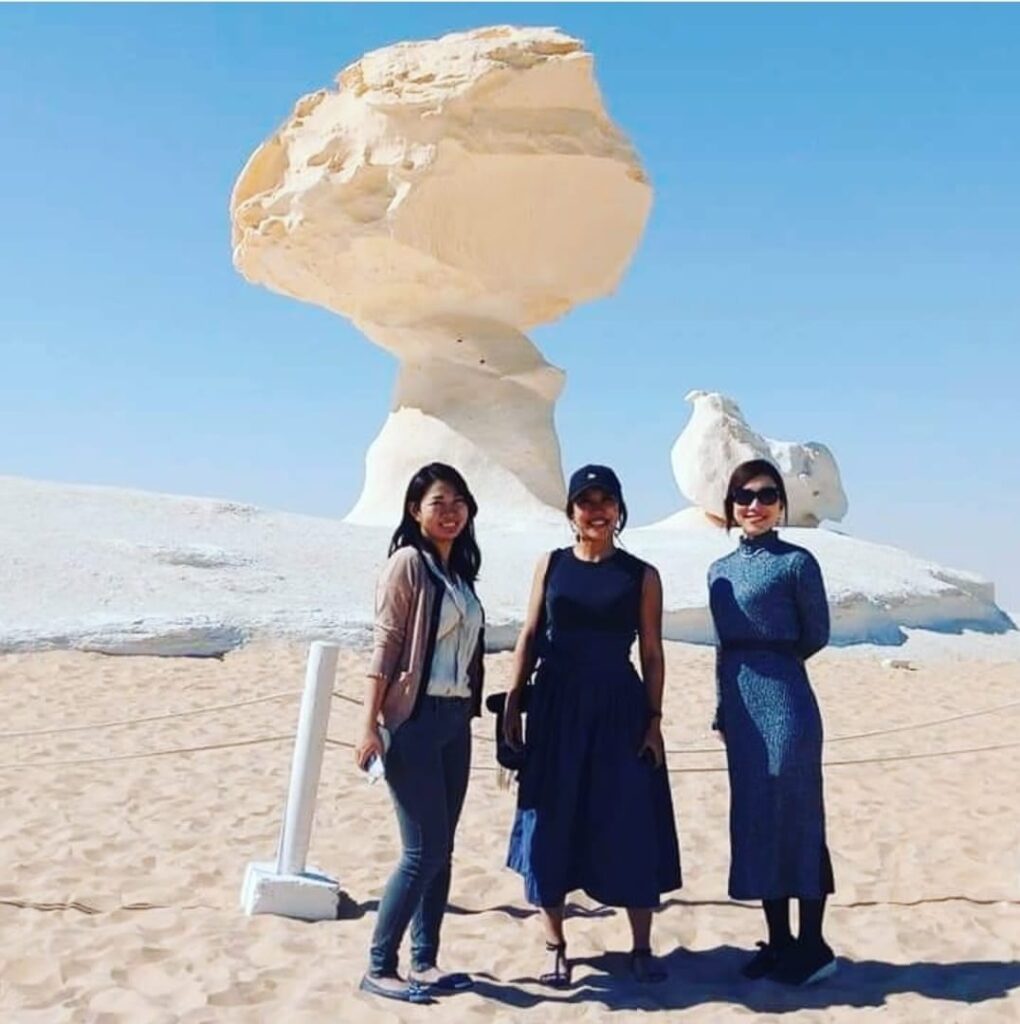
Mushroom Rock and Famous White Desert Formations

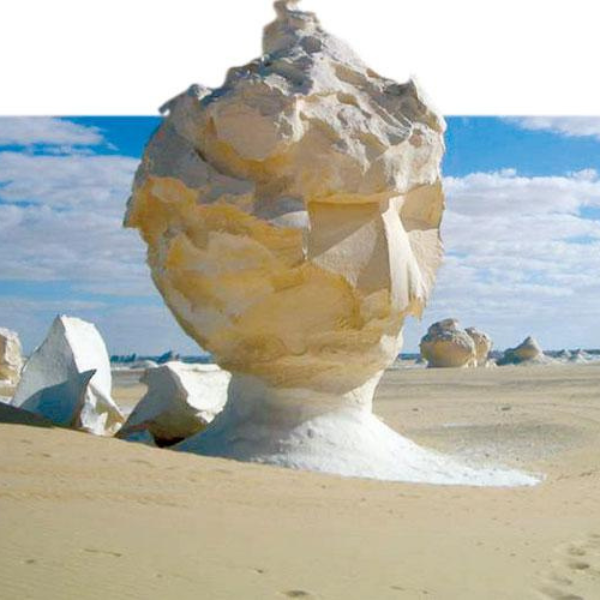
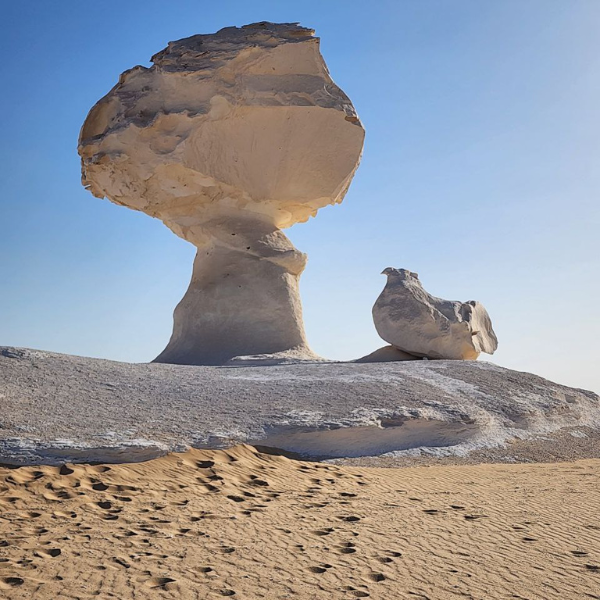
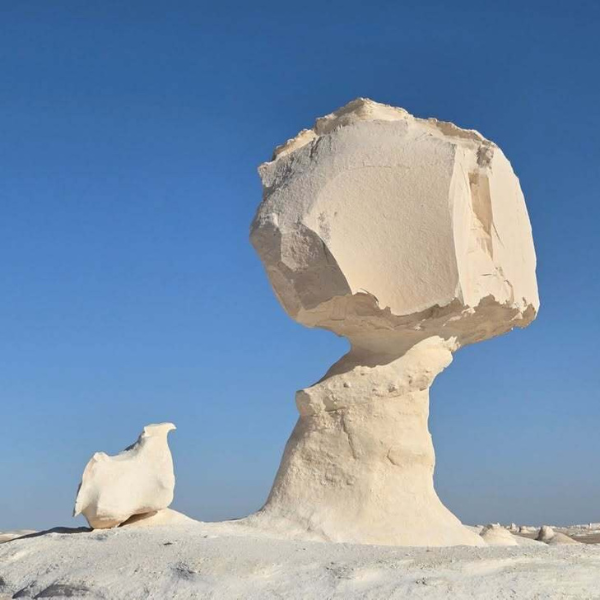
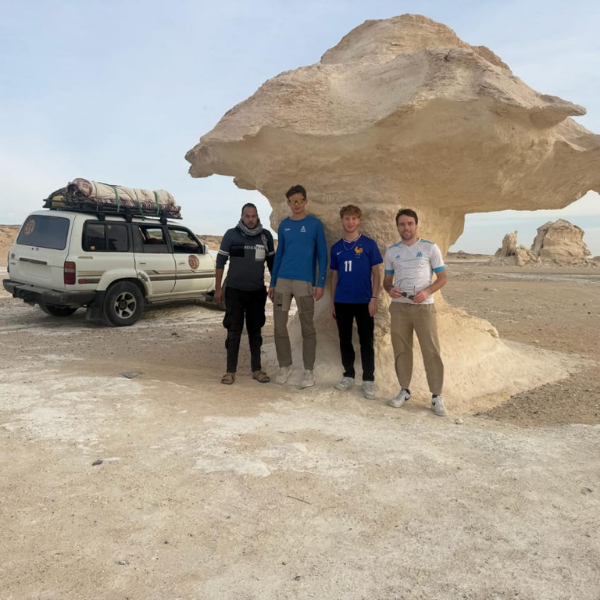
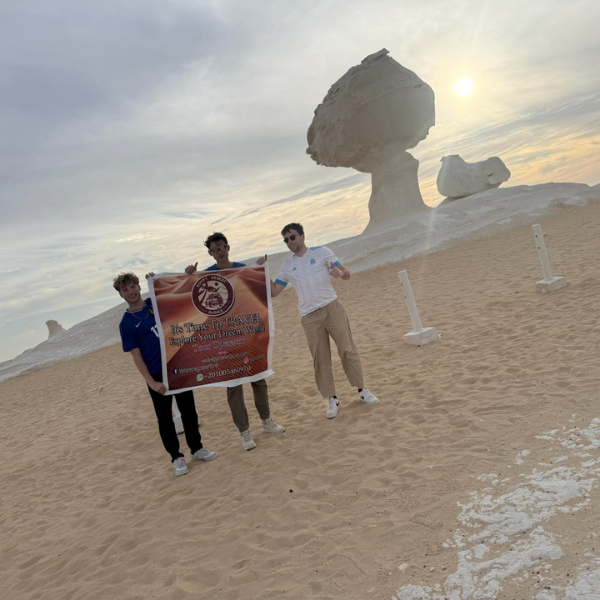
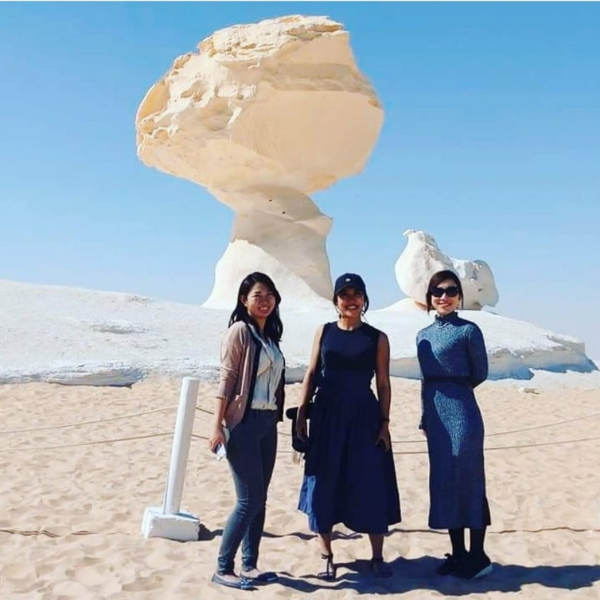
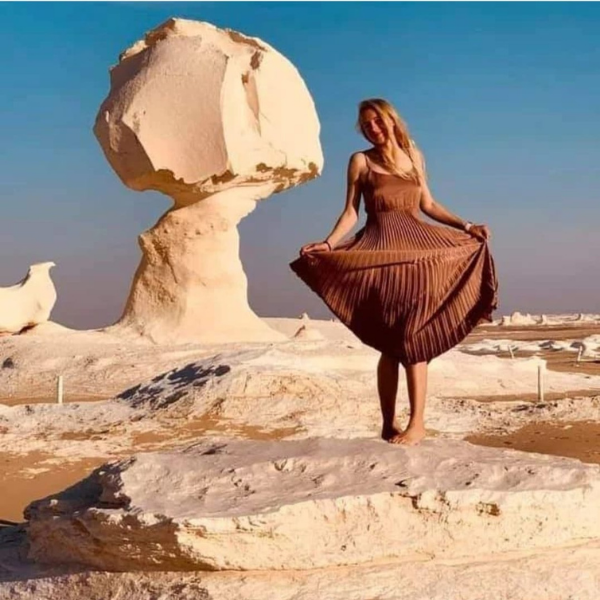
One of the White Desert’s signature landforms is the mushroom-shaped rock.


A narrower pedestal supports a wider upper section.


From the right angle, the shape is unmistakable.


But don’t imagine there is only one Mushroom Rock.


There are multiple mushroom-like formations across the wider landscape.


If these shapes are one of the reasons you’re visiting, see our Mushroom Rock White Desert Egypt Guide.


You can also explore the broader White Desert Rock Formations Guide for the different forms created by erosion.

Why Reaching the White Desert Before Sunset Matters

This is where tour timing becomes extremely important.


At midday, the landscape can look brilliantly white.


But late afternoon does something different.


The Sun moves lower.


Shadows lengthen.


Texture appears.


White chalk becomes:


cream,

gold,

and occasionally soft pink.


This is when the White Desert becomes especially photogenic.


That’s why you don’t want to spend so long at earlier stops that you arrive after sunset.


A good route gives you enough time at:


Black Desert,

Crystal Mountain,

and Agabat


while still protecting the late-afternoon White Desert experience.

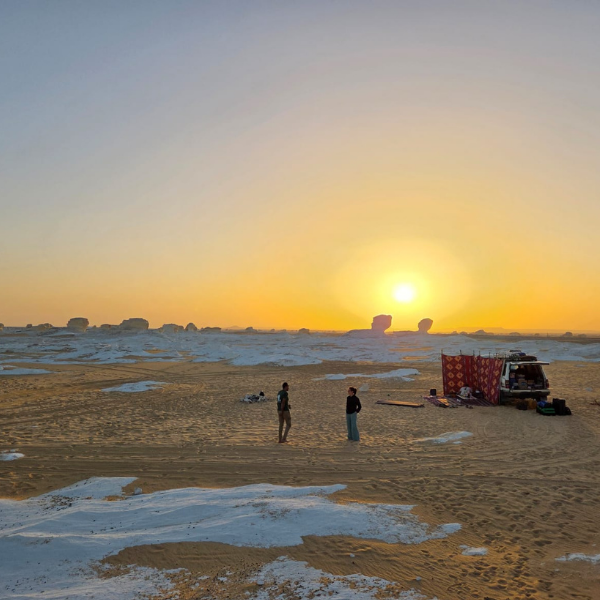
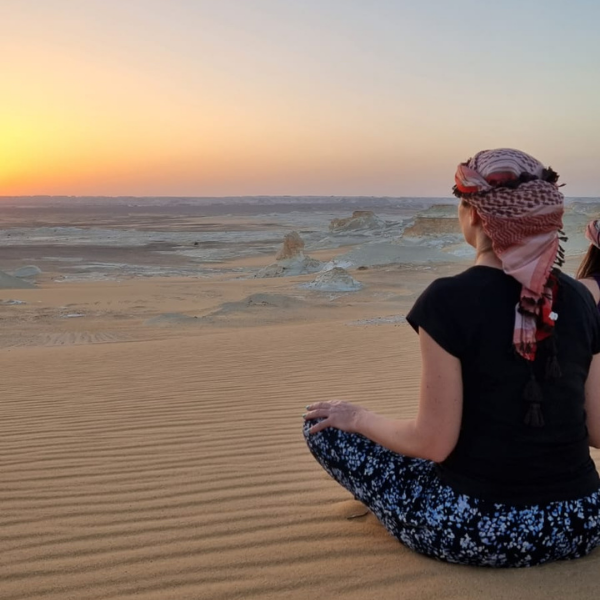
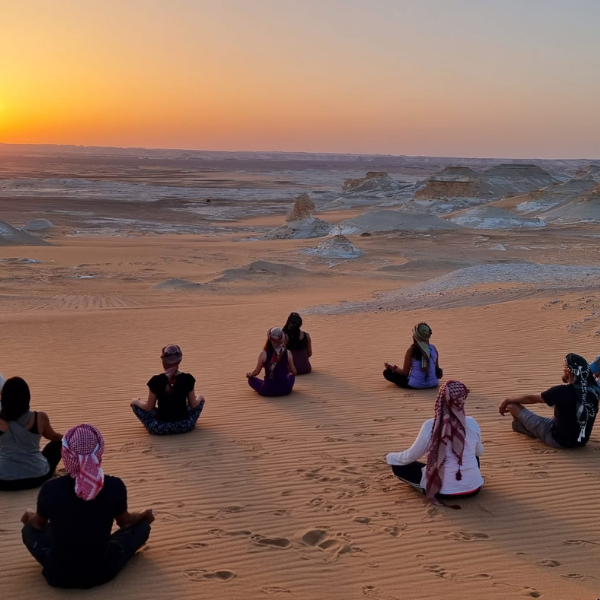
Sunset in the White Desert

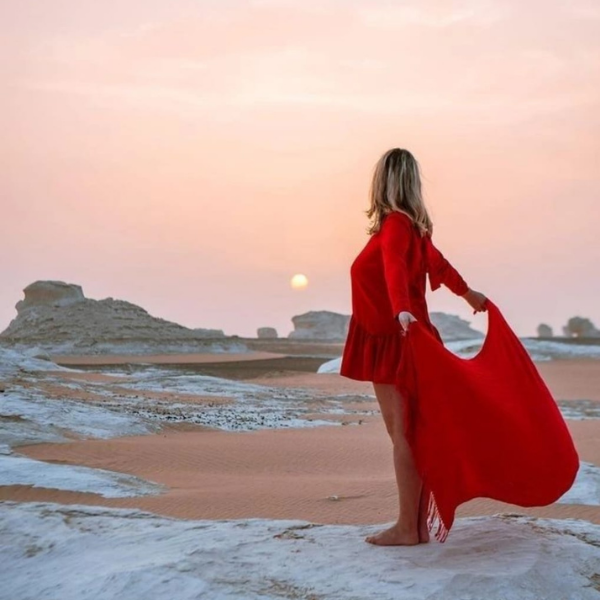
For many travelers, sunset is the emotional peak of Day 1.


You stop driving.


The temperature begins changing.


The formations cast long shadows.


The sky turns warmer.


Then the Sun drops below the horizon and the white rocks begin moving through:


gold,

grey,

blue,

and silhouette.


Don’t immediately head to camp the second the Sun disappears.


Twilight can be just as beautiful.


Our White Desert Sunrise & Sunset Guide explains the best light in much more detail.

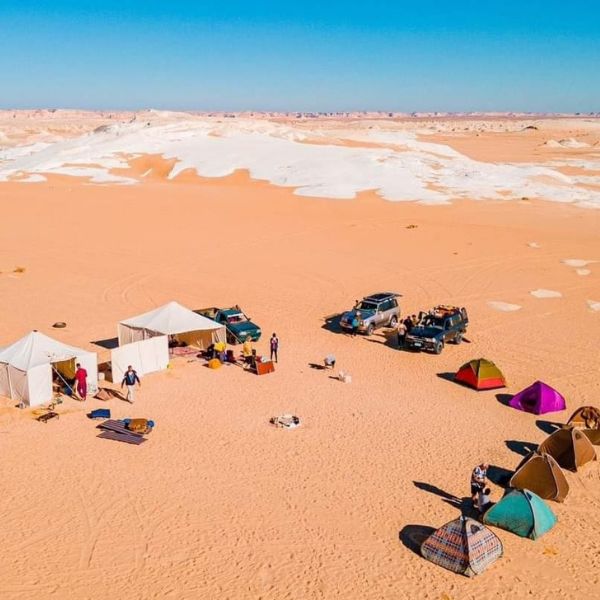
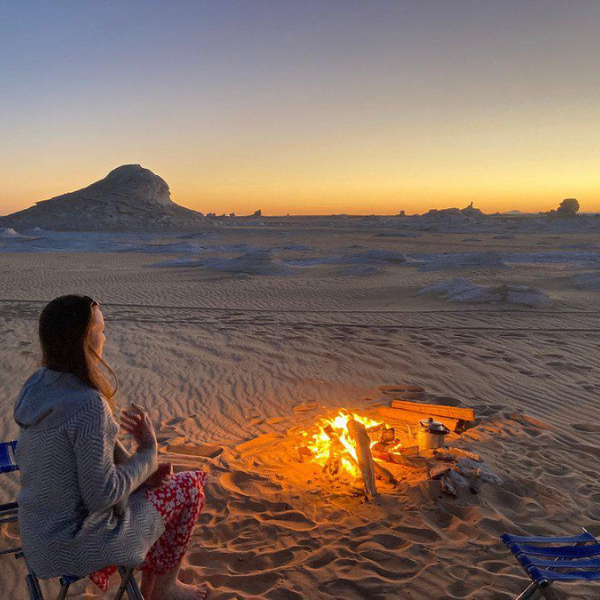
Stage 7: Camping in the White Desert

After sunset comes one of the reasons the White Desert deserves more than a day trip:


camping.


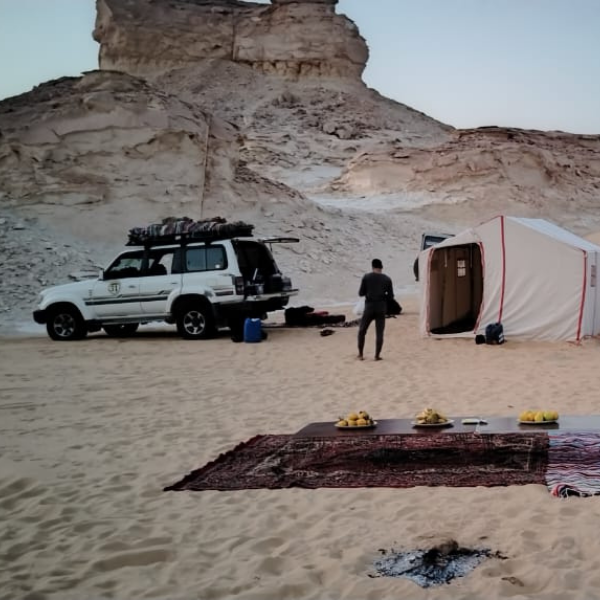
Traditional desert camping is intentionally simple.


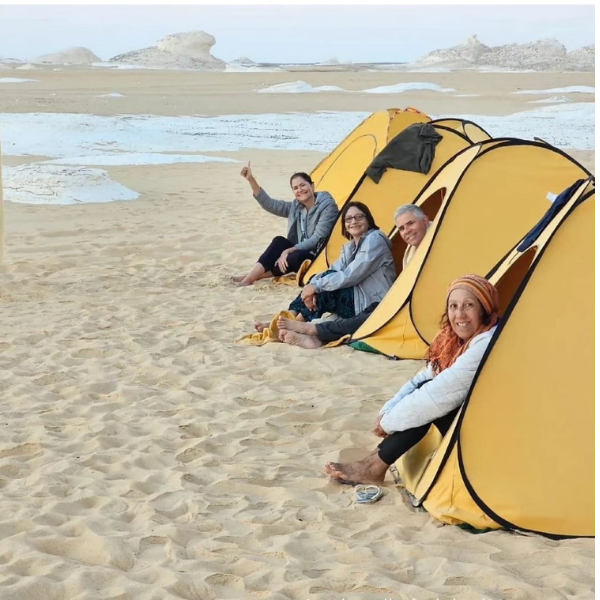
Depending on your operator and chosen package, your setup may include:


tents,

mattresses,

sleeping bags,

blankets,

low seating,

dinner,

tea,

and breakfast.


Don’t automatically imagine:


hotel bathroom,

hot shower,

air-conditioning,

and permanent rooms.


This is wilderness-style accommodation.


That simplicity is part of the experience.


For a full explanation of what camping actually feels like, read our White Desert Camping Guide.

What Is Dinner Like?

Exact menus vary.


But a typical camp includes a freshly prepared evening meal after the day of travel and sightseeing.


At that point, the food isn’t the only attraction.


You’re sitting far from Cairo.


The vehicles have stopped.


The formations have disappeared into darkness.


Tea comes out.


The night becomes quiet.


That’s when the safari stops feeling like a sightseeing tour and starts feeling like camping.

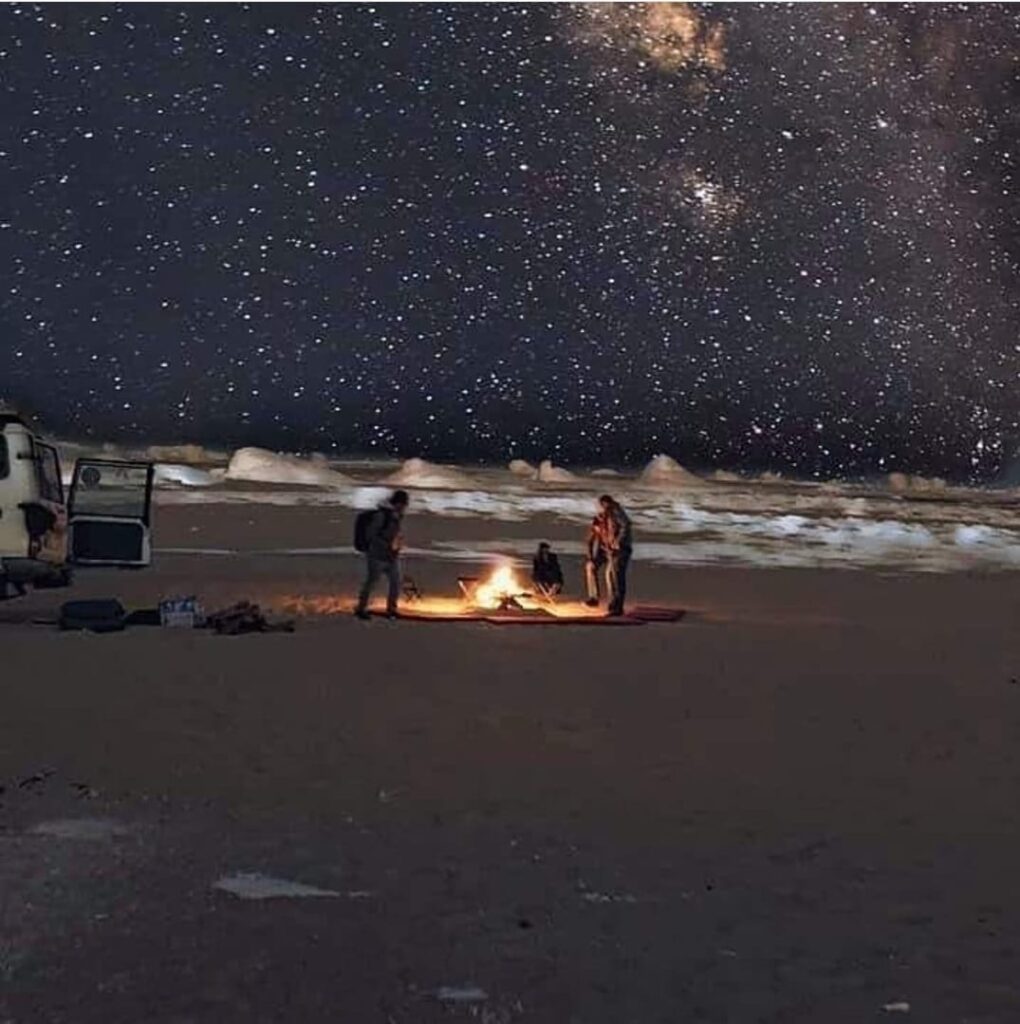
Stage 8: White Desert Stargazing

Once the camp becomes darker, look up.


Remote Western Desert locations can provide dramatically darker conditions than Cairo because you’re far from concentrated urban lighting.


Depending on:


Moon phase,

season,

dust,

cloud,

and atmospheric conditions,

you may see huge numbers of stars and potentially the Milky Way.


But not every night is identical.


A bright Full Moon, for example, can beautifully illuminate chalk formations while reducing visibility of faint stars.


If the night sky is one of your main reasons for booking, use our detailed White Desert Stargazing Guide before selecting your dates.

Should You Stay Awake All Night?

Probably not.


Unless you’re an astrophotographer with questionable sleep priorities.


Enjoy the stars.


Then sleep.


One of the best parts of camping is still coming:


sunrise.

Stage 9: White Desert Sunrise

Wake before the Sun.


Don’t wait until you see bright daylight through the tent.


The period before sunrise can be beautiful.


The rocks may appear:


grey,

blue,

or silver.


Then warm light begins appearing near the horizon.


Finally the first direct sunlight reaches the formations.


One rock turns gold.


Another remains in cool shadow.


Within minutes, the entire desert wakes up.


If you’re willing to wake up early once during your Egypt trip, this is a pretty good time to do it.

Why Camping Makes Sunrise So Easy

If you stayed in a hotel far away, sunrise would require:


getting dressed,

meeting a driver,

traveling,

and hoping you reach the location before the light changes.


In camp?


Your sunrise commute is usually:


get out of the tent.


That’s one of the strongest arguments for sleeping in the desert.

Breakfast and Morning Exploration

After sunrise, most groups return to camp for breakfast.


Then the day continues.


Depending on your itinerary, you may:


explore more formations,

photograph additional areas,

visit another landscape,

or begin returning toward Bahariya.


Morning light can remain beautiful for a while after sunrise, so don’t assume the photography opportunity ends the moment the Sun appears.

Returning to Bahariya Oasis

Eventually the journey begins moving back toward civilization.


The return route can vary.


You may follow:


some of the same corridor,

different tracks,

or a more direct route.


By the time palm trees and buildings reappear, the contrast is noticeable.


Bahariya suddenly feels very developed compared with the desert you’ve just spent the night in.


From there, you’ll normally transfer back into a normal road vehicle and begin the long journey toward Cairo.

How Far Is Bahariya Oasis from the White Desert?

This question sounds simple but is surprisingly difficult to answer with one number.


Why?


Because “the White Desert” isn’t a single parking lot.


It is a large landscape.


And the safari from Bahariya isn’t normally:


Point A → Point B without stopping.


It includes multiple destinations along the way.


So travel time depends on:


which White Desert section you’re visiting,

which stops are included,

road and track conditions,

how long you spend at each landmark,

and current route access.


The more useful way to think about it is:


Bahariya to White Desert is generally a safari journey lasting a substantial part of the day, not a simple direct transfer.


That mindset creates more realistic expectations.

Bahariya vs Farafra: Which Is Closer to the White Desert?

Geographically, Farafra is more closely associated with the White Desert itself.


Egypt’s official tourism portal identifies Farafra as a strong starting point for exploration of nearby Western Desert landscapes and specifically highlights Agabat and Crystal Mountain around the broader region.


So why do so many Cairo tours use Bahariya?


Because Bahariya is farther north and much closer to Cairo.


For a traveler beginning in Cairo:


Bahariya makes logistical sense.


For a traveler already traveling through Farafra/New Valley:


Farafra may make more geographic sense.


Both can be correct depending on the itinerary.

Can You Drive Yourself from Bahariya to the White Desert?

For most international visitors, independent off-road exploration isn’t the practical approach.


As of October 2026, current UK FCDO guidance states that tourists entering Bahariya Oasis, Farafra, the White Desert and Black Desert need advance permits and must use an official guide. It also notes limited phone reception and medical facilities.


Requirements can change, so check current rules shortly before traveling rather than relying permanently on a blog article.


The practical recommendation is simple:


use an experienced, properly authorized desert operator.

Why You Should Not Rely Only on Google Maps

Google Maps is useful for understanding where places are.


It is not a substitute for:


desert navigation,

access information,

permits,

route conditions,

or local knowledge.


A map may show that two locations appear close.


It doesn’t tell you:


whether the route is permitted,

whether the terrain requires a 4×4,

whether sand conditions have changed,

or whether a protected-area route is currently open.


Use digital maps for context.


Use experienced desert professionals for the actual journey.

Phone Reception on the Route

Do not assume continuous mobile signal.


Current travel advice specifically warns that reception can be limited in the Bahariya/Farafra/White Desert region.


Before leaving Bahariya:


download anything important,

save emergency information,

tell family or friends your itinerary,

and make sure key booking documents don’t exist only inside an app requiring internet.


A power bank is useful too.


Not because you’re going to spend the night scrolling TikTok.


Ideally.

Medical Facilities and Remote Travel

Medical services are also limited once you move into remote areas.


That makes preparation important.


Bring:


prescription medication,

personal medical essentials,

basic first-aid items where appropriate,

and suitable travel insurance.


If you have a condition that could require urgent advanced medical care, discuss the logistics before booking.


The White Desert is beautiful partly because it’s remote.


Remote comes with trade-offs.

What Should You Pack for Bahariya to White Desert?

Your packing should cover both:


hot sunny daytime conditions


and


cooler desert nights.


Useful items include:


comfortable closed shoes,

light daytime clothing,

warm layer,

jacket depending on season,

sun hat,

sunglasses,

sunscreen,

power bank,

personal medication,

toiletries,

camera protection,

reusable water bottle,

and dust protection for electronics.


A common mistake is packing for daytime only.


The temperature after sunset can feel completely different.


Use our complete What to Pack for White Desert Egypt Guide before departure.

Best Time to Travel from Bahariya to White Desert

For most travelers, the cooler part of the year is the most comfortable.


Why?


Because much of the safari involves exposure to:


sun,

open landscape,

walking,

and outdoor camping.


Cooler months generally make daytime exploration easier.


However, winter nights can feel surprisingly cold.


So there’s no season where you should ignore clothing layers.


For month-by-month planning, see our Best Time to Visit White Desert Egypt.

2-Day Bahariya & White Desert Safari

This is the classic first-time format.


Day 1

Early departure from Cairo.

Drive to Bahariya.

Lunch.

Transfer to 4×4.

Black Desert.

El Haize/spring stop depending on itinerary.

Crystal Mountain.

Agabat Valley.

White Desert.

Sunset.

Camp.

Dinner.

Stargazing.


Day 2

Wake before sunrise.

Sunrise photography.

Breakfast.

Additional White Desert exploration.

Return toward Bahariya.

Transfer back to Cairo.

It’s busy.

But it provides the core experience.


Explore the White Desert Overnight Tour from Cairo for the classic version.

3-Day Bahariya & White Desert Safari

Adding another day changes the trip considerably.


The biggest advantage isn’t simply:


“more stops.”


It’s:


more time.


You can spend longer:


walking,

taking photographs,

enjoying Agabat,

exploring formations,

watching sunset,

stargazing,

and experiencing sunrise.


You may also gain:


a second camp,

a second sunset,

and a second sunrise.


For travelers who dislike rushing, three days can be much more satisfying.


Explore our White Desert 3 Days Tour from Cairo.


We’ve also compared both options directly in the 2-Day vs 3-Day White Desert Tour Guide.

2 Days vs 3 Days: Quick Comparison

Feature

2 Days / 1 Night

3 Days / 2 Nights

Cairo transfer

Yes

Yes

Bahariya

Yes

Yes

Black Desert

Yes

Yes

Crystal Mountain

Yes

Yes

Agabat

Yes

Yes

White Desert

Yes

Yes

Camping

1 night

Usually 2 nights / extended experience

Sunsets

1

Up to 2

Sunrises

1

Up to 2

Photography pace

Faster

Better

Relaxed exploration

Limited

Stronger

Best for

First visit / limited time

Photographers / desert lovers

Which Is Better for Photographers?

Three days.


A two-day safari can still produce excellent photographs.


But photography takes time.


A group traveler sees a formation and thinks:


“Nice.”


A photographer sees the same formation and begins:


walking around it,

changing lenses,

waiting for someone to move,

checking the Sun,

moving the tripod,

taking brackets,

and then asking for five more minutes.


Three days gives you more breathing room.


If photography matters, also read our White Desert Photography Tips.

Private vs Shared White Desert Safari

This can make a significant difference.


Shared Tour

Usually:


more affordable,

more social,

fixed pace.

Good for:


solo travelers,

budget-conscious travelers,

and people who don’t need control over every stop.


Private Tour

Usually provides more flexibility around:


timing,

photography,

meal breaks,

family needs,

sunset,

and stop duration.


If you know you’ll want to spend 45 minutes photographing one formation while everyone else wants dinner?


Private is easier.


Read our Private White Desert Safari from Cairo Guide for the detailed comparison.

Is Bahariya to White Desert Suitable for Families?

Yes, depending on the children.


The route can be extremely fun because it includes:


4×4 driving,

sand,

unusual rocks,

camping,

stars,

and outdoor exploration.


The bigger challenges are:


the long Cairo transfer,

bathroom arrangements,

camping comfort,

heat,

and children’s tolerance for driving.


For families, a private trip can sometimes make the experience easier because you can control:


stops,

meal times,

and pace.

Is It Good for Couples?

Very.


Especially once the trip reaches:


sunset,

camp,

stars,

and sunrise.


A White Desert overnight experience feels completely different from another night in a city hotel.


For couples interested in experiences rather than conventional luxury alone, this is one of the most memorable additions to a Cairo itinerary.

Is It Good for Solo Travelers?

Yes.


A shared tour can be a good way to meet other travelers.


A private safari is better if you want maximum control.


Either way, remote desert travel is not where you should treat solo independence as a challenge to prove.


Travel with the appropriate local team.

Toilets and Showers on the Route

In Bahariya:


normal facilities are available.


Once you enter remote desert camping areas:


conditions become much more basic.


Some camps may provide portable arrangements.


Others may rely on simpler wilderness systems.


Permanent showers should not automatically be expected.


If facilities matter strongly to you, ask exactly what is provided before booking.


We’re also covering this in detail in our dedicated upcoming guide:


White Desert Camping Toilets, Showers & Facilities: What to Expect.

How Much Does a Bahariya to White Desert Safari Cost?

There isn’t one meaningful universal number.


Price depends on:


trip length,

private vs shared,

number of travelers,

Cairo transfer,

4×4 arrangements,

camp type,

meals,

guide,

permits,

entry fees,

and accommodation.


Two tours with very different prices may actually include very different things.


Before comparing prices, compare inclusions.


Our White Desert Egypt Cost Guide explains the main pricing factors.

What Should a Good Safari Include?

Ask about:


Cairo pickup,

Cairo return,

Bahariya transfer,

4×4 vehicle,

local driver,

guide,

meals,

drinking water,

camping equipment,

permits or entry arrangements,

and advertised sightseeing stops.


Also ask:


How many people share the vehicle?

Is camping private or shared?

What bedding is provided?

Are toilets available?

What happens if access rules change?


The answers tell you much more than a flashy tour title.

Bahariya Oasis to White Desert Safety

The main safety issue isn’t whether Mushroom Rock itself is dangerous.


It’s remote travel.


You’re dealing with:


long distances,

limited communication,

limited medical facilities,

off-road terrain,

and changing access rules.


Travel with experienced professionals.


Follow guide instructions.


Stay hydrated.


Don’t wander away from camp alone.


Keep essential medication with you.


For a complete breakdown, read the White Desert Egypt Safety Guide.

Responsible Travel Along the Route

The desert may look endless.


It’s still vulnerable.


Don’t:


leave plastic behind,

remove fossils,

take crystals,

break chalk,

carve names,

drive randomly across sensitive terrain,

or climb fragile formations for photos.


Crystal Mountain isn’t a souvenir shop.


The White Desert isn’t an unlimited supply of chalk.


And “nobody saw me” is not a conservation strategy.


Photograph the landscape.


Leave it intact for the next traveler.

Why the Bahariya-to-White-Desert Route Is Better Than Just Seeing One Attraction

Because the transition is the story.


You begin among:


Bahariya’s palms.


Then:


dark hills.


Then:


springs.


Then:


crystals.


Then:


golden Agabat cliffs.


Then:


white chalk.


Then:


sunset.


Then:


darkness and stars.


Then:


sunrise.


The landscape changes repeatedly without requiring you to fly across the country.


That is what makes this route one of Egypt’s strongest short adventure trips.


If you only drove to one famous Mushroom Rock, photographed it and returned?


You would technically see the White Desert.


But you’d miss the journey that makes it meaningful.

Is the Bahariya-to-White-Desert Route Worth It?

For travelers who enjoy:


nature,

geology,

photography,

camping,

4×4 travel,

stars,

and landscapes,

yes.


Especially if you’re already spending time in Cairo.


Within two or three days, you can move from one of Africa’s largest cities into a remote desert environment that feels completely disconnected from urban Egypt.


The trip is not effortless.


The transfer is long.


Facilities are basic.


The desert is remote.


But that’s also why the experience feels so different from a normal sightseeing tour.

Plan Your Bahariya Oasis to White Desert Safari

If this is your first visit, the classic route is straightforward:


Cairo → Bahariya Oasis → Black Desert → Crystal Mountain → Agabat Valley → White Desert → Camp → Sunrise → Bahariya → Cairo.


Choose 2 days / 1 night if you want the essential experience in the shortest practical format.


Choose 3 days / 2 nights if:


photography matters,

you prefer slower travel,

or the desert itself is one of the main reasons you’re visiting Egypt.


For the complete destination overview, start with the White Desert Egypt Guide.


For the logistics from Cairo, use our Cairo to White Desert Egypt Guide.


For the classic trip, explore the White Desert Overnight Tour from Cairo.


For the longer experience, see the White Desert 3 Days Tour from Cairo.


You can also browse our Egypt Desert Safari Packages or view all Egypt Desert Dunes tours to compare routes.


And if you want help choosing the right itinerary for your dates, contact Egypt Desert Dunes.

- Tours Carousel
✓ Available on Viator

Book Egypt Desert Dunes Tours on Viator

Discover our private White Desert camping adventures and Siwa Oasis experience. Choose your favorite itinerary and complete your reservation securely through Viator.

✓ Private Tours
✓ Cairo Pickup
✓ Mobile Ticket
✓ English Speaking Team
✓ Book Through Viator
4-Day Private White Desert Camping Tour from Cairo by Egypt Desert Dunes
✓ Book on Viator
Private Tour
White Desert • Bahariya Oasis • Egypt
⏱ 4 Days / 3 Nights ★ 5.0 (4 Reviews)

4-Day Private Camping Tour in the White Desert from Cairo

Go deeper into Egypt's Western Desert with a private four-day camping adventure including spectacular desert landscapes, Black Desert, White Desert, open-air meals and three nights beneath the stars.

Cairo Pickup Private Tour Desert Camping Meals Included
Reference price from
€588 / person*
Check Viator for today's live price
View on Viator →
2-Day 1-Night White Desert Camping Tour from Cairo by Egypt Desert Dunes
✓ Book on Viator
Best Short Trip
White Desert • Black Desert • Egypt
⏱ 2 Days / 1 Night ★ 5.0 (3 Reviews)

2-Day, 1-Night Camping Tour in White Desert from Cairo

Our most compact White Desert adventure for travelers who want to experience the desert from Cairo, explore its unique landscapes and spend an unforgettable night camping beneath the stars.

1 Night Camping Cairo Pickup Breakfast Lunch & Dinner
Reference price from
€197 / person*
Price varies by date and group size
View on Viator →
3-Day Private White Desert Camping Tour from Cairo by Egypt Desert Dunes
✓ Book on Viator
Popular Choice
Black Desert • Aqabat • White Desert
⏱ 3 Days / 2 Nights ★ 5.0 (5 Reviews)

3-Day Private Camping Tour of White Desert from Cairo

Spend three days exploring the Western Desert, including the Black Desert, Crystal Mountain, Aqabat area and White Desert, with two nights of private desert camping.

2 Nights Camping Black Desert White Desert Private Experience
Reference price from
€394 / person*
Check Viator for today's live price
View on Viator →
4-Day Siwa Oasis Trip from Cairo by Egypt Desert Dunes
✓ Book on Viator
Siwa Experience
Siwa Oasis • Western Desert • Egypt
⏱ 4 Days Egypt Desert Dunes • 14 Operator Reviews

Siwa Oasis Trip with Cairo Pick Up

Travel from Cairo to legendary Siwa Oasis on a private four-day journey exploring Siwan culture, desert landscapes, Lake Siwa, traditional sites and some of the oasis's most distinctive attractions.

4 Days Cairo Pickup Siwa Hotel Meals Included
Reference price from
$1,150 / adult*
Check Viator for today's live price
View on Viator →
*Important: Prices shown above are reference “from” prices observed while reviewing the listings and may change based on travel date, number of travelers, availability, currency and Viator pricing. Click “View on Viator” for the current final price before booking.

Explore Egypt's Desert with Egypt Desert Dunes

From a one-night White Desert camping adventure to extended Western Desert and Siwa Oasis experiences, choose the itinerary that matches your travel style and complete your booking through Viator.

Explore Our Tours →
Plan Your Desert Adventure

Book a Tour or Create Your Own Egypt Experience

Choose one of our ready-made tours or customize your own private journey. Select your destinations, duration and travel style, then send your request directly to Egypt Desert Dunes on WhatsApp.

Book Your Desert Tour

Select your preferred itinerary and send us your travel details. Our team will reply on WhatsApp with availability and the final quote.

Choose Your Tour *
Please select a tour and complete your name, travel date and number of travelers.
Your booking request will open directly in WhatsApp. No payment is made through this form.

Create Your Own Private Egypt Tour

Combine Cairo, Giza, Fayoum, the Western Desert and Siwa in one custom itinerary. Choose the destinations and experiences you want and our team will recommend the best route based on your available days.

Which Places Would You Like to Visit? *
Select as many destinations as you like. Egypt Desert Dunes will recommend the best route according to your trip duration.
What Are You Most Interested In?
Please enter your name, number of travelers, trip duration and select at least one destination.
Egypt Desert Dunes will review your selections and send you a customized itinerary and quotation on WhatsApp.
Traveler Reviews

What Our Guests Say on Tripadvisor

Real experiences from travelers who explored Egypt’s deserts, oases, and cultural landmarks with Egypt Desert Dunes. Read their Tripadvisor reviews and discover why guests choose us for private desert safaris, camping adventures, and unforgettable Egypt tours.

FAQ — Bahariya Oasis to White Desert

Is Bahariya Oasis the same as the White Desert? +

No. Bahariya is a populated Western Desert oasis with villages, palm groves, springs, accommodation and archaeological sites. It is also a major gateway used by Cairo-based White Desert safaris.

How far is Bahariya Oasis from Cairo? +

Egypt's official tourism authority places Bahariya approximately 370 km southwest of Cairo.

How long does Cairo to Bahariya take? +

The drive commonly takes around five hours, although traffic, stops, checkpoints and road conditions can affect actual travel time.

How do you get from Bahariya Oasis to the White Desert? +

Travelers normally continue from Bahariya with an experienced desert team in a suitable 4x4, visiting Western Desert landscapes before reaching the White Desert.

What stops are between Bahariya and the White Desert? +

Common safari stops include the Black Desert, El Haize or spring areas, Crystal Mountain and Agabat Valley before reaching the White Desert.

Is the Black Desert before the White Desert? +

On many Cairo-based itineraries beginning in Bahariya, yes. The Black Desert is one of the first major desert landscapes visited.

Is Crystal Mountain on the White Desert route? +

Yes. Crystal Mountain is commonly included on safari routes between the Bahariya and Farafra regions.

Is Agabat Valley on the route? +

Yes. Agabat Valley is one of the major landscapes commonly visited before reaching the iconic White Desert formations.

Do you need a 4x4 from Bahariya to the White Desert? +

Suitable 4x4 vehicles are normally used for the off-road safari sections beyond Bahariya.

Do you need a guide for the White Desert? +

Current travel guidance states that tourists entering Bahariya, Farafra, the White Desert and Black Desert need advance permits and an official guide. Requirements should be checked again before travel because regulations can change.

Can you drive yourself from Bahariya to the White Desert? +

For most international visitors, independent off-road driving is not the practical approach because of permits, protected-area requirements, navigation and remote terrain.

How many days do you need? +

Two days and one night are enough for the classic first White Desert experience from Cairo. Three days provide a slower and more photography-friendly trip.

Is one night enough in the White Desert? +

Yes. One night allows you to experience sunset, camping, stargazing and sunrise.

Is three days better than two? +

Three days are better if you want more photography time, a slower pace, additional exploration or a second night in the desert.

Can you visit the White Desert in one day from Cairo? +

It is extremely rushed. The Cairo-to-Bahariya transfer alone takes several hours before the safari begins, so an overnight trip is much more practical.

Is Farafra closer to the White Desert than Bahariya? +

Yes. Farafra is geographically closer to the White Desert, while Bahariya is a practical gateway for many Cairo-based tours because it lies farther north and closer to Cairo.

Can you camp in the White Desert? +

Camping is commonly included in White Desert safari itineraries, subject to current access rules, permits and approved locations.

What is the best time to travel from Bahariya to the White Desert? +

The cooler season is generally more comfortable for daytime exploration and camping. Travelers should still prepare for cool or cold desert nights.

Is the Bahariya-to-White-Desert route worth it? +

Yes. The route itself is one of the main attractions because it combines oasis landscapes, Black Desert hills, Crystal Mountain, Agabat Valley, White Desert formations, sunset, camping and sunrise.

Leave a Comment

Your email address will not be published. Required fields are marked *