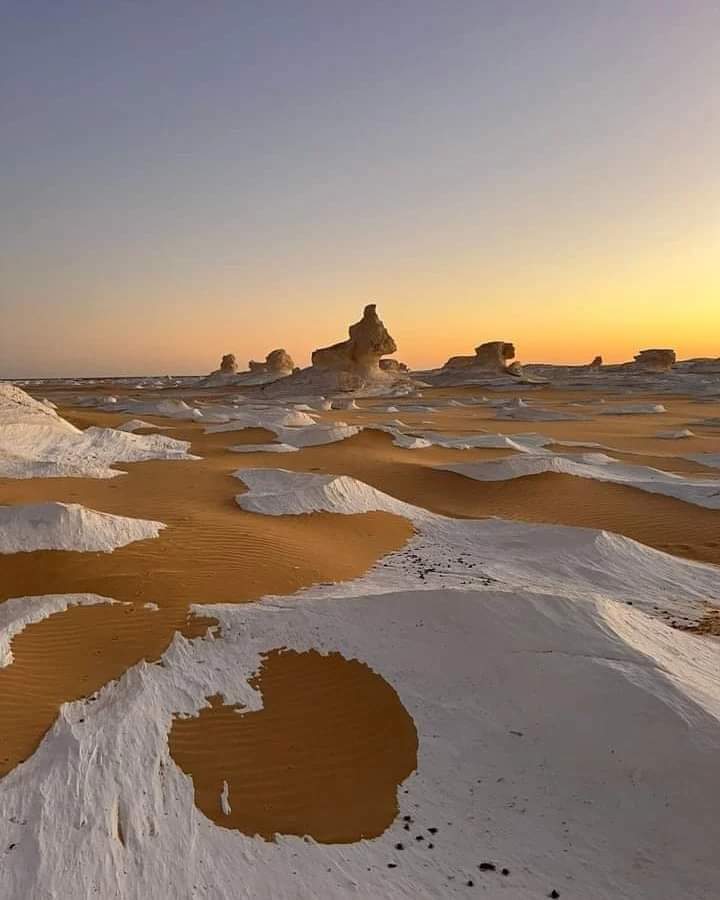
Overnight Desert Safari Egypt: What to Expect from a Night in the Desert

An overnight desert safari in Egypt is very different from an ordinary day tour.


During the day, you’re moving.


You drive through the desert.


Stop at viewpoints.


Explore rock formations.


Cross dunes.


Take photographs.


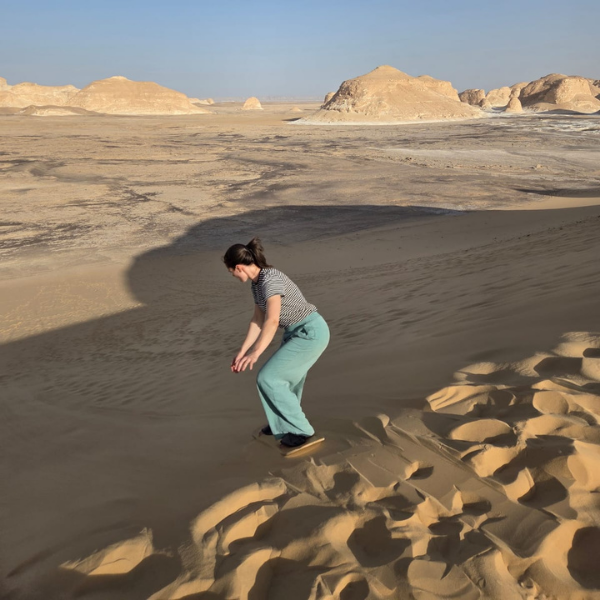
Maybe try sandboarding.


But after sunset, the whole experience changes.


The vehicles stop.


The landscape becomes dark.


Dinner is prepared.


The desert gets quieter.


Stars begin appearing.


And instead of driving back to a hotel, you stay.


That night in the desert is often the part travelers remember most.


For visitors starting in Cairo, one of the most popular ways to experience an overnight desert safari in Egypt is through Bahariya Oasis and into the Black Desert, Crystal Mountain, Agabat Valley and White Desert.


Egypt’s official tourism portal specifically promotes desert camping around Bahariya and says licensed guides and local tour companies can arrange tents, food and other equipment for overnight trips. It also recommends using experienced licensed guides with suitable 4×4 vehicles when leaving the oasis.


The experience can include:


4×4 desert driving,

sunset,

a freshly prepared dinner,

campfire or evening tea,

sleeping in tents,

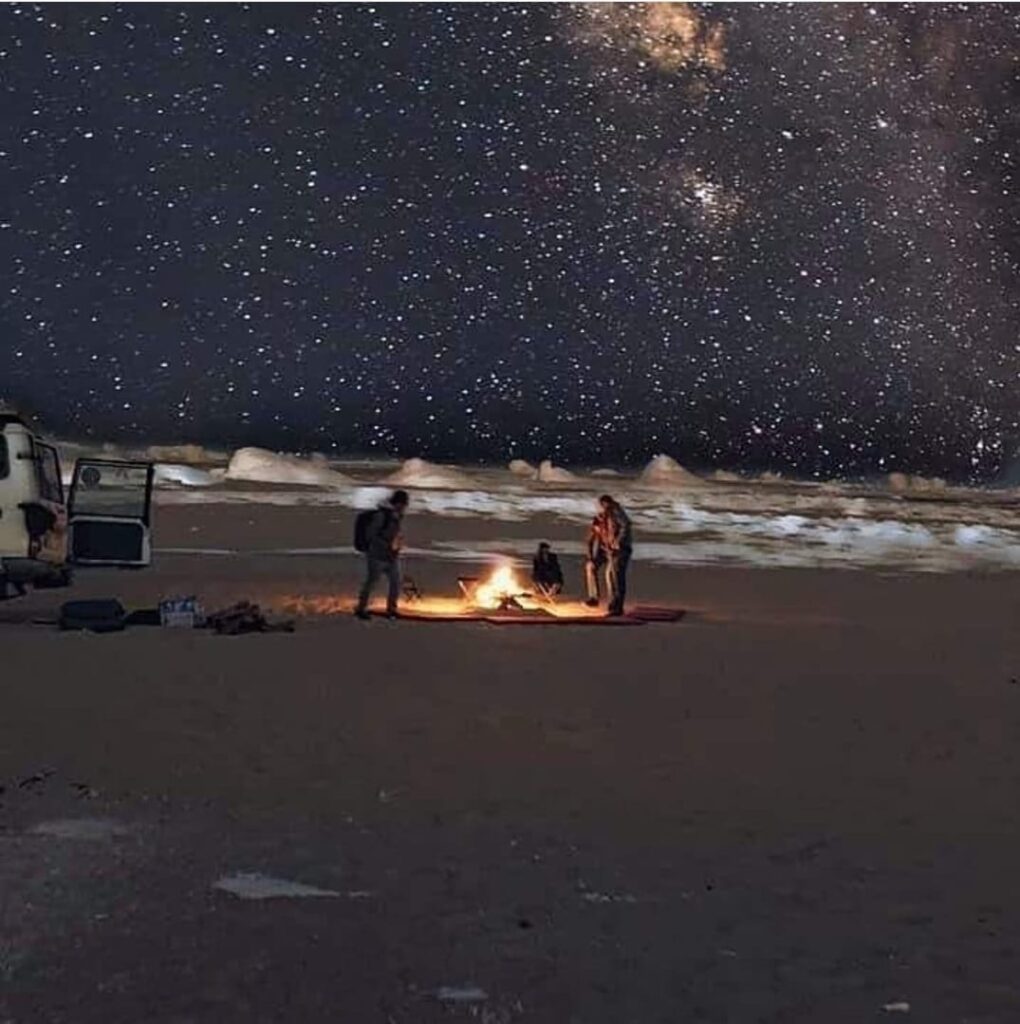
stargazing,

and waking up for sunrise.


But before booking, there are some practical questions almost everyone asks.


Are there toilets?

Are there showers?

Is the tent comfortable?

Does it get cold?

Can you charge your phone?

Will you have mobile reception?

What should you bring?

And is one night enough?


This guide answers all of that.


If you’re specifically interested in the White Desert, start with our White Desert Egypt Guide.


For the actual overnight trip from Cairo, explore our White Desert Overnight Tour from Cairo.

- Tours Carousel

Overnight Desert Safari Egypt at a Glance

Question

Quick Answer

Best classic overnight safari from Cairo?

White Desert via Bahariya Oasis

Typical duration

2 days / 1 night

Main transport

Road transfer + suitable 4×4

Where do you sleep?

Desert camp or tent depending on tour

Is dinner included?

Commonly yes on organized overnight safaris

Are there toilets?

Depends on camp/operator; remote camps can be basic

Are there showers?

Don’t assume so in wilderness camps

Is electricity available?

Usually limited or unavailable in basic camps

Can you charge phones?

Bring a power bank

Is there mobile reception?

Often limited in remote Western Desert areas

Does the desert get cold at night?

Yes, especially in cooler months

Best part of the night

Stargazing and silence

Best morning experience

Sunrise

Best minimum trip

2 days / 1 night

Better for photographers

3 days / 2 nights

What Is an Overnight Desert Safari in Egypt?

An overnight desert safari combines daytime desert exploration with at least one night spent away from normal city accommodation.


That can mean different things depending on where you travel.


Egypt offers desert experiences around:


the White Desert,

Bahariya Oasis,

Fayoum,

Siwa Oasis,

the Great Sand Sea,

and other desert regions.


But the classic Cairo-based overnight desert safari usually refers to a Western Desert journey through Bahariya toward the White Desert.


Egypt’s official tourism authority promotes camping, 4×4 exploration, desert excursions and stargazing as part of Egypt’s wider outdoor travel experience.


A normal trip is not simply:


drive into the sand → pitch a tent → sleep.


The overnight stay is usually built into a much larger route.

What Does a Typical Overnight Desert Safari from Cairo Look Like?

For a White Desert trip, the journey commonly follows a structure such as:


Cairo

↓

Bahariya Oasis

↓

4×4 safari begins

↓

Black Desert

↓

Crystal Mountain

↓

Agabat Valley

↓

White Desert

↓

Sunset

↓

Camp

↓

Dinner

↓

Stargazing

↓

Sleep

↓

Sunrise

↓

Breakfast

↓

More desert exploration

↓

Bahariya

↓

Cairo


That’s why one night can feel much longer than a normal hotel stay.


You’re not checking into accommodation at 8 PM and leaving at 8 AM.


The overnight element is part of the safari from afternoon through the following morning.


For the complete route, read our Bahariya Oasis to White Desert Guide.

Stage 1: Leaving Cairo

The adventure usually starts early.


Bahariya Oasis lies around 370 km southwest of Cairo, according to Egypt’s official tourism authority, and the drive commonly takes around five hours depending on traffic, stops and road conditions.


That first transfer is important.


You’re moving from:


Cairo traffic,

urban buildings,

restaurants,

and hotels

toward:

open desert,

palm groves,

small oasis settlements,

and eventually wilderness.


If you’re considering the trip but worried about the journey, read our Cairo to White Desert Egypt Guide.

Stage 2: Arriving in Bahariya Oasis

Bahariya is the transition point between the normal road journey and the desert safari.


A typical stop may include:


lunch,

tea,

bathroom break,

meeting your local desert driver,

checking supplies,

and changing into a 4×4.


This is a useful time to make sure you have everything needed for the night.


Once you’re far into the desert, forgetting your jacket becomes more annoying.


For more about the oasis itself, read our Bahariya Oasis Egypt Guide.

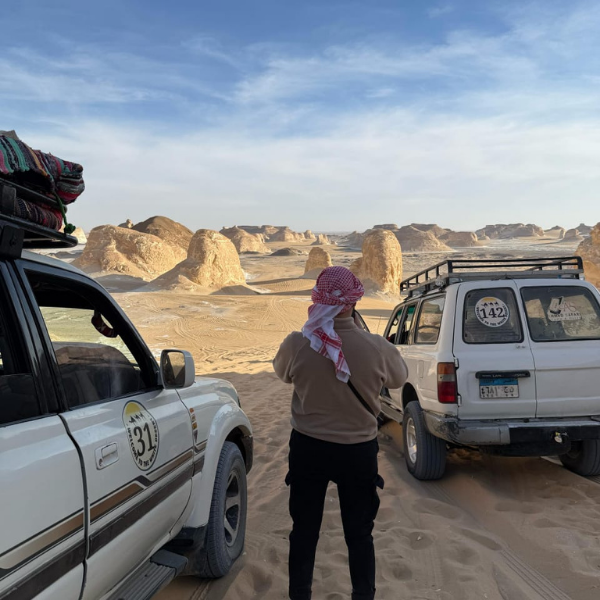
Stage 3: The 4x4 Safari Begins

Once you leave Bahariya, the journey becomes much more adventurous.


Egypt’s official tourism portal recommends experienced licensed guides and suitable 4×4 vehicles for trips outside the oasis.


You’ll travel through a series of dramatically different landscapes.


And that’s important.


An overnight desert safari isn’t six hours of staring at identical sand.


The landscape keeps changing.

The Black Desert

One of the first major stops is often the Black Desert Egypt.


Here, dark hills and black stones create a visual contrast with the later White Desert.


You’ll usually:


stop for photos,

walk around viewpoints,

and experience the first real feeling of leaving the oasis behind.

Crystal Mountain

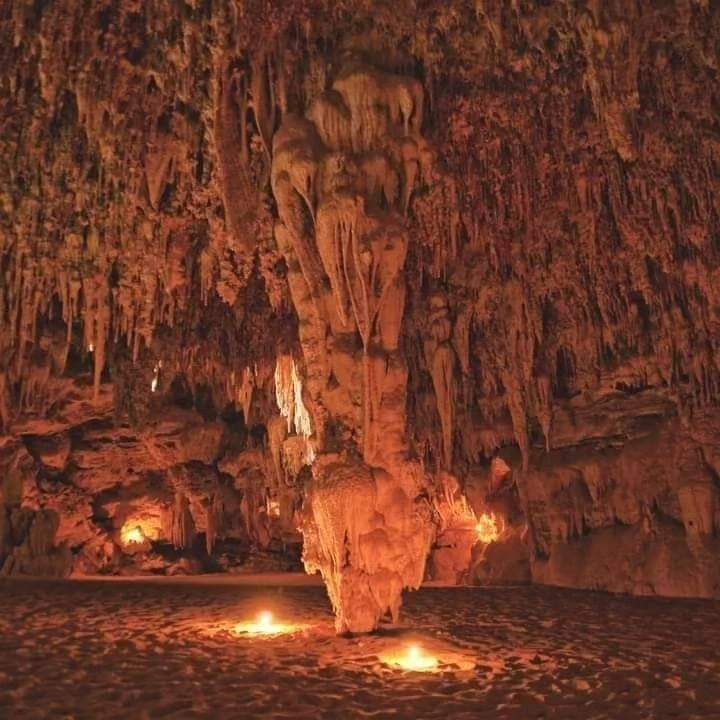
Next may come Crystal Mountain Egypt.


It’s a compact geological landmark known for exposed crystalline material and unusual rock structure.


The stop is usually shorter than Agabat or the White Desert itself.


But it adds another completely different visual environment to the journey.

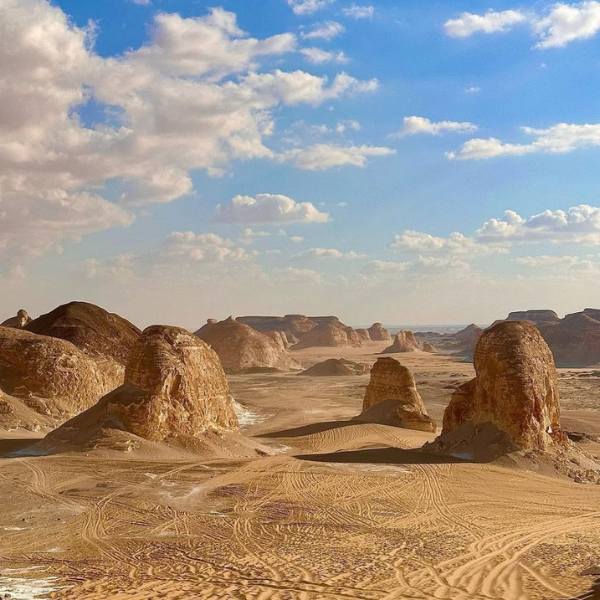
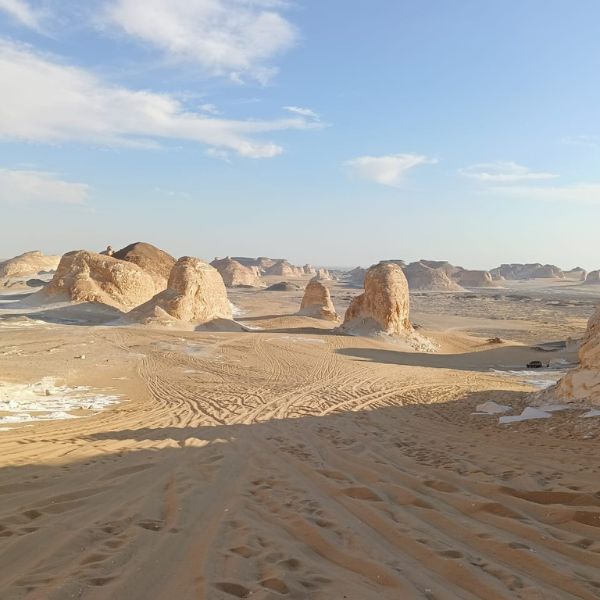
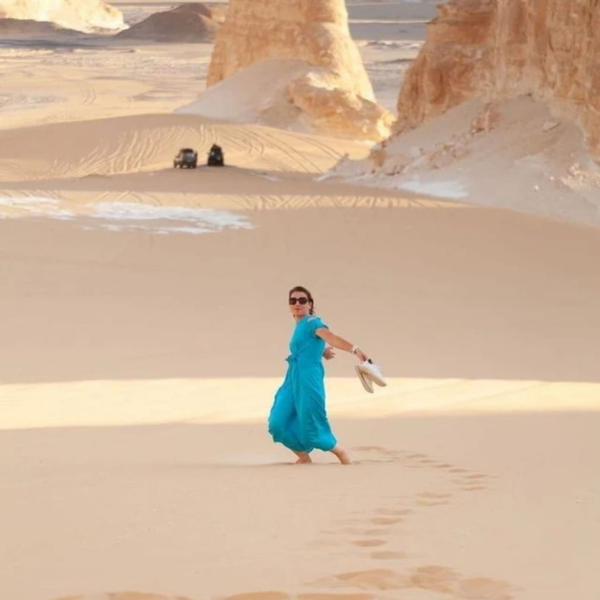
Agabat Valley

Then comes Agabat Valley Egypt.


This is where the scale becomes enormous.


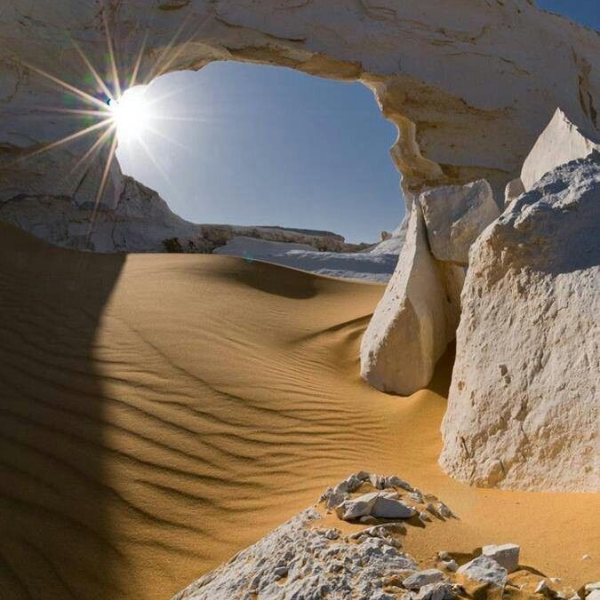
Golden sand.


Pale cliffs.


Large open valleys.


Dunes.


Tiny 4×4 vehicles against huge geological formations.


For many travelers, Agabat is one of the most photogenic parts of the entire route.

Stage 4: Reaching the White Desert Before Sunset

The timing matters.


You ideally don’t want to reach the White Desert after all the good light has disappeared.


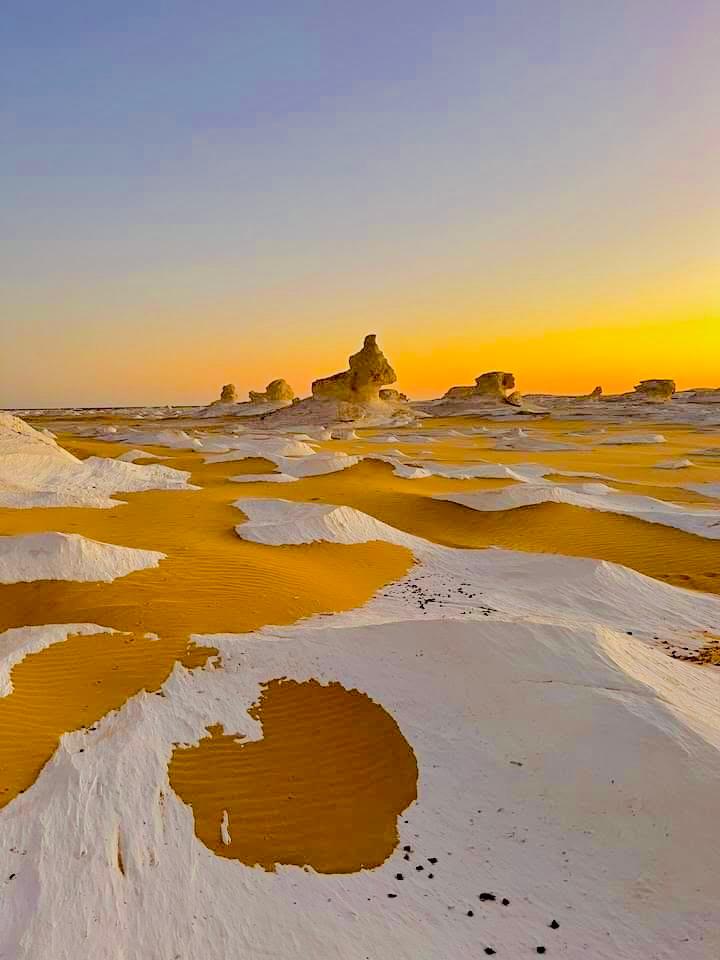
Low afternoon sunlight turns the chalk formations from brilliant white into:


cream,

gold,

soft pink,

and deep shadow.


For photographers, this is one of the most important periods of the trip.


Our White Desert Sunrise & Sunset Guide explains the best light in detail.

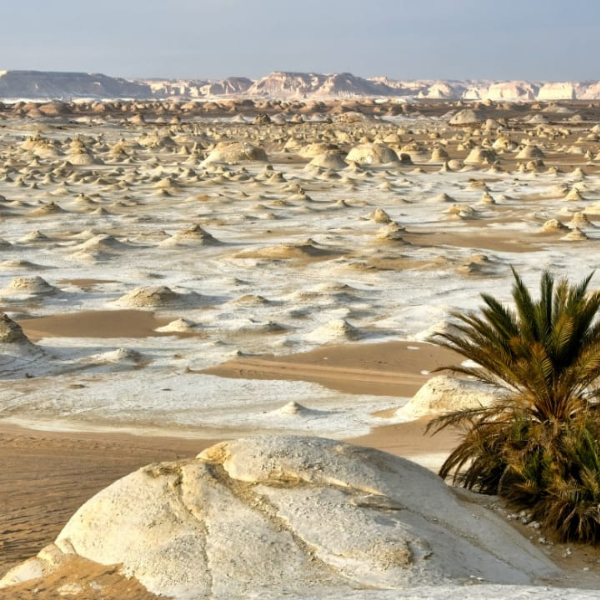
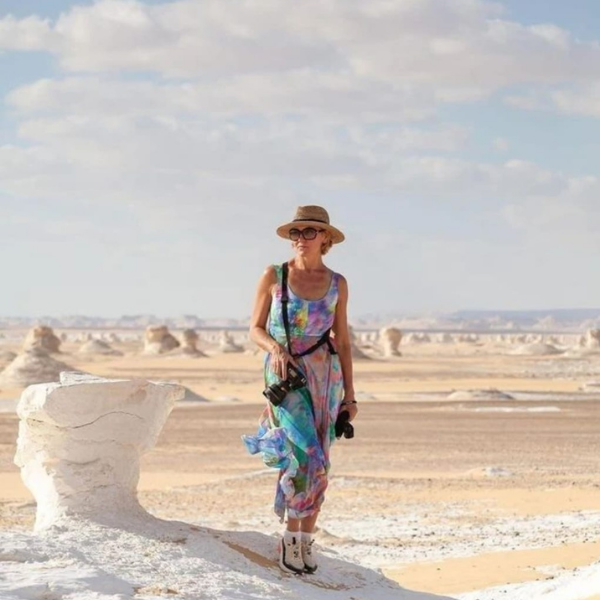
What Is the White Desert Actually Like?

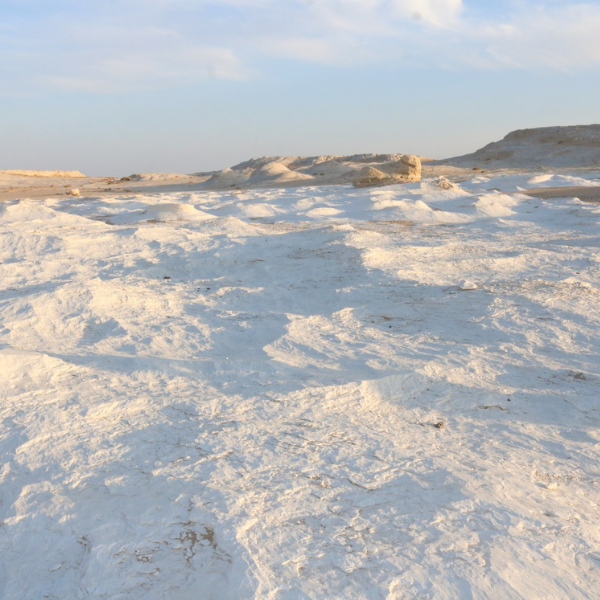
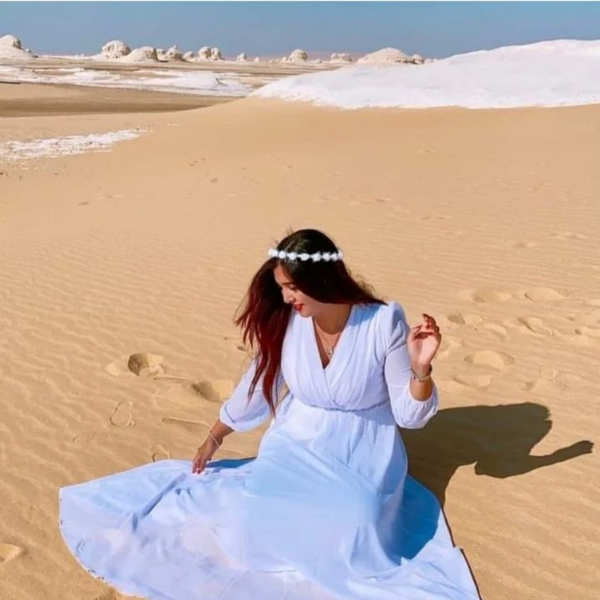
It’s not simply white sand.


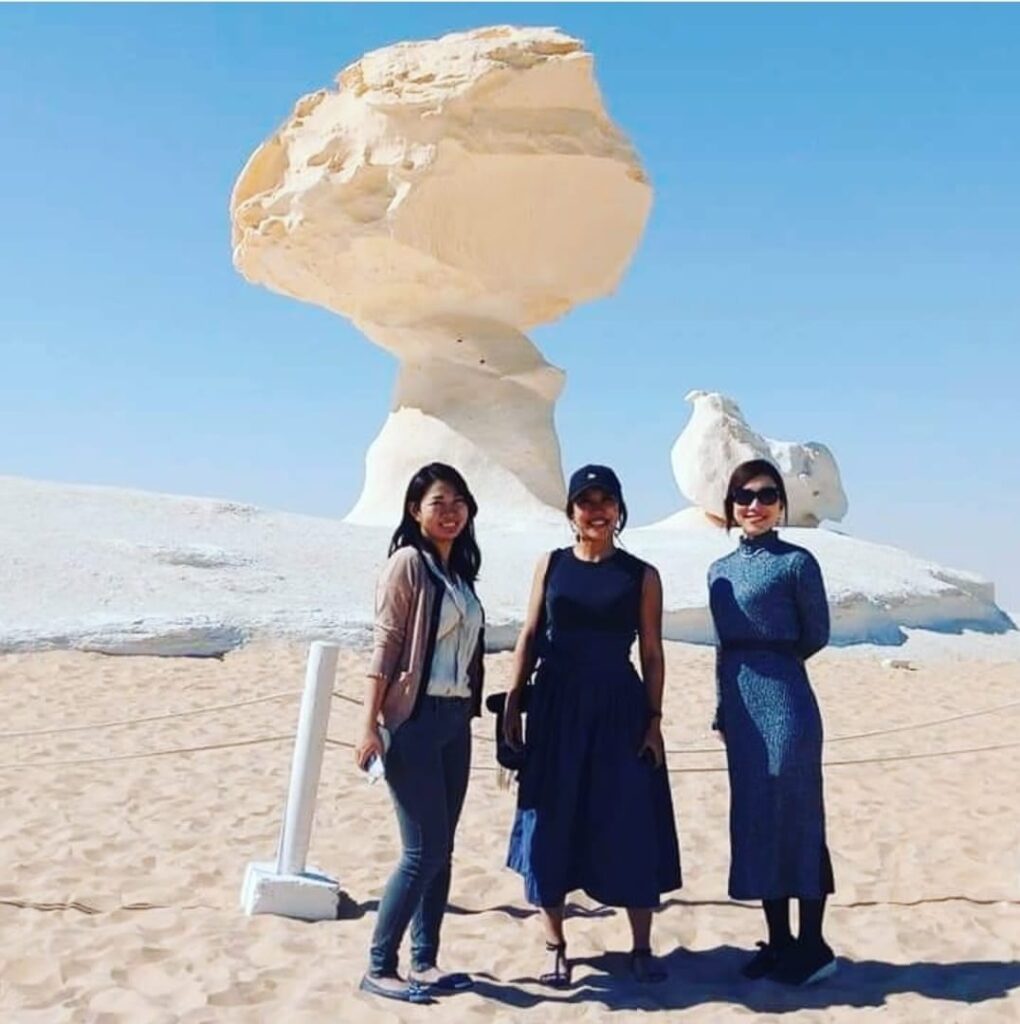
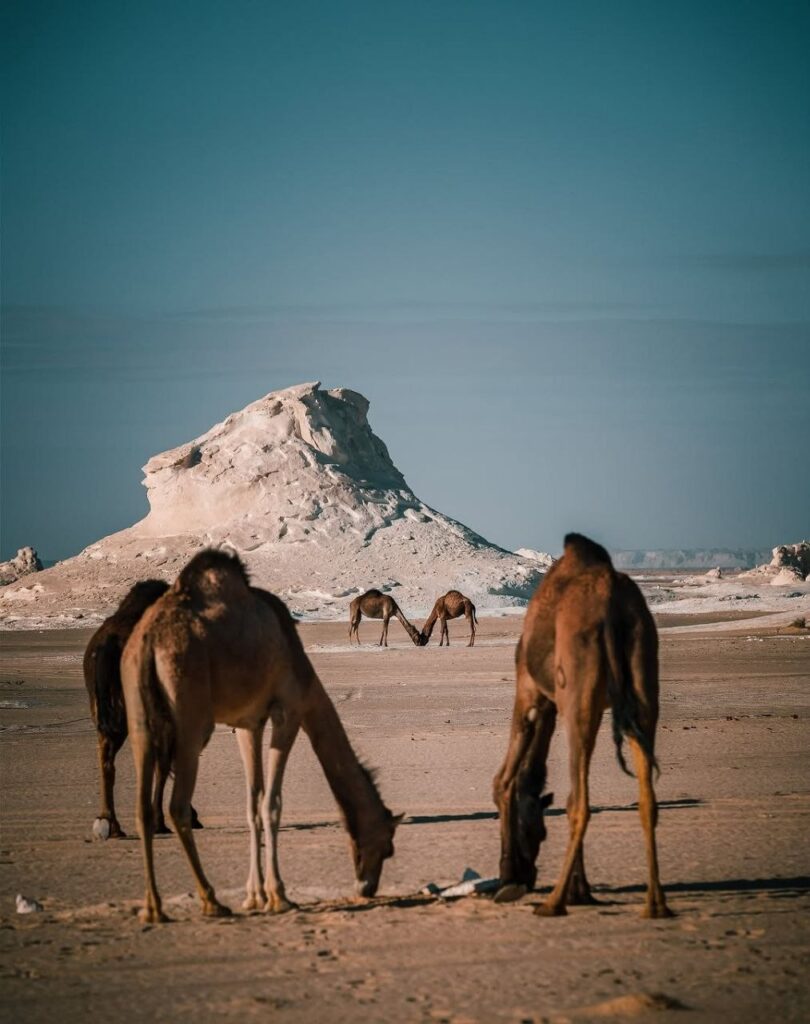
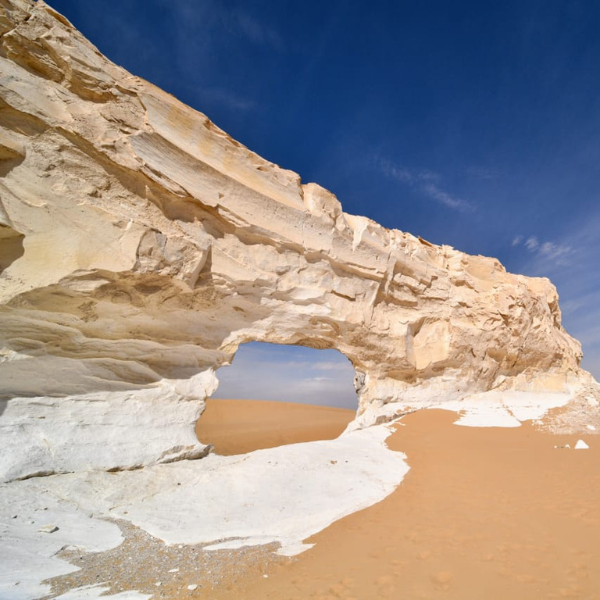
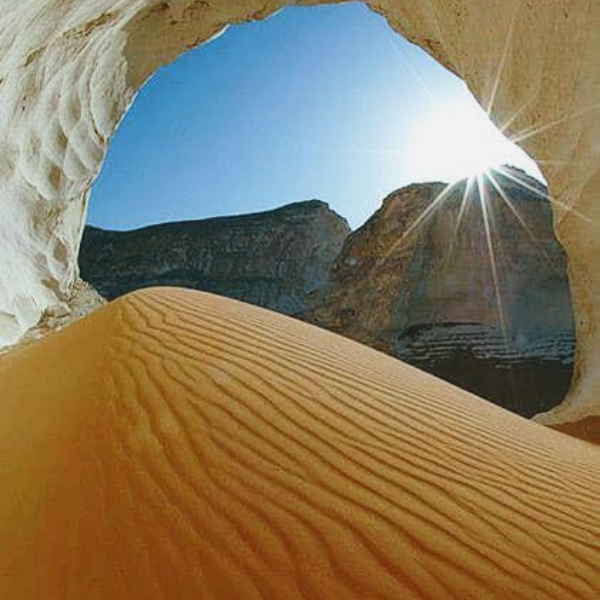
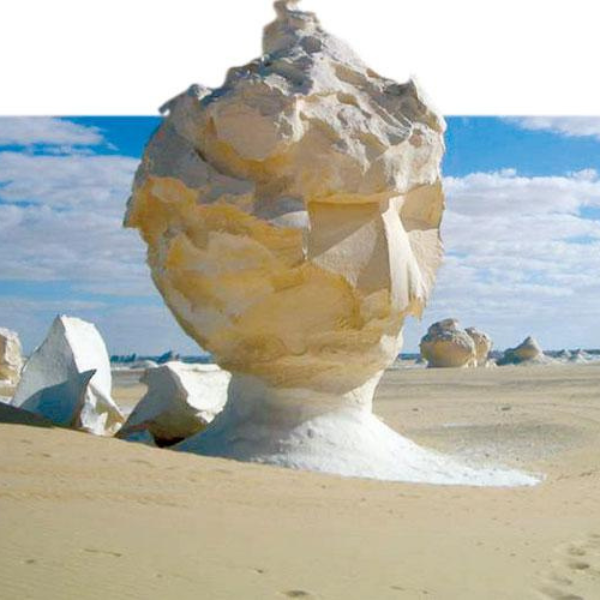
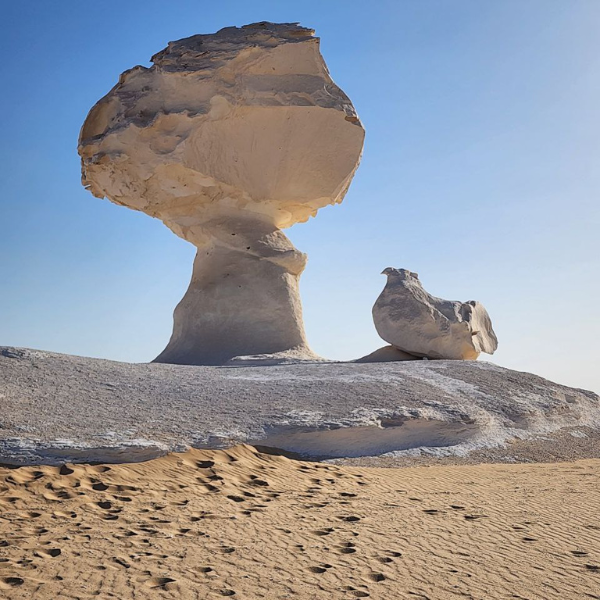
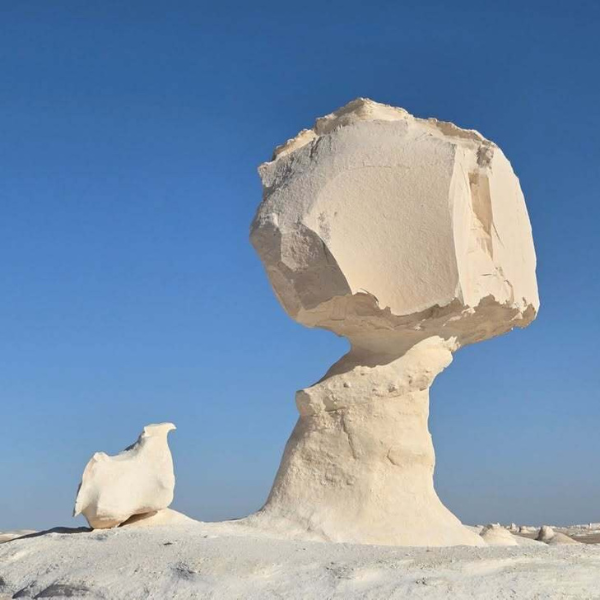
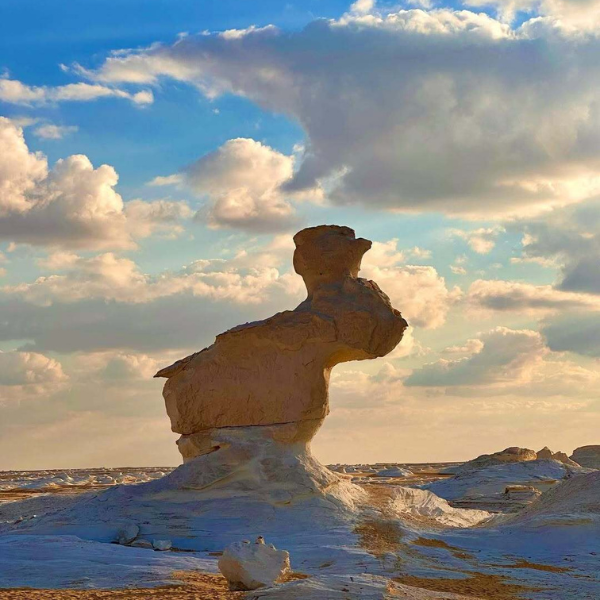
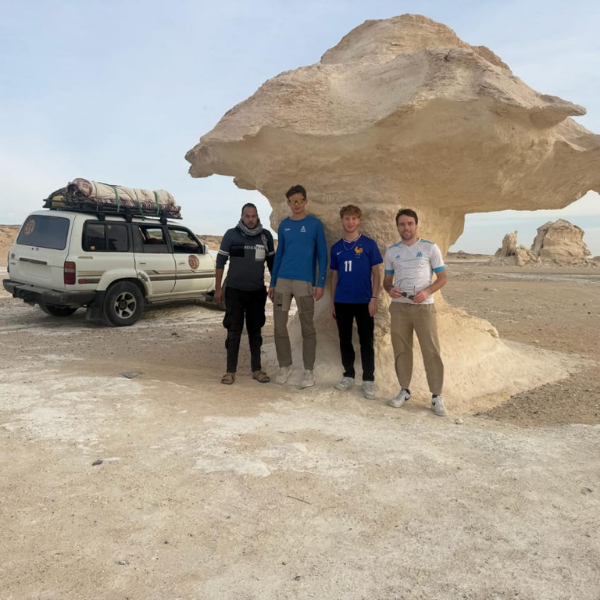
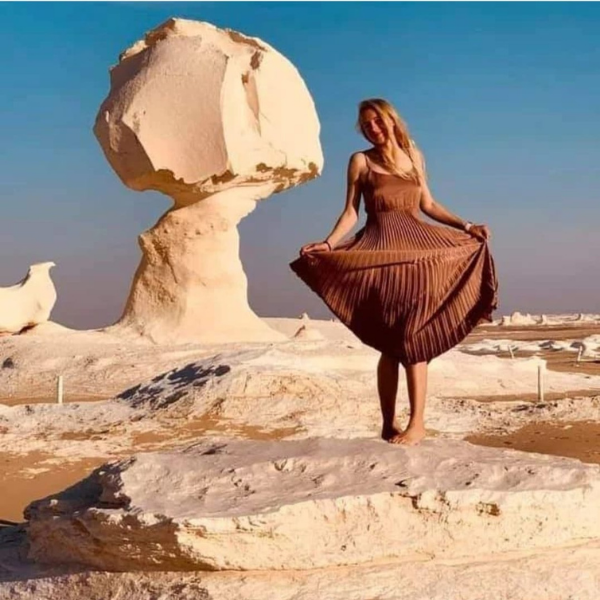
The landscape is famous for pale chalk and limestone formations sculpted over geological time.


Some resemble:


mushrooms,

animals,

towers,

faces,

or abstract sculptures.


To understand why the landscape is white, read Why Is Egypt’s White Desert White?.


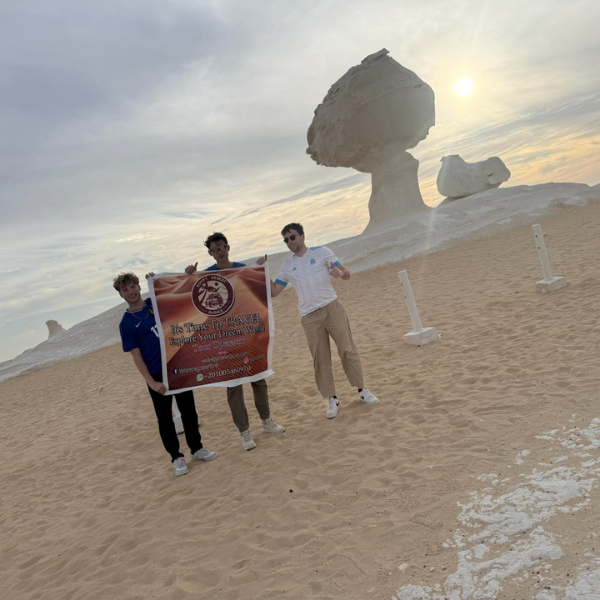
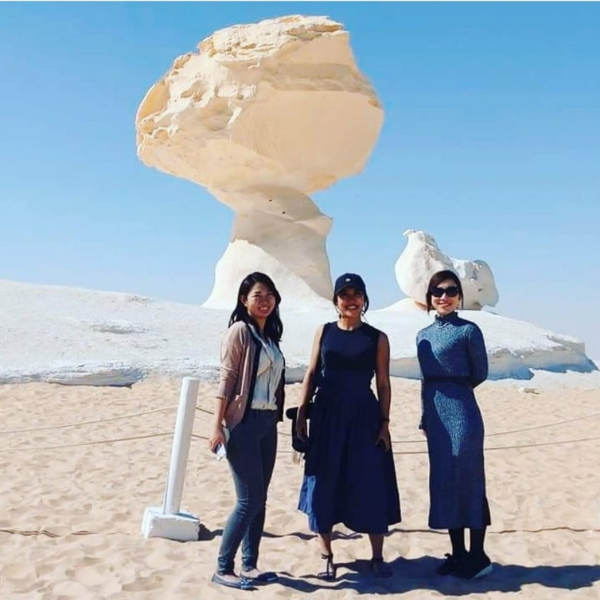
And for one of its most recognizable landforms, see our Mushroom Rock White Desert Egypt Guide.

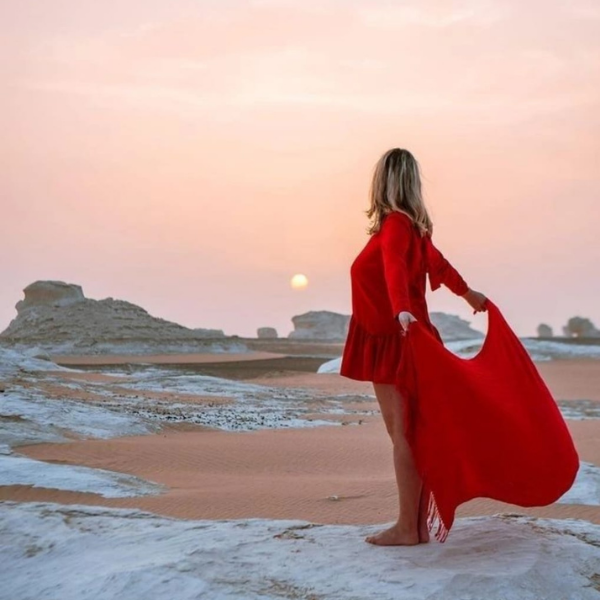
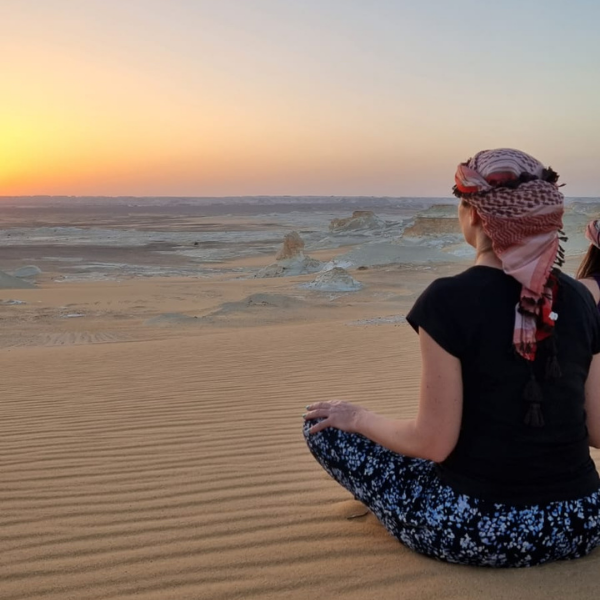
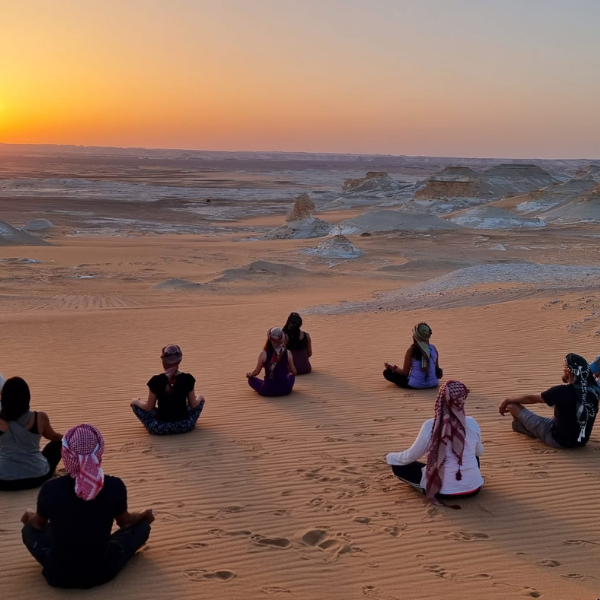
Stage 5: Watching Sunset

Then comes the moment the safari slows down.


The vehicle stops.


You get out.


Nobody needs to rush toward the next attraction.


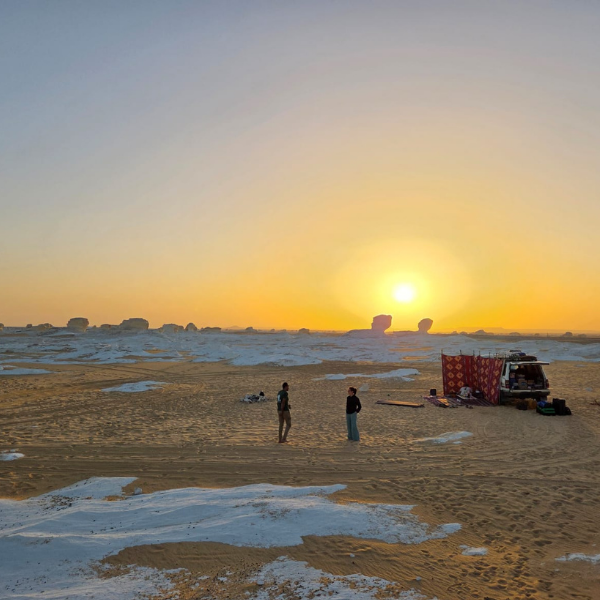
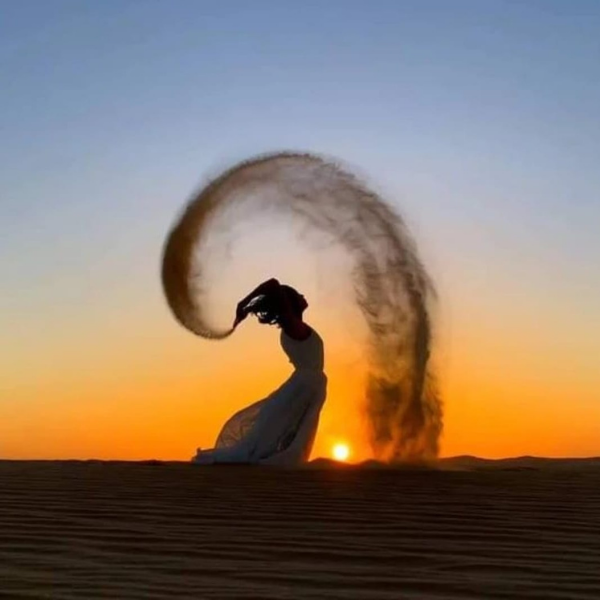
The Sun drops.


Shadows stretch.


The chalk formations begin changing color.


For many travelers, this is when the trip starts feeling different from sightseeing.


You aren’t collecting attractions anymore.


You’re simply standing in the desert watching the light disappear.


Stay outside after the solar disk drops.


Twilight can be just as beautiful.

Stage 6: Setting Up the Desert Camp

Your camp setup depends heavily on the operator and package.


Egypt’s official tourism authority says licensed guides and local companies can arrange camping equipment including tents and food for desert trips from Bahariya.


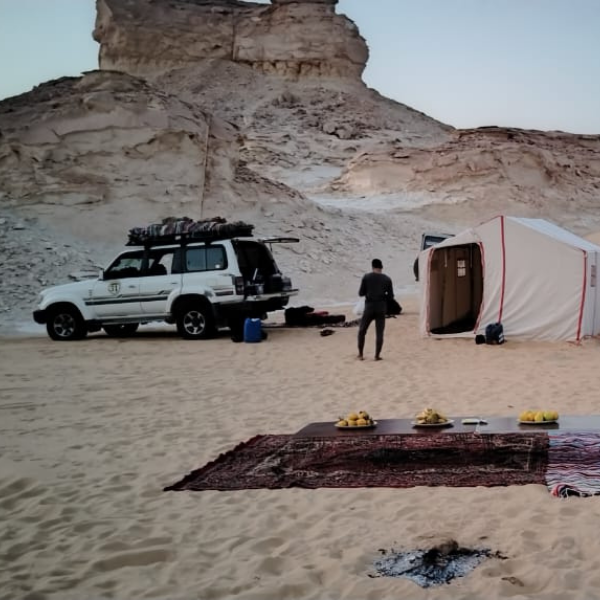
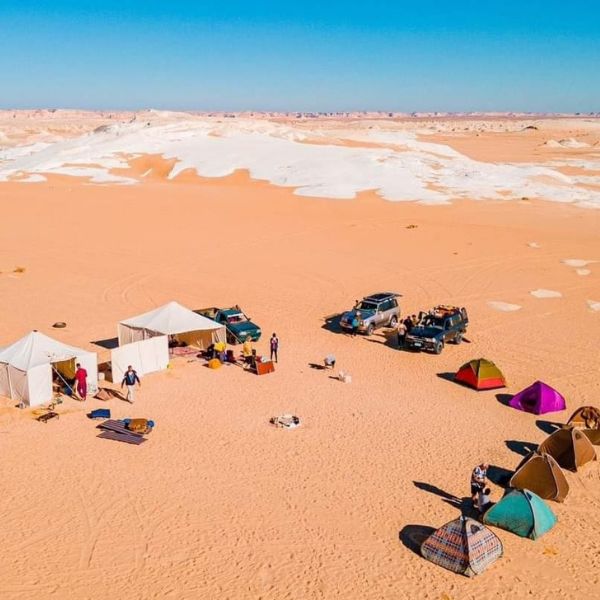
A typical basic overnight camp may include:


sleeping tents,

mattresses,

blankets or sleeping bags,

a shared sitting area,

low tables,

lighting,

food preparation equipment,

water,

and basic camping supplies.


Some tours are more comfortable.


Others are deliberately simple.


This is where asking questions before booking matters.

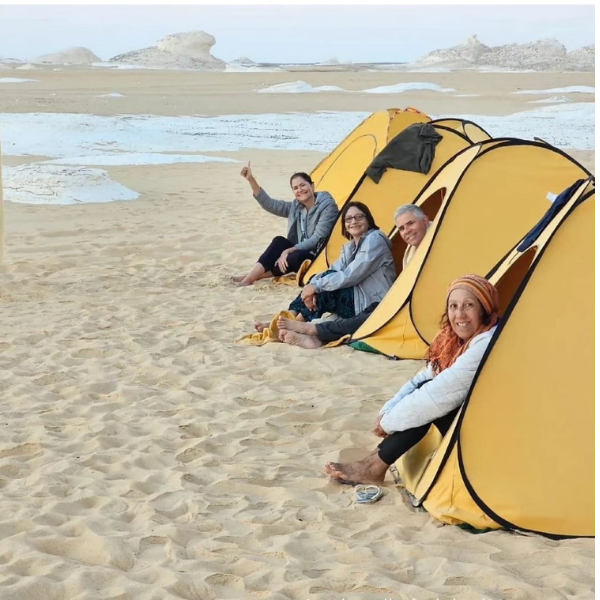
What Does the Tent Look Like?

Don’t automatically imagine luxury glamping.


A classic White Desert overnight camp may use relatively simple tents intended mainly for:


sleep,

wind protection,

privacy,

and warmth.


The exact style can vary between operators.


Some provide individual tents.


Others may offer larger shared setups.


Premium/private trips can provide upgraded arrangements.


Before booking, ask:


Is the tent private?

How many people sleep inside?

Is bedding included?

Is the mattress raised or on the ground?

Are sleeping bags provided?


These are much more useful questions than simply asking:


“Is camping included?”

Is Sleeping in the Desert Comfortable?

It can be.


But comfortable does not necessarily mean hotel-like.


Your experience depends on:


mattress quality,

sleeping bag,

temperature,

wind,

noise,

and your personal expectations.


Some people sleep incredibly well because the desert becomes so quiet.


Others need time to adjust because they’re used to:


air-conditioning,

a thick mattress,

and complete indoor darkness.


If you’re uncomfortable sleeping on a basic camping mattress, ask whether upgraded bedding or camp arrangements are available.

Does the Desert Get Cold at Night?

Yes.


This surprises people constantly.


They think:


Egypt + Sahara = permanently hot.


Nope.


Desert environments can cool significantly after sunset, especially during the cooler season.


You may spend the afternoon in:


a T-shirt,

hat,

and sunglasses,

then want:


long trousers,

warm layer,

jacket,

and proper socks

later that evening.


Your packing should account for both day and night.


Use our complete What to Pack for White Desert Egypt guide before leaving Cairo.

Is Summer Camping Too Hot?

Summer trips require much more attention to heat.


The daytime desert can be demanding, particularly around midday.


Heat affects:


hydration,

walking,

sleep,

and overall comfort.


The cooler season is generally preferred by many travelers for White Desert exploration.


If you’re deciding when to go, read our Best Time to Visit White Desert Egypt.

What About the Wind?

Wind can completely change how a desert night feels.


A mild temperature can feel much colder when you’re sitting still in wind.


Wind also affects:


camp setup,

sand,

photography,

and sleeping comfort.


That’s another reason a tent matters even on nights when there is no chance of rain.


It’s not only about shelter from weather.


It’s about creating a protected sleeping space.

What Is Dinner Like on an Overnight Desert Safari?

Meals vary by operator.


But an organized overnight safari commonly includes dinner.


Egypt’s tourism authority explicitly mentions food as one of the items local tour companies can arrange for desert camping trips.


Dinner is usually relatively simple and filling rather than luxury fine dining.


The exact menu can change, but you may expect a combination of:


rice,

vegetables,

meat or chicken,

salads,

bread,

fruit,

tea,

and other locally prepared food.


Ask in advance if you have:


vegetarian requirements,

allergies,

religious dietary requirements,

or other restrictions.


Don’t wait until the campfire is lit to mention a serious food allergy.

Why Dinner Feels Better in the Desert

Because context is doing half the work.


You’ve been traveling all day.


You’ve crossed the Black Desert.


Walked around Crystal Mountain.


Driven through Agabat.


Watched sunset.


Now you’re eating outside with almost no city noise.


A meal that might feel ordinary in Cairo suddenly feels excellent.


Travel is unfair like that.

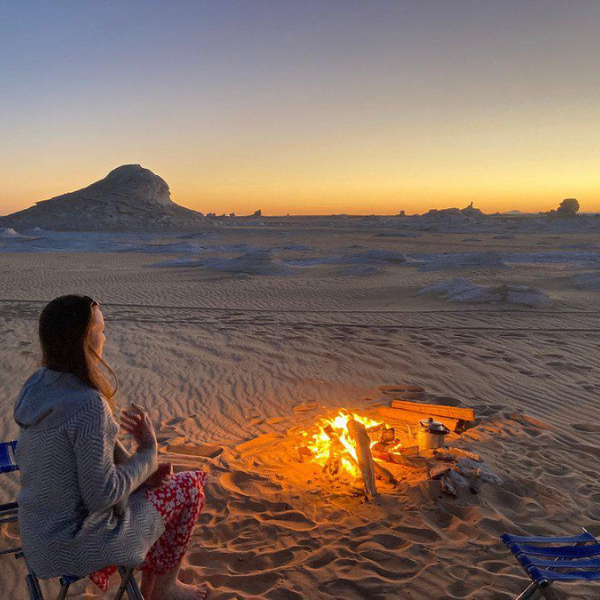
Is There a Campfire?

Many desert trips include a campfire or evening fire when conditions and local rules allow.


That becomes the social center of the camp.


People sit.


Drink tea.


Talk.


Maybe listen to music.


Then eventually the fire becomes less important because the sky starts demanding attention.


Remember that fire use should always follow current conservation and operator rules.


The White Desert is a protected natural landscape, not an unrestricted campsite.

Stage 7: Stargazing

For many visitors, this is the highlight.


Egypt’s official tourism portal promotes desert safaris as experiences combining food, campfire atmosphere and stargazing, while its outdoor travel guidance describes peaceful nights under star-filled skies as part of licensed overnight camping experiences.


Once the lights are reduced, the sky can become dramatically darker than anything you normally see in Cairo.


On a favorable night, you may see:


far more stars,

bright planets,

constellations,

satellites,

meteors,

and sometimes the Milky Way.


But this depends on:


Moon phase,

season,

dust,

cloud,

and artificial camp lighting.

Can You See the Milky Way?

Under sufficiently dark and clear conditions:


yes.


But don’t expect your eyes to see the same colorful Milky Way that appears in heavily processed astrophotography.


The naked-eye view is more subtle.


If Milky Way viewing is important to you, plan around:


Moon phase,

Moonrise,

Moonset,

and season.


Our White Desert Stargazing Guide covers all of that.

Full Moon vs New Moon

This creates two very different desert nights.


New Moon

Better for:


faint stars,

Milky Way,

meteor observation,

astrophotography.


Full Moon

Better for:


moonlit rock formations,

walking around camp,

night landscape photography.


A bright Moon can make the White Desert glow.


It’s beautiful.


But it hides many faint stars.


Neither is “wrong.”


They’re different experiences.

Do You Need a Telescope?

No.


Most travelers don’t need anything beyond their eyes.


Binoculars can be fun.


A telescope can be fantastic if the trip is specifically astronomy-focused.


But for a normal overnight safari, lying back and looking up is enough.


The bigger priority is reducing unnecessary light.

Turn Your Phone Screen Down

One bright white phone screen can destroy your dark adaptation surprisingly quickly.


If you want to enjoy the night:


reduce brightness,

use night mode,

and avoid constantly checking your phone.


Yes, Instagram will survive without you for an hour.


Probably.

Is There Electricity at the Camp?

Do not assume there is normal mains electricity.


A wilderness camp is not a hotel.


Some operators may have:


vehicle charging,

portable batteries,

small power solutions,

or other arrangements.


But you should bring your own power bank.


Before leaving Cairo or Bahariya:


charge your phone,

camera,

headlamp,

and power bank fully.


Photographers should bring spare batteries.


Night photography uses power quickly.

Can You Charge Your Phone?

Potentially through:


a vehicle,

portable charging source,

or camp equipment,

depending on the operator.


But don’t depend on it.


Your safest plan is:


arrive fully charged + carry a power bank.


For a single overnight trip, that’s normally plenty.

Is There Mobile Phone Signal?

Not reliably.


Current UK travel guidance specifically warns of limited phone reception in Western Desert areas including Bahariya Oasis, Farafra, the White Desert and Black Desert.


Download before departure:


maps,

booking confirmations,

translation tools,

music,

important contacts,

and anything else you might need offline.


Tell family or friends where you’re going.


Then enjoy the rare situation where you cannot doom-scroll.

Are There Toilets in the White Desert?

This is one of the first questions travelers ask.


The answer:


It depends on the camp setup.


Bahariya itself has ordinary bathrooms.


Remote White Desert camps can be much more basic.


Some organized camps may provide:


portable toilets,

temporary privacy enclosures,

or other camping arrangements.


Simpler camps may use more basic wilderness solutions.


What you should not do is assume there will be a permanent tiled bathroom next to your tent.


Ask your operator exactly what’s included.

Are There Showers?

Again:


don’t assume so.


A classic one-night wilderness safari may not provide a normal hot shower.


For one night, most travelers simply shower:


before leaving Bahariya or Cairo

and

after returning.


Wet wipes and basic toiletries can help.


If a shower is important to you, ask whether your selected package provides one.


We’ll explore this subject in more detail in the dedicated planned article:


White Desert Camping Toilets, Showers & Facilities: What to Expect.

What About Privacy?

A good operator should explain the camp’s toilet/privacy arrangements clearly.


For many travelers—especially first-time campers—this is more important than tent color or dinner menu.


Ask before booking if:


you’re traveling with children,

you’re uncomfortable with wilderness facilities,

or privacy is a major concern.


There’s nothing embarrassing about asking.


It’s camping.


Everybody eventually asks about the toilet.

Can Women Comfortably Do an Overnight Desert Safari?

Yes.


Women regularly travel on organized desert safaris.


The practical concerns are the same as for other travelers:


appropriate clothing,

privacy,

toilet arrangements,

personal hygiene supplies,

medication,

and camp setup.


If traveling solo or with a private group, ask about:


tent arrangements,

guide/team structure,

and bathroom privacy

before departure.


A professional operator should answer clearly.

Can Families Do an Overnight Desert Safari?

Yes, and children often love it.


For them, the trip feels like:


4×4 adventure,

giant sandbox,

strange rocks,

camping,

and stars.


Parents should think more about:


long driving time,

food preferences,

bathrooms,

cold nights,

and sleeping arrangements.


A private trip can make family travel easier because you have more control over:


stops,

meal times,

and pace.

Is It Good for Couples?

Very.

Sunset.

Tea.

Campfire.

Stars.

Silence.

Sunrise.


It’s not difficult to see why.


For couples wanting something different from another conventional hotel night, an overnight White Desert safari can be one of the most memorable parts of an Egypt itinerary.

Is It Good for Solo Travelers?

Yes.


You can choose:


shared safari

or

private safari.


A shared trip can be social and usually costs less.


A private safari offers more flexibility.


Photographers often prefer private tours because they may want to wait for:


sunset,

stars,

specific compositions,

or sunrise light.


Read our Private White Desert Safari from Cairo Guide if you’re comparing the two.

Stage 8: Sleeping in the Desert

Eventually, everybody heads toward the tents.


The camp becomes quieter.


The wind may continue.


Outside, the desert can be almost completely dark.


This is where expectations matter.


You’re not sleeping in a resort designed to isolate you from the environment.


You’re sleeping inside the environment.


You may hear:


wind,

tent fabric,

people moving around camp,

or distant animal sounds.


Some travelers find it unbelievably peaceful.


Others take longer to fall asleep.


Both reactions are normal.

Are There Dangerous Animals?

The Western Desert supports wildlife, but normal organized camps are not horror-movie situations.


The practical rule is simple:


follow your guide’s instructions,

keep food managed properly,

wear shoes when walking at night,

and don’t wander far from camp.


The desert is a natural environment.


Treat it like one.


We’ll cover local species in depth in the planned White Desert Wildlife cluster content.

Can You Leave Food Outside?

Follow the camp team’s instructions.


Food scraps attract animals and create waste.


Responsible camping means:


containing food,

cleaning properly,

and leaving the campsite as close as possible to how you found it.


That also applies to:


bottles,

tissues,

plastic,

and disposable items.

Stage 9: Waking Before Sunrise

Set an alarm.


Or ask the guide when sunrise will be.


Then wake up before it actually happens.


Pre-sunrise light is beautiful.


The formations may look:


blue,

grey,

or silver.


The eastern horizon gradually brightens.


Then direct sunlight touches the chalk.


Within minutes:


blue becomes gold.

It’s one of the strongest visual moments of the trip.

Is Sunrise Really Worth Waking Up For?

Yes.


You can sleep in Cairo.


This is one morning where I’d recommend getting up.


And because you’re already camping in the desert, sunrise requires almost no transport.


You leave the tent.


That’s your commute.


Our White Desert Sunrise & Sunset Guide explains exactly when photographers should be ready.

Breakfast in the Desert

After sunrise, breakfast is usually prepared at camp.


Exact food varies, but the idea is simple:


eat,

drink tea or coffee,

pack,

and prepare for the return journey.


By this point the desert is already becoming brighter and warmer.


The atmosphere changes quickly after sunrise.

Stage 10: Morning Exploration

You may have time for additional formations after breakfast.


This is useful because the White Desert contains far more than one famous Mushroom Rock.


Different areas offer:


isolated chalk towers,

white plains,

smaller formations,

and open panoramic landscapes.


Morning light can remain attractive before the Sun becomes too high.


For more things to see, read Things to Do in White Desert Egypt.

Returning to Bahariya

Eventually the overnight part ends.


You return by 4×4 toward Bahariya.


Then transfer back to the normal road vehicle for Cairo.


And this is usually the point where people realize how far from normal city life they spent the previous evening.


Buildings return.


Phone signal improves.


Traffic appears.


And suddenly the silence from the night before feels very far away.

Is One Night Enough?

For most first-time travelers:


yes.


A 2-day / 1-night safari gives you:


4×4 driving,

major desert stops,

sunset,

camping,

dinner,

stars,

sleep,

sunrise,

and morning exploration.


That’s a lot of experience inside two days.


It’s the ideal format when you’re combining the desert with:


Cairo,

Luxor,

Aswan,

or other parts of Egypt.

When Is Two Nights Better?

Choose 3 days / 2 nights when:


the desert is a major priority,

photography matters,

you want slower travel,

you want two sunsets,

you want two sunrises,

or one night feels too rushed.


A second night also gives you another chance at good stargazing if the first night has:


dust,

cloud,

wind,

or bright Moon conditions.


Explore the White Desert 3 Days Tour from Cairo.


You can also compare both formats in our 2-Day vs 3-Day White Desert Tour Guide.

One Night vs Two Nights

Experience

1 Night

2 Nights

Sunset

1

2

Sunrise

1

2

Stargazing

1 night

2 nights

Desert pace

Faster

Slower

Major highlights

Yes

Yes

Photography flexibility

Good

Excellent

Weather backup

Limited

Better

Best for

Most first-timers

Photographers / desert lovers

What Is Usually Included?

Every operator differs, so always check.


But an organized overnight safari may include:


Cairo/Bahariya transfer,

4×4 vehicle,

driver,

guide,

meals,

drinking water,

camping equipment,

tent,

mattress,

blankets or sleeping bag,

breakfast,

and sightseeing.


Egypt’s official tourism information specifically notes that local guides and tour companies can arrange tents, food and equipment for desert camping.


Don’t assume every operator includes the same package.

What Might Not Be Included?

Possible extras can include:


personal drinks,

tips,

special accommodation upgrades,

private tent upgrades,

special dietary items,

additional activities,

hotel nights,

or certain entrance/permit costs depending on the package.


The correct question isn’t:


How much does the tour cost?


It’s:


What exactly is included in that price?


For pricing factors, read our White Desert Egypt Cost Guide.

Private vs Shared Overnight Safari

Shared Safari

Better for:


lower cost,

meeting people,

solo travelers,

simple first visits.


Potential drawback:


less control over pace.


Private Safari

Better for:


couples,

families,

photographers,

groups,

and travelers who want flexibility.


You can more easily adjust:


photo stops,

meal timing,

rest breaks,

and route pace.


Neither is universally better.


Choose based on how you travel.

What Should You Pack for One Night?

Keep it relatively simple.


Bring:


comfortable closed shoes,

breathable daytime clothing,

warm nighttime layers,

sunscreen,

hat,

sunglasses,

toiletries,

wet wipes,

personal medication,

power bank,

camera batteries,

reusable water bottle,

and small overnight bag.


Photographers may add:


tripod,

wide-angle lens,

spare batteries,

memory cards,

and dust protection.


You don’t need to bring half your Cairo hotel room into the desert.

What Should You Leave Behind?

Huge luggage.


Expensive unnecessary electronics.


Fragile items.


Multiple outfit changes.


And unrealistic expectations about staying perfectly clean.


You’re going camping.


A little dust is part of the contract.


Leave your main luggage in Cairo or Bahariya if your operator provides appropriate arrangements, and take only what you need overnight.

Is an Overnight Desert Safari Safe?

The safari can be organized responsibly, but the Western Desert is a remote region and travelers should treat access and security guidance seriously.


Current U.S. travel guidance advises against Western Desert travel unless using a professionally licensed tour company and specifically says the Black and White Deserts should only be visited with a licensed company.


Current UK guidance says tourists entering Bahariya Oasis, Farafra, the White Desert and Black Desert must arrange permits in advance and use an official guide. It also notes limited phone reception and poor medical facilities.


Regulations and travel advice can change.


Check again before departure.


For trip-specific planning, read our White Desert Egypt Safety Guide.

Do You Need a Permit?

Current access arrangements require advance planning for major Western Desert areas.


Your authorized operator should handle or advise on current:


permits,

route access,

guide requirements,

and logistics.


Don’t assume rules from an old travel blog still apply.


Egyptian desert access can change.

Travel Insurance

Because you’re entering a remote environment, appropriate travel insurance is sensible.


Current U.S. guidance specifically recommends comprehensive insurance and consideration of medical evacuation coverage for Egypt travel.


Check what your policy says about:


remote desert excursions,

organized tours,

medical evacuation,

and adventure activities.

Responsible Desert Camping

One night can create a surprising amount of rubbish if a group isn’t careful.


Take responsibility for:


plastic bottles,

food packaging,

tissues,

batteries,

and other waste.


Don’t:


break chalk,

collect fossils,

remove crystals,

carve names,

or leave camp rubbish.


The desert looking empty doesn’t mean your waste disappears.


It just becomes easier to see.

Is the White Desert Better Than Fayoum for an Overnight Safari?

If your goal is a truly remote wilderness-style camping experience:


White Desert wins.


Fayoum is closer to Cairo and excellent for:


day trips,

dunes,

Wadi El Rayan,

Magic Lake,

and fossils.


The White Desert gives you:


a longer expedition,

deeper isolation,

more dramatic camping,

chalk landscapes,

and stronger stargazing potential.


For the broader comparison, read our Best Desert Trips from Cairo.

White Desert vs Siwa for Overnight Camping

These are very different.


White Desert


Best for:


chalk formations,

shorter 2–3 day trip from Cairo,

wilderness camping,

geology,

stars.


Siwa


Best for:


oasis culture,

salt lakes,

Great Sand Sea,

multi-day travel,

and a larger destination experience.


If you only have two days?


White Desert makes far more sense.


If you have four or five?


Siwa becomes a serious alternative.

Who Should NOT Book an Overnight Safari?

An overnight desert safari may not be ideal if you:


require hotel-level bathroom facilities,

cannot sleep on camping bedding,

need immediate access to advanced medical services,

strongly dislike long road journeys,

or simply hate camping.


And that’s okay.


Travel isn’t a competition.


You don’t need to suffer in a tent to prove you’re adventurous.


Choose the experience that actually suits you.

Who Will Probably Love It?

You’ll likely enjoy an overnight desert safari if you love:


landscapes,

road trips,

photography,

outdoor experiences,

stars,

camping,

geology,

silence,

and unusual travel.


It’s particularly strong for travelers who feel they’ve already seen:


museums,

temples,

pyramids,

and cities


and want to experience a completely different side of Egypt.

Sample 2-Day Overnight Desert Safari from Cairo

Day 1


Early Morning — Cairo Departure

Leave Cairo and travel toward Bahariya Oasis.

Midday — Bahariya

Lunch.

Meet the desert team.

Switch vehicles.

Afternoon — Black Desert

Explore dark hills and viewpoints.

Crystal Mountain

Short geological stop.

Agabat Valley

Golden dunes and pale cliffs.

Late Afternoon — White Desert

Explore chalk formations.

Sunset

Stop.

Photograph.

Watch the light disappear.

Evening

Set up camp.

Dinner.

Tea.

Campfire where permitted.

Night

Stargazing.

Photography.

Sleep.


Day 2


Before Sunrise

Wake up.

Watch dawn.

Sunrise

Photograph or simply enjoy the landscape.

Breakfast

Eat at camp.

Morning

Explore additional White Desert formations.

Return

4×4 back toward Bahariya.

Afternoon

Transfer toward Cairo.


That’s the classic overnight experience.

Why This Trip Works So Well in Only Two Days

Because the contrast is huge.


Day 1 begins in one of the busiest cities in Africa.


That same night?


You’re sleeping in a desert camp.


No hotel elevator.


No Cairo traffic.


No streetlights.


Then you wake up surrounded by chalk formations.


Few short trips from Cairo create such a dramatic environmental change.


That’s what makes the overnight White Desert route special.

Is an Overnight Desert Safari in Egypt Worth It?

For the right traveler:


absolutely.


The value isn’t simply that you save money by not staying in a hotel.


You’re not camping because accommodation is unavailable.


You’re camping because the night itself is part of the destination.


Without staying overnight, you miss:


sunset without rushing away,

the desert after dark,

dinner at camp,

stars,

silence,

the feeling of sleeping in the wilderness,

and sunrise.


Those aren’t side activities.


They’re a major part of the experience.


If you’re coming from Cairo and have two days available, a White Desert overnight trip provides one of the strongest combinations of:


adventure,

landscape,

geology,

camping,

and photography


within a relatively short Egypt itinerary.

Plan Your Overnight Desert Safari in Egypt

For most first-time travelers, the classic choice is:


2 days / 1 night from Cairo through Bahariya Oasis to the White Desert.


It gives you the essential experience without consuming a large portion of your Egypt holiday.


Choose three days if:


photography is important,

you want a slower pace,

or you want two nights beneath the desert sky.


Start with our White Desert Overnight Tour from Cairo.

For the wider route, explore the White Desert Safari from Cairo.

For a longer adventure, see the White Desert 3 Days Tour from Cairo.

You can also compare our Egypt Desert Safari Packages or browse all Egypt Desert Dunes tours.


And if you’re unsure which trip fits your dates, group size or camping preferences, contact Egypt Desert Dunes.

- Tours Carousel
✓ Available on Viator

Book Egypt Desert Dunes Tours on Viator

Discover our private White Desert camping adventures and Siwa Oasis experience. Choose your favorite itinerary and complete your reservation securely through Viator.

✓ Private Tours
✓ Cairo Pickup
✓ Mobile Ticket
✓ English Speaking Team
✓ Book Through Viator
4-Day Private White Desert Camping Tour from Cairo by Egypt Desert Dunes
✓ Book on Viator
Private Tour
White Desert • Bahariya Oasis • Egypt
⏱ 4 Days / 3 Nights ★ 5.0 (4 Reviews)

4-Day Private Camping Tour in the White Desert from Cairo

Go deeper into Egypt's Western Desert with a private four-day camping adventure including spectacular desert landscapes, Black Desert, White Desert, open-air meals and three nights beneath the stars.

Cairo Pickup Private Tour Desert Camping Meals Included
Reference price from
€588 / person*
Check Viator for today's live price
View on Viator →
2-Day 1-Night White Desert Camping Tour from Cairo by Egypt Desert Dunes
✓ Book on Viator
Best Short Trip
White Desert • Black Desert • Egypt
⏱ 2 Days / 1 Night ★ 5.0 (3 Reviews)

2-Day, 1-Night Camping Tour in White Desert from Cairo

Our most compact White Desert adventure for travelers who want to experience the desert from Cairo, explore its unique landscapes and spend an unforgettable night camping beneath the stars.

1 Night Camping Cairo Pickup Breakfast Lunch & Dinner
Reference price from
€197 / person*
Price varies by date and group size
View on Viator →
3-Day Private White Desert Camping Tour from Cairo by Egypt Desert Dunes
✓ Book on Viator
Popular Choice
Black Desert • Aqabat • White Desert
⏱ 3 Days / 2 Nights ★ 5.0 (5 Reviews)

3-Day Private Camping Tour of White Desert from Cairo

Spend three days exploring the Western Desert, including the Black Desert, Crystal Mountain, Aqabat area and White Desert, with two nights of private desert camping.

2 Nights Camping Black Desert White Desert Private Experience
Reference price from
€394 / person*
Check Viator for today's live price
View on Viator →
4-Day Siwa Oasis Trip from Cairo by Egypt Desert Dunes
✓ Book on Viator
Siwa Experience
Siwa Oasis • Western Desert • Egypt
⏱ 4 Days Egypt Desert Dunes • 14 Operator Reviews

Siwa Oasis Trip with Cairo Pick Up

Travel from Cairo to legendary Siwa Oasis on a private four-day journey exploring Siwan culture, desert landscapes, Lake Siwa, traditional sites and some of the oasis's most distinctive attractions.

4 Days Cairo Pickup Siwa Hotel Meals Included
Reference price from
$1,150 / adult*
Check Viator for today's live price
View on Viator →
*Important: Prices shown above are reference “from” prices observed while reviewing the listings and may change based on travel date, number of travelers, availability, currency and Viator pricing. Click “View on Viator” for the current final price before booking.

Explore Egypt's Desert with Egypt Desert Dunes

From a one-night White Desert camping adventure to extended Western Desert and Siwa Oasis experiences, choose the itinerary that matches your travel style and complete your booking through Viator.

Explore Our Tours →
Plan Your Desert Adventure

Book a Tour or Create Your Own Egypt Experience

Choose one of our ready-made tours or customize your own private journey. Select your destinations, duration and travel style, then send your request directly to Egypt Desert Dunes on WhatsApp.

Book Your Desert Tour

Select your preferred itinerary and send us your travel details. Our team will reply on WhatsApp with availability and the final quote.

Choose Your Tour *
Please select a tour and complete your name, travel date and number of travelers.
Your booking request will open directly in WhatsApp. No payment is made through this form.

Create Your Own Private Egypt Tour

Combine Cairo, Giza, Fayoum, the Western Desert and Siwa in one custom itinerary. Choose the destinations and experiences you want and our team will recommend the best route based on your available days.

Which Places Would You Like to Visit? *
Select as many destinations as you like. Egypt Desert Dunes will recommend the best route according to your trip duration.
What Are You Most Interested In?
Please enter your name, number of travelers, trip duration and select at least one destination.
Egypt Desert Dunes will review your selections and send you a customized itinerary and quotation on WhatsApp.
Traveler Reviews

What Our Guests Say on Tripadvisor

Real experiences from travelers who explored Egypt’s deserts, oases, and cultural landmarks with Egypt Desert Dunes. Read their Tripadvisor reviews and discover why guests choose us for private desert safaris, camping adventures, and unforgettable Egypt tours.

FAQ — Overnight Desert Safari Egypt

What is an overnight desert safari in Egypt? +

An overnight desert safari combines desert sightseeing and 4x4 travel with a night spent at a desert camp. White Desert trips from Cairo commonly include Bahariya Oasis, the Black Desert, Crystal Mountain, Agabat Valley, camping, stargazing and sunrise.

What is the best overnight desert safari from Cairo? +

The White Desert via Bahariya Oasis is one of the most popular options for travelers who want 4x4 adventure, geological landscapes, camping and stargazing within a two-day trip.

How long is an overnight White Desert safari? +

The classic format is two days and one night. Three-day and two-night trips are available for travelers who want a slower pace and more time in the desert.

Where do you sleep during a White Desert safari? +

Travelers normally sleep in a desert camp using tents and camping bedding arranged by the tour operator.

Are tents provided? +

Organized overnight trips commonly provide camping equipment, but exact tent type, bedding and privacy arrangements vary by operator.

Is food included on an overnight desert safari? +

Meals are commonly included in organized overnight safaris. Egypt's official tourism authority notes that local desert operators can arrange food and camping equipment.

Are there toilets in White Desert camps? +

Facilities vary by operator. Some camps may provide portable or temporary toilet arrangements, while basic wilderness camps can have simpler facilities. Ask before booking.

Are there showers in the White Desert? +

Do not assume a traditional wilderness camp has a normal shower. Facilities vary, and travelers should confirm what their specific package provides.

Is there electricity in the White Desert? +

Normal mains electricity should not be expected in a remote wilderness camp. Bring fully charged devices and a power bank.

Is there phone reception in the White Desert? +

Reception can be limited. Current UK travel guidance specifically warns of limited mobile reception in Bahariya, Farafra, the White Desert and Black Desert.

Does the White Desert get cold at night? +

Yes. Temperatures can drop significantly after sunset, especially during cooler months. Bring warm layers even if daytime weather feels comfortable.

Can you see the Milky Way in the White Desert? +

Under dark, clear conditions with favorable Moon and atmospheric conditions, the Milky Way can be visible. Bright moonlight, cloud, dust and camp lighting affect visibility.

Is one night enough in the White Desert? +

Yes for most first-time visitors. One night provides sunset, dinner, camping, stargazing and sunrise.

Are two nights better than one? +

Two nights are better for photographers, desert enthusiasts and travelers who want a slower itinerary or an additional chance for good night-sky conditions.

Is an overnight desert safari suitable for families? +

Yes for many families, but parents should consider the long transfer, toilet arrangements, food, bedding, temperature and children's comfort with camping.

Is an overnight desert safari suitable for couples? +

Yes. Sunset, camping, stars and sunrise make the trip particularly popular with couples who want an unusual outdoor experience.

Can solo travelers book an overnight safari? +

Yes. Solo travelers can join shared trips or book private safaris depending on their budget and preferred level of flexibility.

Do you need a licensed tour company for the White Desert? +

Current U.S. travel guidance says the Black and White Deserts should only be visited with a professionally licensed tour company, while current UK advice states that tourists entering key Western Desert areas need advance permits and an official guide.

What should I pack for an overnight desert safari? +

Bring closed shoes, sun protection, warm layers, toiletries, personal medication, a power bank, comfortable clothing and any photography equipment you need.

Is an overnight desert safari in Egypt worth it? +

Yes for travelers who enjoy landscapes, camping, stars and outdoor adventure. Staying overnight allows you to experience sunset, desert darkness, stargazing and sunrise rather than only daytime sightseeing.

Leave a Comment

Your email address will not be published. Required fields are marked *