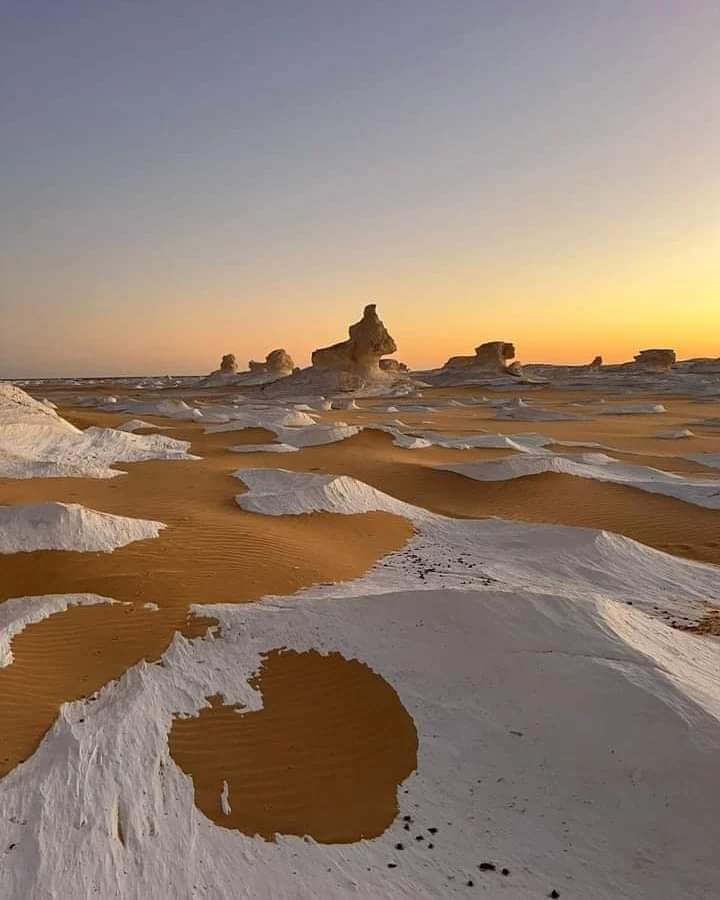
Crystal Mountain Egypt: Complete Guide to the White Desert Landmark

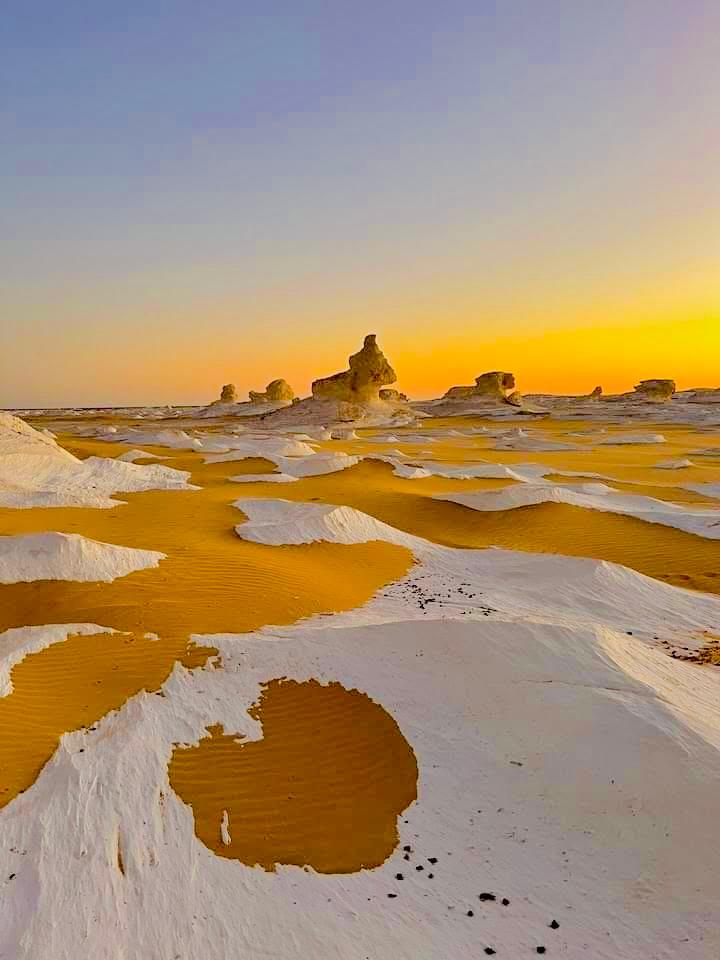
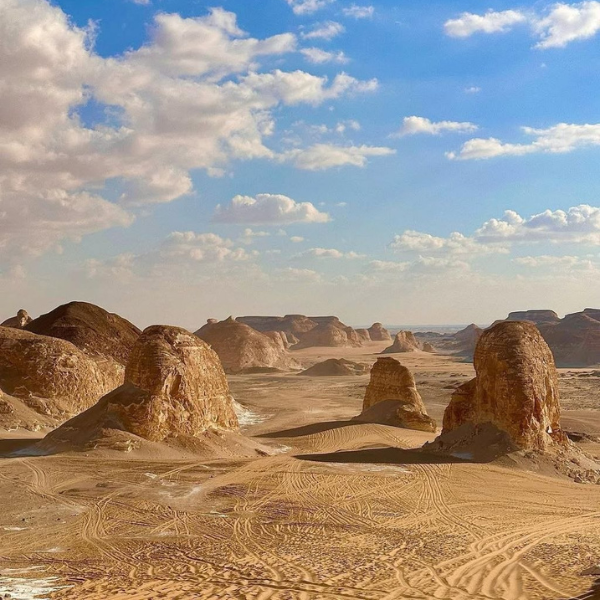
In the middle of Egypt’s Western Desert, between dark volcanic-looking hills and the surreal white formations of the White Desert, there is a small geological landmark that seems to glitter in the sunlight.


This is Crystal Mountain Egypt, one of the most popular stops on the classic route from Bahariya Oasis toward the White Desert.


Despite the name, Crystal Mountain is not a towering mountain that requires a long hike or technical climb. It is better understood as a compact mineral-rich ridge and exposed geological formation whose crystalline surfaces catch the desert sun.


That relatively small size is part of what makes the place surprising.


You may spend only 20 to 40 minutes here, yet Crystal Mountain is often one of the most memorable stops on a White Desert safari because it looks completely different from the landscapes surrounding it.


Egypt’s official tourism portal identifies Crystal Mountain as one of the geographical wonders travelers can visit while exploring the White Desert region.


For most travelers, however, Crystal Mountain should not be treated as a separate trip from Cairo.


It makes far more sense as part of a wider route combining:


Bahariya Oasis → Black Desert → Crystal Mountain → Agabat Valley → White Desert


If you are already planning that journey, start with our complete White Desert Egypt guide.


If you would rather experience the route as an organized trip, explore our White Desert Safari from Cairo.

- Tours Carousel

Crystal Mountain Egypt at a Glance

Question

Quick answer

What is Crystal Mountain?

A mineral-rich geological ridge with exposed crystals and a small natural opening

Where is it?

Between Bahariya Oasis and Farafra in Egypt’s Western Desert

Is it really a mountain?

Not in the usual sense; it is closer to a ridge or rocky outcrop

What are the crystals?

Geological studies document abundant calcite; barite is also reported in descriptions of the mineralization

Is it quartz?

It is often described online as quartz, but that is an oversimplification

How long do you need?

Usually around 20–45 minutes

Best way to visit?

As part of a White Desert 4×4 safari

Can you take crystals?

No — leave geological material where it belongs

Best time to visit?

Usually during the cooler desert season

Can it be combined with the Black Desert?

Yes, and most White Desert itineraries do exactly that

What Is Crystal Mountain in Egypt?

Crystal Mountain is a distinctive geological formation in Egypt’s Western Desert, on the route connecting Bahariya Oasis and Farafra Oasis.


It is also known in various sources as Gebel Crystal, Crystal Mountain, or by other locally transliterated names.


The word “mountain” creates the wrong image for many first-time visitors.


Don’t expect a huge isolated peak rising thousands of meters above the desert.


Instead, imagine a relatively compact ridge of weathered rock where crystalline minerals are exposed across cavities, surfaces and geological structures.


When sunlight hits those crystal faces, the rock reflects light in different directions.


That’s what gives the formation its famous sparkling appearance.


The effect becomes particularly interesting when you look closely.


From a distance, the formation may initially appear like another rocky rise in the desert.


Up close, the textures change.


You begin to see translucent and light-colored crystal surfaces embedded within the surrounding rock.


This unusual concentration of exposed crystalline material is what made the location one of the standard stops on White Desert safari itineraries.

Is Crystal Mountain Really Made of Quartz?

This is one of the most interesting — and frequently misunderstood — facts about Crystal Mountain.


Search online and you will find countless descriptions calling it:


“Quartz Mountain”


or claiming that the mountain is entirely made from quartz crystals.


The geology is more complicated.


Academic work on the Crystal Mountain/Gebel Crystal area documents significant calcite mineralization within an ancient karst and cave system. A 2009 geological study examining the area between Bahariya and Farafra describes extensive cave deposits in the Crystal Mountain region, while more recent research published in the Journal of African Earth Sciences discusses the site’s chalky limestone and calcite crystals.


Mineralogical references also identify calcite at the site.


Some geological descriptions additionally discuss barite associated with the formation.


So describing every visible crystal as quartz is too simplistic.


Why does this matter?


Because Crystal Mountain is more interesting when you understand what you’re actually seeing.


It’s not a pile of gemstones sitting mysteriously in the desert.


It is evidence of a much older geological story involving:


limestone,


caves and cavities,


mineral-rich water,


crystallization,


erosion,


and enormous periods of geological change.


That story is much more fascinating than simply saying:


“It’s a mountain made of quartz.”

How Did Crystal Mountain Form?

To understand Crystal Mountain, you have to imagine a Western Desert very different from the dry landscape you see today.


Geological research describes Crystal Mountain as an important karst feature associated with chalky limestone.


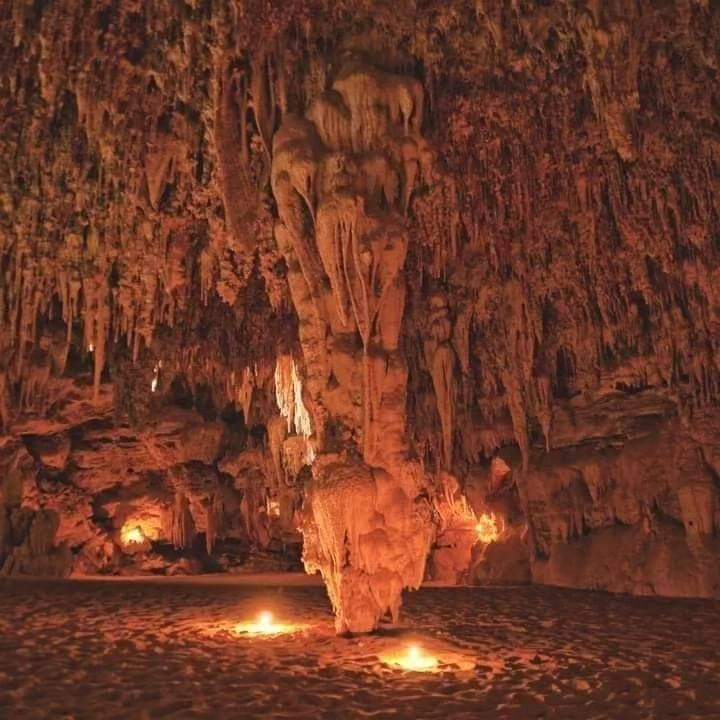
Karst landscapes form when soluble rocks such as limestone are gradually affected by water, producing cavities, channels, caves and other structures.


Research into the region has documented ancient cave systems and mineral deposits dating back millions of years.


Over long geological periods, minerals crystallized within cavities and fractures.


Later erosion exposed parts of this hidden geological system.


The result is the sparkling formation travelers can see today.


One useful way to think about the area is this:


Crystal Mountain isn’t just a mountain that happened to get crystals on top.


You’re looking at the exposed remains of a much older geological environment.


That’s why the structure contains such unusual combinations of:


chalk,


cavities,


mineral deposits,


crystalline surfaces,


and eroded openings.

Where Is Crystal Mountain Egypt?

Crystal Mountain lies in Egypt’s Western Desert, between Bahariya Oasis and Farafra Oasis.


Geological research places Gebel Crystal around latitude 27°37’–27°39’N and longitude 28°29’–28°31’E along the Bahariya–Farafra route.


This point is important:


Crystal Mountain is not near central Cairo.


It forms part of a much longer Western Desert journey.


The classic travel pattern is:


Cairo

↓

Bahariya Oasis

↓

Black Desert

↓

Crystal Mountain

↓

Agabat Valley

↓

White Desert


Visitors generally reach Bahariya first and then continue into the desert in vehicles suitable for the route.


If you’re trying to understand the wider geography before traveling, see our White Desert Egypt Map.


That guide explains how Bahariya, the Black Desert, Crystal Mountain, Agabat and the White Desert relate to each other geographically.

Crystal Mountain and the White Desert

Many travelers search for:


Crystal Mountain White Desert Egypt


because the two attractions are commonly experienced on the same safari.


Crystal Mountain is associated with the broader White Desert excursion circuit and protected desert landscape. Egypt’s official tourism information lists it alongside White Desert attractions accessible from Farafra and advises travelers to check current permits and regulations with an authorized guide or travel operator.


But visually, Crystal Mountain looks quite different from the most famous parts of the White Desert.


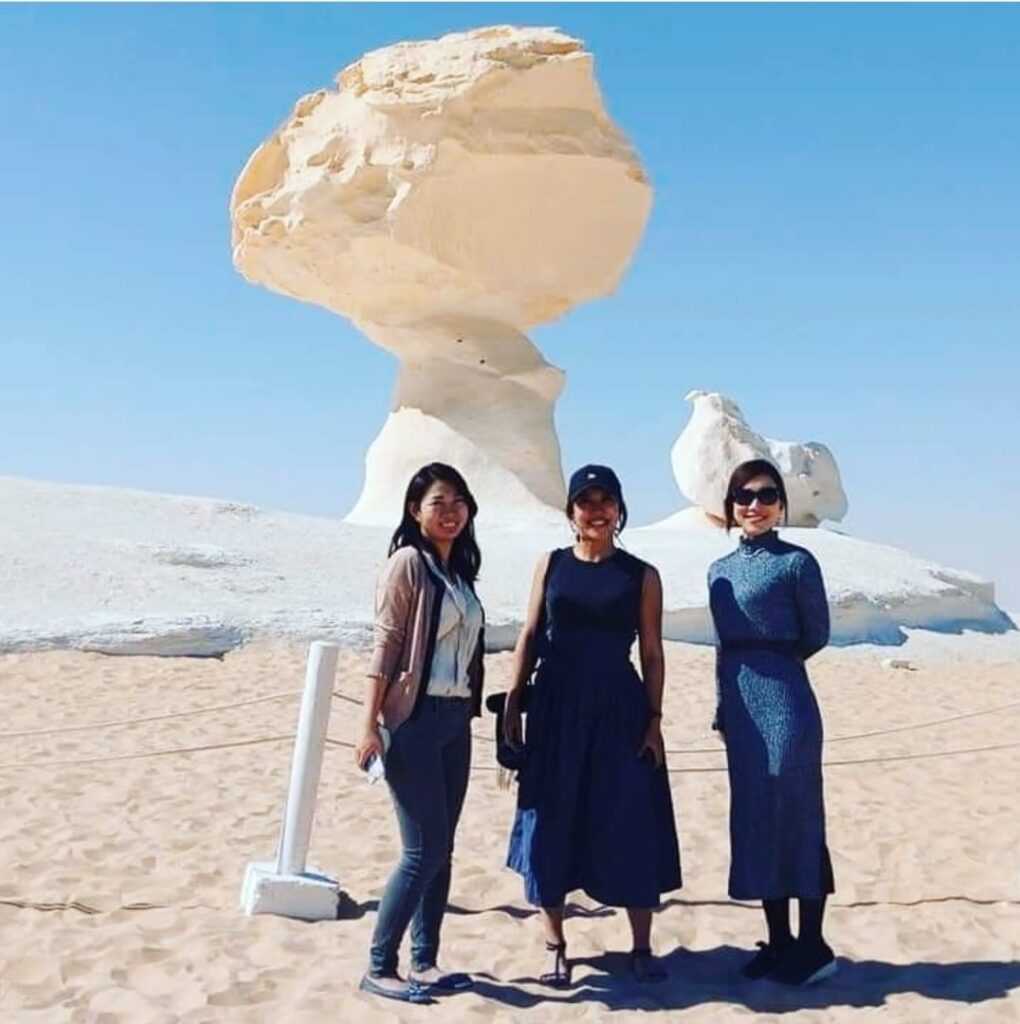
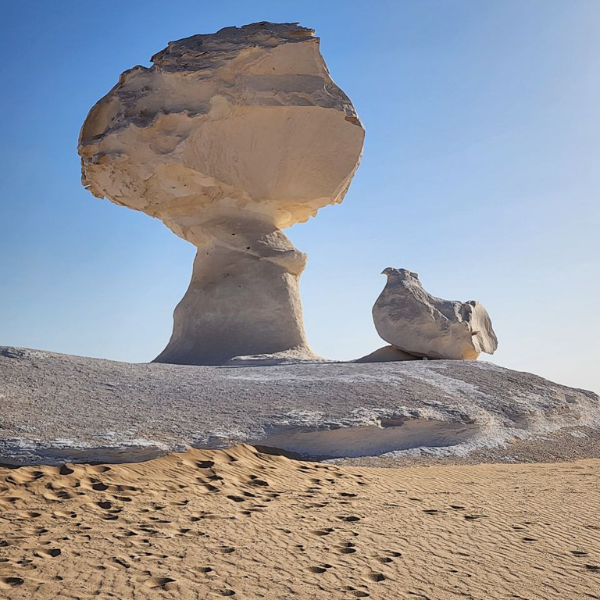
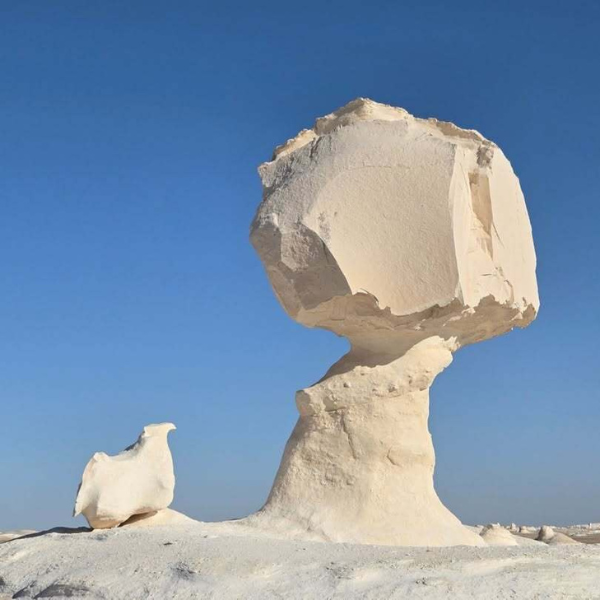
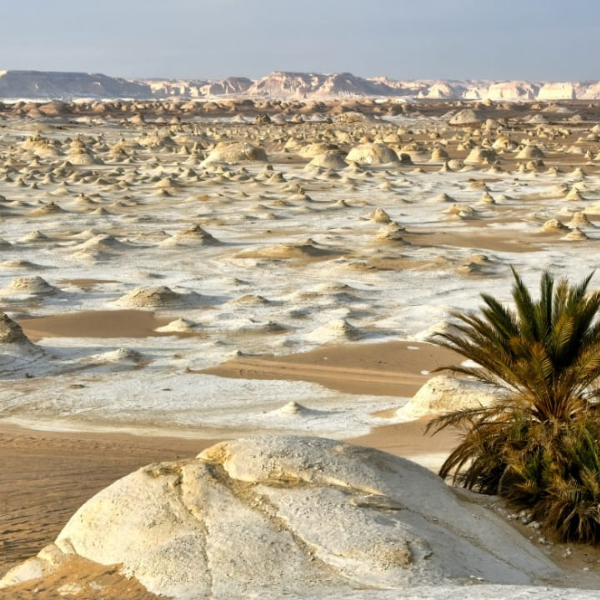
The classic White Desert is known for:


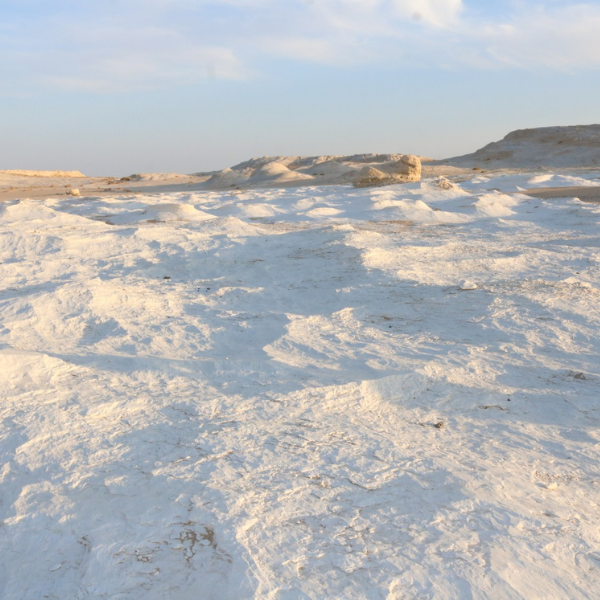
white chalk formations,


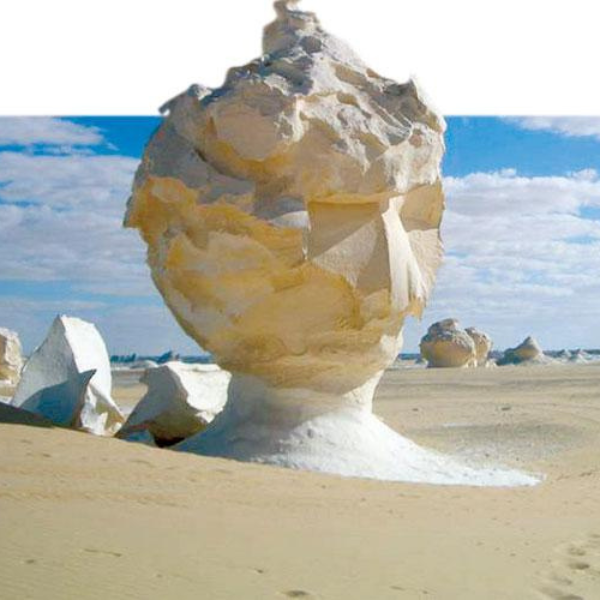
mushroom-shaped rocks,


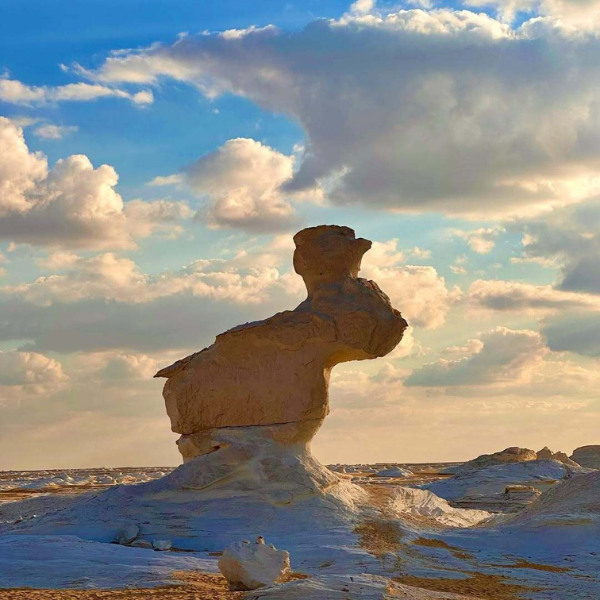
towering sculptures created by erosion,


broad pale landscapes,


and camping beneath open desert skies.


Crystal Mountain is more about geology at close range.


You stop.


Walk around.


Examine the exposed crystals.


Photograph the arch and textures.


Then continue through the desert.


It is a short chapter within a much bigger journey.


And that’s exactly how it should be experienced.

Crystal Mountain vs the White Desert

These two places shouldn’t really be competitors because most travelers visit both.


But they offer very different experiences.

Crystal Mountain

White Desert

Compact geological stop

Large desert landscape

Known for exposed crystals

Known for chalk formations

Usually 20–45 minutes

Often several hours + overnight

Close-up photography

Landscape and astrophotography

Part of the journey

Usually the main destination

No camping experience by itself

Famous for desert camping

If you only looked at photos online, you might assume Crystal Mountain itself is the main attraction.


In reality, the White Desert safari route as a whole is what makes the trip exceptional.


Crystal Mountain adds another geological layer to that experience.

Crystal Mountain vs Black Desert Egypt

Just north of the Crystal Mountain portion of many safari routes lies another completely different landscape:


the Black Desert.


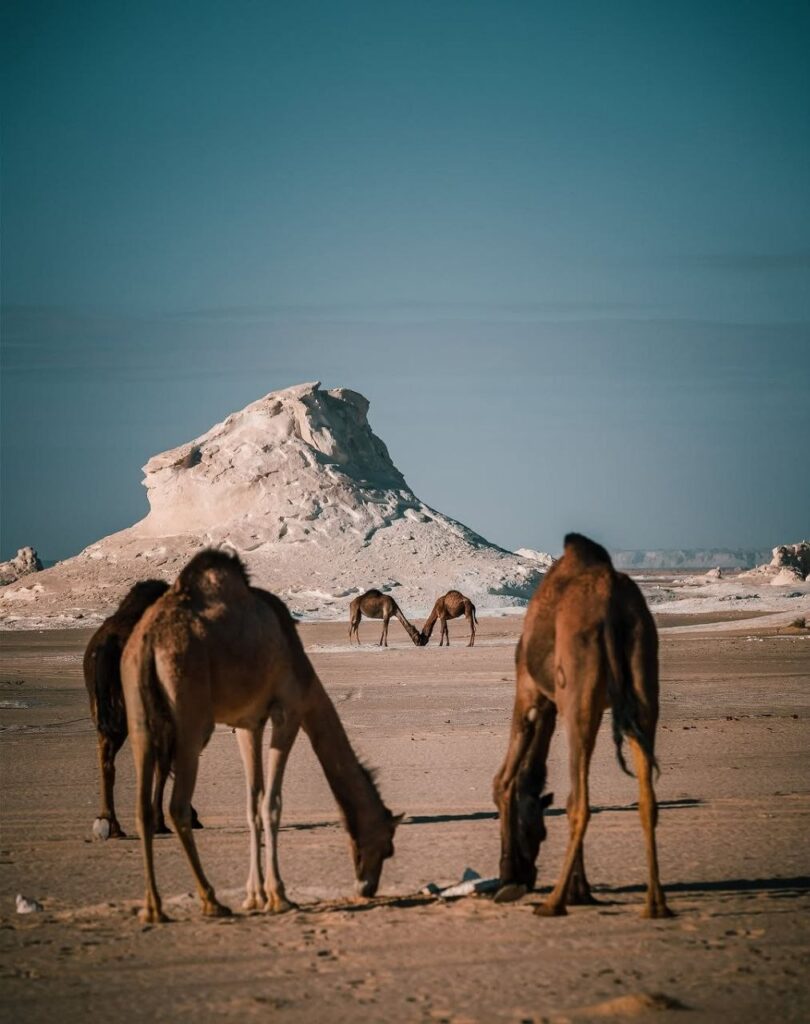
The Black Desert is characterized by dark stones and black-capped hills that create a dramatic contrast with the pale desert floor.


Then you reach Crystal Mountain, where mineral-rich surfaces begin reflecting light.


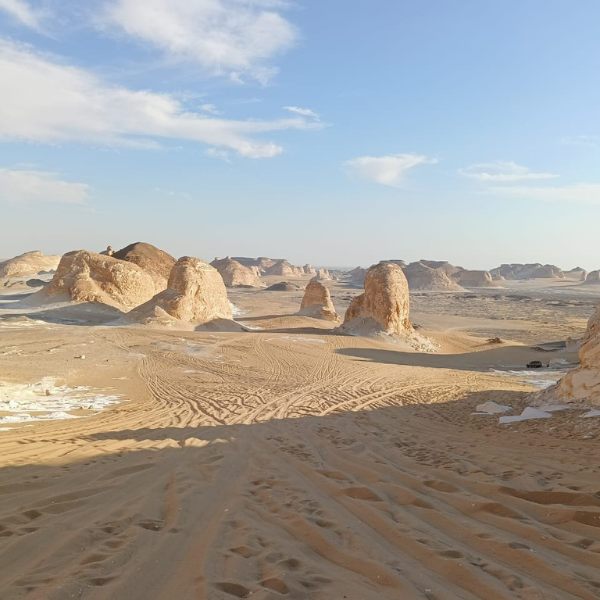
Continue farther south and the landscape transforms again as you approach pale chalk formations and the White Desert.


This rapid change in geology is one of the reasons the route between Bahariya and Farafra is so interesting.


You’re not driving through one repetitive sandy desert.


Within the same journey you can see:


black-topped hills,


pale desert plains,


crystal-bearing formations,


huge sculpted valleys,


and bright chalk landscapes.


Read our dedicated Black Desert Egypt guide before your trip if you want to understand the first major landscape on the classic safari route.

What Can You See at Crystal Mountain?

Crystal Mountain is compact, but there are several details worth slowing down for.

1. The Crystal-Covered Surfaces

Obviously, this is the main reason you’re here.


Look closely at the mineralized areas rather than viewing the formation only from a distance.


Different crystal faces react differently to the sunlight, giving some sections a more noticeable sparkle.


Photography often fails to communicate the effect fully because what catches your attention in person is the way the reflections change while you move.

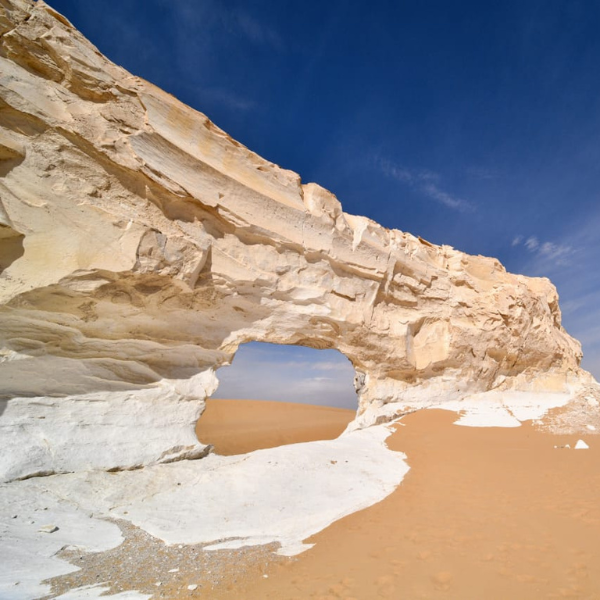
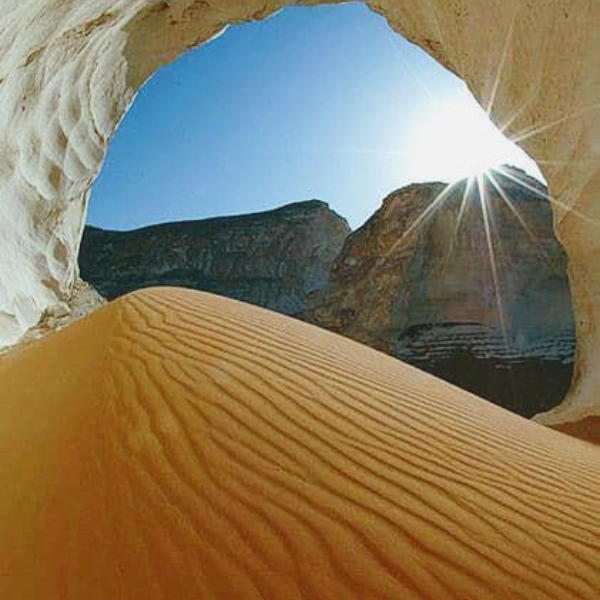
2. The Natural Opening or Arch

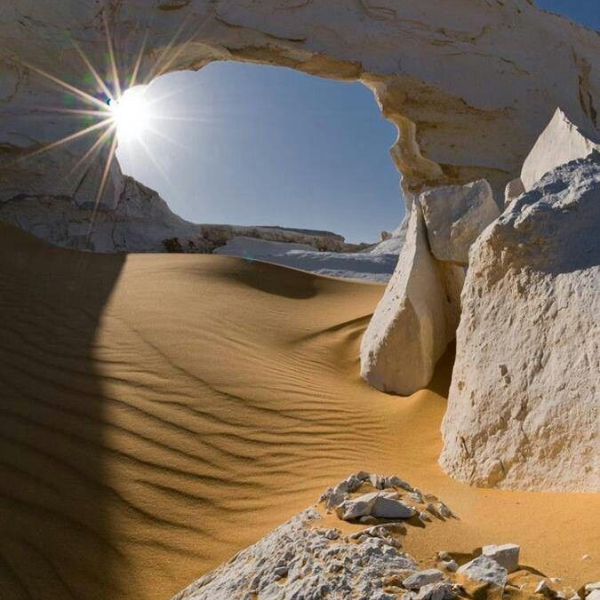
One of Crystal Mountain’s most photographed features is its small arch-like opening.


The opening naturally frames sections of the surrounding desert, making it a popular photography composition.


Don’t expect something on the scale of the giant arches in Jordan or the American Southwest.


Again, Crystal Mountain’s charm comes from detail rather than size.

3. The Surrounding Desert

Turn away from the crystals occasionally.


Seriously.


The surrounding emptiness matters.


A geological feature like this would feel completely different if it sat beside a city or highway packed with buildings.


Here, it exists against a huge Western Desert backdrop.


That contrast between tiny crystals and enormous open space is part of the experience.

4. Geological Layers and Textures

Travelers interested in geology should pay attention to more than the shiny surfaces.


Look for:


differences in rock color,


layering,


weathered cavities,


crystal growth inside openings,


and changes in texture.


Crystal Mountain is essentially an outdoor geology lesson.

How Long Do You Need at Crystal Mountain?

For most White Desert safari itineraries:


20 to 45 minutes is enough.


That may sound short, but Crystal Mountain is not an enormous attraction.


You need enough time to:


walk around the formation,


see the crystal surfaces,


photograph the arch,


look at the geology,


and enjoy the surrounding landscape.


Spending several hours here would usually make less sense than continuing toward Agabat Valley and the White Desert.


That’s especially true on an overnight itinerary where sunset timing matters.


In desert travel, good itinerary planning isn’t just about seeing as many stops as possible.


You also need to arrive at major landscapes at the right time.

Can You Take Crystals from Crystal Mountain?

No.


Please don’t.


A geological site stays special because visitors leave it intact for the next person.


Taking pieces of crystal as souvenirs gradually damages the very attraction people have traveled to see.


Follow a basic rule of responsible desert travel:


Take photographs. Leave the geology.


Don’t:


break crystal formations,


chip pieces from the rock,


collect loose geological material,


scratch names into surfaces,


or move rocks to create social-media photos.


Crystal Mountain has existed for millions of years.


A souvenir isn’t worth damaging it.


This principle applies throughout the White Desert as well.

Best Time to Visit Crystal Mountain Egypt

For most travelers, the best period for a White Desert journey is during Egypt’s cooler desert months rather than the hottest part of summer.


Why?


Because Crystal Mountain isn’t an indoor attraction.


You’ll be exposed to:


direct sunlight,


dry air,


open desert,


and potentially strong temperature differences between day and night.


A visit to Crystal Mountain itself may be short, but it normally sits inside a much longer safari day.


That means comfort during the rest of the journey matters just as much.


For detailed seasonal planning, use our Best Time to Visit White Desert Egypt guide.


It covers temperature patterns, camping conditions and seasonal considerations in more detail.

What Time of Day Is Best for Crystal Mountain?

There isn’t one universally perfect time because most travelers visit according to the larger safari schedule.


However, sunlight matters.


The crystals are easiest to appreciate when direct light catches their surfaces.


Lower-angle sunlight can create more dramatic contrast and shadows, while stronger daylight can make reflective surfaces easier to notice.


For photography, experiment rather than taking one photo from the first viewpoint.


Move slightly.


Change your angle.


Get close.


Then step back and include the desert landscape.


If photography is an important part of your trip, our White Desert Photography Tips guide will help you plan camera gear, light and desert shooting conditions.

How Do You Get to Crystal Mountain from Cairo?

The practical answer is:


You normally don’t travel from Cairo directly to Crystal Mountain as a standalone attraction.


Instead, travelers usually make Crystal Mountain part of a White Desert safari.


The standard sequence begins with the road journey from Cairo toward Bahariya Oasis.


Bahariya serves as one of the main gateways for White Desert itineraries.


From there, desert vehicles and local guides continue toward areas such as:


the Black Desert,


Crystal Mountain,


Agabat Valley,


and eventually the White Desert.


Trying to turn Crystal Mountain into a same-day isolated roadside visit from Cairo misses the point.


The journey becomes much more worthwhile when you combine it with the surrounding desert landscapes.

Should You Visit Crystal Mountain Independently?

For international visitors, the smarter option is generally to include Crystal Mountain within an organized Western Desert itinerary.


Egypt’s official tourism portal specifically advises visitors heading into desert areas around Farafra and the White Desert to check current permits and regulations with a travel agency or authorized tour guide.


Rules and access conditions can change.


That’s important because travel advice copied from an old blog article may no longer reflect current procedures.


An organized desert trip also solves practical problems involving:


navigation,


suitable vehicles,


desert driving,


route planning,


meals,


camping equipment,


and timing.


For first-time White Desert visitors, that convenience matters.

Can You Visit Crystal Mountain on a One-Day Trip?

Technically, itinerary possibilities depend on where you’re starting.


But if you’re starting from Cairo, trying to squeeze the whole Western Desert circuit into an extremely rushed day isn’t how I would recommend experiencing it.


The White Desert deserves more time.


A better first experience is usually an overnight itinerary.


That way you can combine:


Bahariya,


Black Desert,


Crystal Mountain,


Agabat,


White Desert sunset,


dinner,


stargazing,


camping,


and sunrise.


If you want the classic overnight experience, see our White Desert Overnight Tour from Cairo.


You can also read our detailed White Desert Overnight Tour from Cairo Guide before choosing a trip.

What Does a Typical Crystal Mountain Safari Route Look Like?

Exact itineraries vary according to:


weather,


desert conditions,


permissions,


season,


group preferences,


and travel time.


But a typical experience may look something like this:


Cairo to Bahariya Oasis

Leave Cairo and travel west toward Bahariya.


This transition alone is interesting as urban landscapes gradually give way to open desert.


Bahariya Oasis

Stop in the oasis for food, logistics or preparation before continuing deeper into the Western Desert.


Black Desert

Explore the dark volcanic-looking landscape and panoramic viewpoints.


Crystal Mountain

Stop for roughly 20–45 minutes to see the exposed crystals and geological formations.


Agabat Valley

Continue toward one of the most dramatic landscapes on the route, where huge pale formations rise from the desert floor.


White Desert

Reach the famous chalk formations and explore the landscape.


Sunset and Camping

Watch the desert change color before dinner and camping under the stars.


Sunrise

Wake up in one of Egypt’s most unusual landscapes before beginning the return journey.


This sequence explains why Crystal Mountain works so well.


On its own, it is a fascinating geological feature.


Within the full safari, it becomes part of a constantly changing desert story.

Should You Choose a 2-Day or 3-Day White Desert Tour?

If Crystal Mountain is only one item on your list, a classic overnight itinerary may be enough.


But travelers who enjoy:


photography,


geology,


slow travel,


camping,


or spending more time away from paved roads


may prefer a longer itinerary.


A 2-day White Desert trip gives you the essential experience.


A 3-day White Desert tour gives you more breathing room.


Instead of thinking only in terms of “how many attractions can we check off?”, think about how much time you actually want to spend in the desert.


We’ve compared the formats in our 2-Day vs 3-Day White Desert Tour guide.


If you’d rather go straight to the longer option, explore our White Desert 3 Days Tour from Cairo.

Crystal Mountain for Photographers

Crystal Mountain offers a different photography challenge from the White Desert.


At the White Desert, your strongest compositions may rely on:


huge landscapes,


rock silhouettes,


sunset,


stars,


and dramatic skies.


At Crystal Mountain, some of the best images are closer.


Think about:


crystal textures,


reflections,


small cavities,


the natural opening,


hands or people for scale without touching formations,


and wide frames showing the ridge against the desert.


Photography tip

Don’t rely only on your phone’s automatic exposure.


Bright desert surfaces can confuse cameras.


Tap or meter carefully so crystal highlights don’t become completely overexposed.


Also protect camera gear from dust and sand.


That applies throughout the Western Desert.

What Should You Wear at Crystal Mountain?

You don’t need technical hiking gear for a normal stop.


But appropriate desert clothing makes the whole safari much more comfortable.


Bring:


comfortable closed shoes,


lightweight breathable clothing,


sun protection,


a hat,


sunglasses,


and seasonal layers.


If your trip includes overnight camping, you may need warmer clothing than you expect.


Desert temperatures after sunset can feel very different from daytime conditions.


Use our complete What to Pack for White Desert Egypt checklist before leaving Cairo.

Is Crystal Mountain Safe to Visit?

For normal sightseeing, Crystal Mountain is generally a short walking and photography stop rather than an extreme physical activity.


But the broader journey takes place in a remote desert environment.


That means the relevant safety considerations are less about Crystal Mountain itself and more about:


transport,


heat,


hydration,


navigation,


current access rules,


desert conditions,


and choosing experienced guides.


Avoid climbing unstable formations purely for photographs.


Wear suitable shoes.


Don’t wander far away from your group.


And follow your guide’s instructions.


For broader planning, read our White Desert Egypt Safety Guide.

Is Crystal Mountain Worth Visiting?

Yes — especially when it’s included naturally within a White Desert safari.


Would I recommend driving hundreds of kilometers solely to spend 30 minutes at Crystal Mountain and immediately return?


Probably not.


That’s not what makes the site valuable.


Its strength comes from its place in the larger journey.


Within a single safari route, you move from:


green Bahariya Oasis,


to dark Black Desert hills,


to glittering Crystal Mountain,


to the enormous formations of Agabat,


to the chalk-white landscape of the White Desert.


Crystal Mountain becomes one transformation in a sequence of completely different environments.


That’s what makes the route extraordinary.

What Other Places Should You See Near Crystal Mountain?

If you’re planning this trip, several nearby or route-connected attractions belong on the same itinerary.


Black Desert Egypt

Known for dark volcanic-looking hills and black stones scattered across lighter desert ground.


Read: Black Desert Egypt


Agabat Valley

One of the most dramatic landscape sections of the wider route, characterized by huge sculpted formations and open desert.


This will also receive its own dedicated guide later in our White Desert content cluster.


White Desert Egypt

The main attraction for most travelers: an extraordinary landscape of pale chalk formations sculpted into unusual shapes by erosion.


Read: White Desert Egypt


Bahariya Oasis

The major gateway for many White Desert trips from Cairo, known for palms, springs and desert-tour logistics.


Read: Bahariya Oasis Egypt

Crystal Mountain and Responsible Desert Tourism

The Western Desert can look indestructible.


It isn’t.


Dry environments often preserve damage for much longer than visitors expect.


Crystal formations can be broken.


Fossils can disappear.


Vehicle tracks can disturb sensitive surfaces.


Trash can remain in the desert for years.


Responsible behavior is simple:


don’t remove rocks or crystals,


don’t damage formations,


take your trash with you,


follow approved routes,


respect protected-area regulations,


and use experienced local operators.


A landscape doesn’t need fences everywhere for it to deserve protection.


If every traveler took “just one small crystal,” the attraction would eventually stop being Crystal Mountain.

White Desert Camping After Crystal Mountain

For many visitors, Crystal Mountain is a daytime stop.


The most memorable part of the trip comes later.


As afternoon progresses and you enter the White Desert, the formations change color under lower sunlight.


Then the sun disappears.


City noise vanishes.


Artificial light becomes minimal.


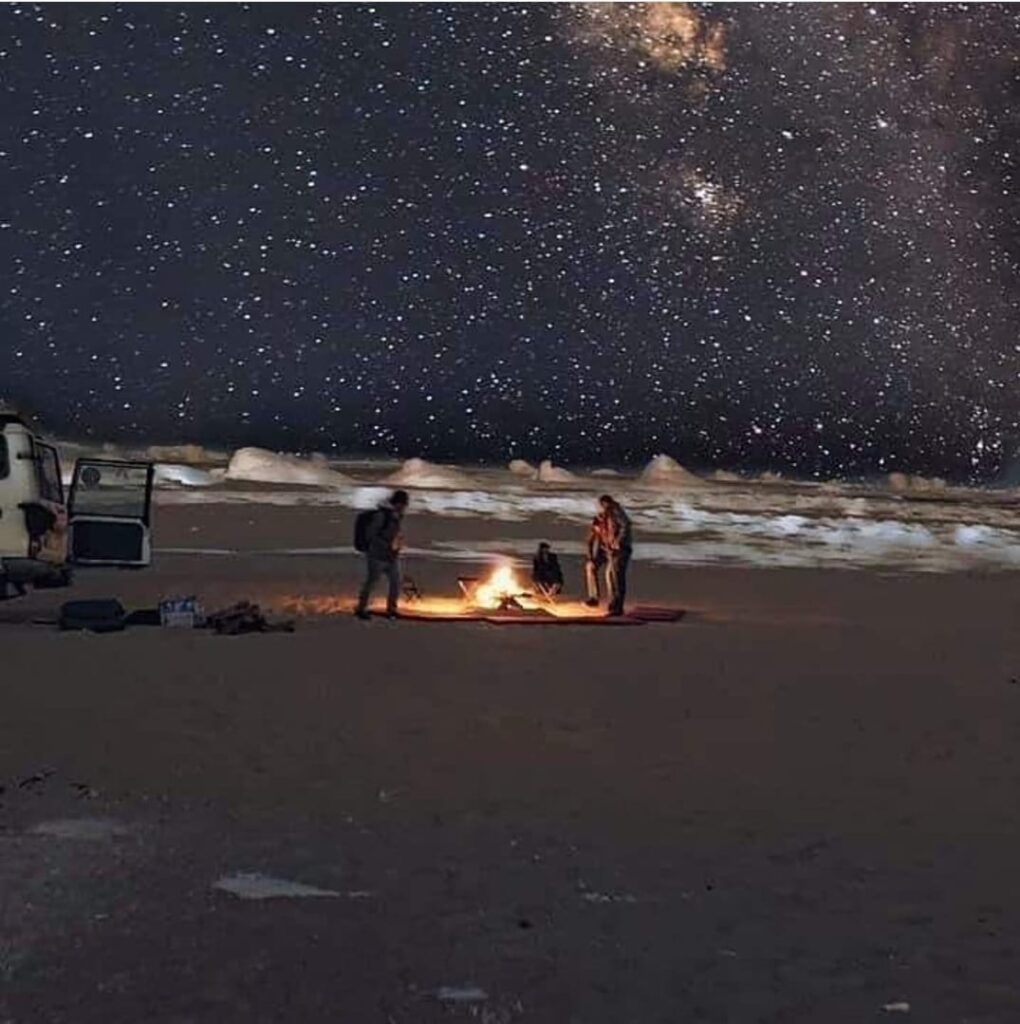
And the sky becomes the attraction.


Camping is one of the defining experiences of a White Desert journey.


Dinner, tea, stars and sunrise transform the trip from sightseeing into something much more immersive.


If that’s what you’re looking for, read our White Desert Camping Guide.


For travelers specifically searching for a trip from Cairo, our White Desert Camping from Cairo guide covers the journey in more detail.

How Much Does a Crystal Mountain and White Desert Trip Cost?

There isn’t one universal price because White Desert tours vary according to:


number of travelers,


private vs shared format,


trip duration,


vehicle arrangements,


accommodation,


meals,


camping setup,


entry fees,


and inclusions.


Crystal Mountain itself is usually one stop inside that larger itinerary rather than something priced independently.


That’s why comparing only a headline tour price can be misleading.


Before booking, check exactly what is included.


We’ve broken down the variables in our White Desert Egypt Cost guide.

Plan Your Crystal Mountain & White Desert Safari

Crystal Mountain is small.


But that’s exactly why travelers shouldn’t judge Egypt’s Western Desert by individual stops.


The magic comes from the progression.


You leave Cairo.


Reach Bahariya.


Enter the Black Desert.


Watch the ground and rocks change.


Stop at Crystal Mountain and inspect crystals formed through geological processes millions of years old.


Continue toward Agabat.


Then suddenly the White Desert opens around you.


By sunset, Crystal Mountain feels like one chapter in a much larger adventure.


If you want to experience that complete route, explore our White Desert Safari from Cairo.


For a classic camping experience, see the White Desert Overnight Tour from Cairo.


If you want more time in the desert, choose the White Desert 3 Days Tour from Cairo.


And if you’re still comparing options, browse all Egypt Desert Dunes tours.

- Tours Carousel
Plan Your Desert Adventure

Book a Tour or Create Your Own Egypt Experience

Choose one of our ready-made tours or customize your own private journey. Select your destinations, duration and travel style, then send your request directly to Egypt Desert Dunes on WhatsApp.

Book Your Desert Tour

Select your preferred itinerary and send us your travel details. Our team will reply on WhatsApp with availability and the final quote.

Choose Your Tour *
Please select a tour and complete your name, travel date and number of travelers.
Your booking request will open directly in WhatsApp. No payment is made through this form.

Create Your Own Private Egypt Tour

Combine Cairo, Giza, Fayoum, the Western Desert and Siwa in one custom itinerary. Choose the destinations and experiences you want and our team will recommend the best route based on your available days.

Which Places Would You Like to Visit? *
Select as many destinations as you like. Egypt Desert Dunes will recommend the best route according to your trip duration.
What Are You Most Interested In?
Please enter your name, number of travelers, trip duration and select at least one destination.
Egypt Desert Dunes will review your selections and send you a customized itinerary and quotation on WhatsApp.
✓ Available on Viator

Book Egypt Desert Dunes Tours on Viator

Discover our private White Desert camping adventures and Siwa Oasis experience. Choose your favorite itinerary and complete your reservation securely through Viator.

✓ Private Tours
✓ Cairo Pickup
✓ Mobile Ticket
✓ English Speaking Team
✓ Book Through Viator
4-Day Private White Desert Camping Tour from Cairo by Egypt Desert Dunes
✓ Book on Viator
Private Tour
White Desert • Bahariya Oasis • Egypt
⏱ 4 Days / 3 Nights ★ 5.0 (4 Reviews)

4-Day Private Camping Tour in the White Desert from Cairo

Go deeper into Egypt's Western Desert with a private four-day camping adventure including spectacular desert landscapes, Black Desert, White Desert, open-air meals and three nights beneath the stars.

Cairo Pickup Private Tour Desert Camping Meals Included
Reference price from
€588 / person*
Check Viator for today's live price
View on Viator →
2-Day 1-Night White Desert Camping Tour from Cairo by Egypt Desert Dunes
✓ Book on Viator
Best Short Trip
White Desert • Black Desert • Egypt
⏱ 2 Days / 1 Night ★ 5.0 (3 Reviews)

2-Day, 1-Night Camping Tour in White Desert from Cairo

Our most compact White Desert adventure for travelers who want to experience the desert from Cairo, explore its unique landscapes and spend an unforgettable night camping beneath the stars.

1 Night Camping Cairo Pickup Breakfast Lunch & Dinner
Reference price from
€197 / person*
Price varies by date and group size
View on Viator →
3-Day Private White Desert Camping Tour from Cairo by Egypt Desert Dunes
✓ Book on Viator
Popular Choice
Black Desert • Aqabat • White Desert
⏱ 3 Days / 2 Nights ★ 5.0 (5 Reviews)

3-Day Private Camping Tour of White Desert from Cairo

Spend three days exploring the Western Desert, including the Black Desert, Crystal Mountain, Aqabat area and White Desert, with two nights of private desert camping.

2 Nights Camping Black Desert White Desert Private Experience
Reference price from
€394 / person*
Check Viator for today's live price
View on Viator →
4-Day Siwa Oasis Trip from Cairo by Egypt Desert Dunes
✓ Book on Viator
Siwa Experience
Siwa Oasis • Western Desert • Egypt
⏱ 4 Days Egypt Desert Dunes • 14 Operator Reviews

Siwa Oasis Trip with Cairo Pick Up

Travel from Cairo to legendary Siwa Oasis on a private four-day journey exploring Siwan culture, desert landscapes, Lake Siwa, traditional sites and some of the oasis's most distinctive attractions.

4 Days Cairo Pickup Siwa Hotel Meals Included
Reference price from
$1,150 / adult*
Check Viator for today's live price
View on Viator →
*Important: Prices shown above are reference “from” prices observed while reviewing the listings and may change based on travel date, number of travelers, availability, currency and Viator pricing. Click “View on Viator” for the current final price before booking.

Explore Egypt's Desert with Egypt Desert Dunes

From a one-night White Desert camping adventure to extended Western Desert and Siwa Oasis experiences, choose the itinerary that matches your travel style and complete your booking through Viator.

Explore Our Tours →

FAQ — Crystal Mountain Egypt

What is Crystal Mountain Egypt? +

Crystal Mountain is a mineral-rich geological formation in Egypt's Western Desert between Bahariya and Farafra. It is known for exposed crystalline surfaces, unusual rock textures and a small natural opening that make it a popular stop on White Desert safari routes.

Where is Crystal Mountain in Egypt? +

Crystal Mountain is located in the Western Desert on the route between Bahariya Oasis and Farafra Oasis, within the broader landscape associated with White Desert excursions.

Is Crystal Mountain really a mountain? +

Not in the traditional sense. Despite its name, Crystal Mountain is better described as a relatively small ridge, rocky outcrop or exposed geological formation rather than a high mountain requiring a major climb.

What type of crystals are found at Crystal Mountain Egypt? +

Geological research on the Crystal Mountain area documents abundant calcite crystals within its ancient limestone and karst system. Some geological descriptions also identify barite mineralization. It is therefore misleading to describe the entire formation simply as quartz.

Is Crystal Mountain made of quartz? +

Crystal Mountain is frequently described in tourism content as a quartz formation, but geological studies provide a more complex picture and identify significant calcite mineralization, with barite also reported in descriptions of the area.

How long do you need at Crystal Mountain? +

Most visitors spend approximately 20 to 45 minutes exploring and photographing Crystal Mountain before continuing toward Agabat Valley and the White Desert.

Can you take crystals from Crystal Mountain? +

No. Visitors should leave crystals, rocks and other geological material in place. Removing pieces damages the site and reduces the experience for future visitors.

Can you visit Crystal Mountain from Cairo? +

Yes, but Crystal Mountain is normally visited as part of a multi-stop White Desert safari from Cairo rather than as an independent attraction. Travelers usually reach Bahariya Oasis first and then continue into the Western Desert.

Do you need a 4x4 to visit Crystal Mountain? +

The broader White Desert safari itinerary normally uses suitable desert vehicles and experienced local drivers. Access arrangements can vary, so travelers should follow current guidance from their authorized operator.

Can you visit Crystal Mountain and the Black Desert on the same trip? +

Yes. The Black Desert and Crystal Mountain are commonly included on the same White Desert safari route from Bahariya Oasis.

Is Crystal Mountain worth visiting? +

Yes, particularly as part of a White Desert safari. Its exposed crystals and geology create a striking contrast with the Black Desert, Agabat Valley and White Desert landscapes seen during the same journey.

What is the best time to visit Crystal Mountain Egypt? +

The cooler desert months are generally the most comfortable time for a White Desert safari. Conditions vary by season, so travelers should check weather and current desert access conditions before departure.

Leave a Comment

Your email address will not be published. Required fields are marked *